
See the video at Anglican.TV
Archbishop Duncan health bulletin 2
We received news tonight from Canon Jack Lamanog that the Archbishop’s surgery went well.
Archbishop Duncan health bulletin
Archbishop Duncan to undergo further surgery in Nairobi
East African revival and the renewal of Anglicanism

Text of the Presentation on the East African Revival by the Rev. Dr. John Senyonyi, Vice-Chancellor of Uganda Christian University.
Archbishop Jensen’s address to the archbishops’ luncheon with Justin Welby

TRANSCRIPT: DR PETER JENSEN, Chairman of the Global Fellowship of Confessing Anglicans
Your graces, my lords, ladies and gentlemen, actually brothers and sisters, it is a very wonderful thing to stand here and look around and see so many whose faces I know so well who I count as comrades, brothers and sisters in the long, arduous business of being Christian. As well as that, I see quite a number whose acquaintance I have just made.
My first duty today is to say particularly to the local committee who have arranged for GAFCON to take place here, how very, very grateful we are to you for the extraordinary amount of work you have done, for the skill with which you have done it, and for the endless hours of time you have put into this. I might say with the High Commissioner how much this has enhanced if I can say so and will enhance the reputation of Kenya and Nairobi.
You have been through two horrendous incidents with the fire at the airport and of course this last tragedy. You have continued on, faithfully and steadfastly. You have looked again at the security for example, I know that, but you have been so faithful in doing all this. We will not be adequately able to thank you but please accept these words as our deepest thanks to you for making this great convention possible.
Can I also say that I didn’t think it would be possible until I walked into the Trinity Centre and then I knew, since we could never build that centre in Sydney, I knew I was in the presence of people who can run a convention and do it well. So I want to lead the rest of us in applause to the local committee. (Applause).
Your Grace the Primate of Kenya we want to thank you. It is not an easy thing to extend an invitation to hundreds and hundreds of people to come. My whole aim in Sydney I have to say was to avoid the General Synod occurring ever in Sydney, always have it somewhere else. I know what it’s like, and that was nothing compared to having GAFCON here. So again and very publicly I want to say how very grateful we are to you. And today of course I want to thank you, on behalf of all your guests, for this magnificent meal that you and Mama Rhoda have been hosting for us and I want to say how grateful we are; but also I want to assure you publicly that you are loved, you are deeply loved, both here in Kenya but also around the world, and we love and honour you for all you have done for us – thank you. (Applause)
I have also been asked to say just a few words about GAFCON. One of the reasons why it is so appropriate to be here for GAFCON this week is that it was born in Nairobi, Room 1216 of the Hilton Hotel to be exact, well I have to check my records, but I think it was 1216. A number of people sitting here today were present at that meeting. And it was intentionally held here in Kenya. The leader of the meeting of course was Archbishop Akinola, and I can remember Archbishop Okoh at his right. And Archbishop Okoh’s great contribution to the meeting, amongst others, was to tell us that the word GAFCON was the word we should have. So I think it was you sir, I can’t see you, but it was you sir who gave us the word GAFCON and for that we are very grateful because it is the Global Anglican Future Conference which we decided on.
Now a number of the folk here today were present at that. How little we could have guessed that we would be here five years later and asking ourselves what has been accomplished. I heard earlier today – Archbishop Wabukala said – that in a sense the crisis has passed, and that’s true because you can’t live in a state of crisis. The crisis having been passed, the results have become permanent, or at least permanent for the time being if I can put it like that. Something has happened with grave consequences which now go on. And what indeed has happened and why?
Well, the genesis of GAFCON as you know was the authority of Scripture: Is the word of God the word of God?
Long ago, even before GAFCON, Bishop Nazir-Ali said to me that the debate we were having was about the clarity of Scripture. I’ll never forget him saying that. And I thought yes, he’s right of course: Is the Bible the Bible for everybody, that all can read, in a way in which it interprets itself? Is it the Bible for the lay people as much as it is the Bible for the clergy and anyone else? And this was Bishop Nazir-Ali’s point: that we can read the Bible too; and we can understand what it is saying to us. And the clarity of the Scriptures – particularly in the area of human sexuality – which is so important for our identity, means that we believe that we know – always ready to look again – but when we look again, the same message appears:: that human sexual expression needs to occur within the bonds of marriage between a man and a woman, and anything else is unholy matrimony, if you like.
Now it’s those great issues, aren’t they: the Bible and our obedience to the Bible, which gave us the explosion if you like which occurred at GAFCON. Since then, I see GAFCON – it’s interesting, you occasionally hear what people say about GAFCON and the FCA, not always very nice – it is often far from accurate.
I often hear it said that it is a ‘schismatic movement’, which is very funny considering how many Anglicans are involved in it – ‘it’s a schismatic movement’. And I’ve heard a view that ‘it is homophobic’ of course, and all the other terms of abuse that’s it’s so popular to throw.
I want to say to you that the GAFCON movement is a movement for Unity. I remember the Saturday night after GAFCON I, we had gathered in the room, the Primates gathered there, I gathered as the boy in the room, and the discussion was held. And I think it was I, but someone asked the question: ‘Are we leaving the Anglican Communion?’ And immediately all said: ‘No we are not leaving the Anglican Communion; that is not the intention, we would never do that.’ But our intention is to gather up the fragments of the Anglican Communion. And what GAFCON has done, particularly in North America, has been to gather up the fragments and to unite and to make sure that our beloved friends like Archbishop Bob Duncan here today, our beloved friends are kept and recognised as the authentic true Anglicans that they are, and that they don’t have to pretend to be something else. (Acclaim and applause)
And of course it is not only the North Americans but others as well, and this is going to happen in other places around the Communion, indeed it has begun to happen in other places around the Communion, where to stand for Biblical truth is going to cost you very, very dearly indeed, as it has cost our brothers here. And then you will have to ask yourself: who are our friends? Who will stand with us? And GAFCON is a way of delivering friendship, it is a way of delivering unity, it is a way of making sure that to quote the immortal words of a Nigerian bishop at our last meeting in London: ‘Now we know we are not alone’ [Approval]. I’ve never forgotten him saying that.
That’s GAFCON: Now we know that we are not alone.
Now, as we heard this morning, the Anglican Communion 21st Century is going to look very, very different from the Anglican Communion that began the 21st Century – that’s obvious. Indeed it is not only going to look different, it is different, it already is different. The events of 2008, little did we know it, was the birth of something new in the Anglican Communion. And in a sense GAFCON is called I believe to model what a Communion could be, a different Communion. I like to put it this way: that the British Empire is dead but the British Commonwealth of nations has followed.
There’s a different partnership, a different equality between the partners now, a bringing together of bishops, laity and clergy, altogether in a great conference where all may play their part, and a way of modelling and being the Anglican Communion for the sake of the whole Gospel, of Christ and the Gospel, in a way which will bring our gifts to bear for the sake of one another. That’s a great picture, and I believe in microcosm this is what the FCA movement is already and has begun to be.
Here is, when thirteen hundred and – now last night it was thirteen hundred and fifty-two, this morning it is thirteen hundred and forty-eight and one baby from Nigeria I believe – are gathering in Nairobi.
1,352 Anglican Christians are gathering here in Nairobi for a week in which we are going to seek, according to Archbishop Wabukala, we are going to seek the Glory of God.
Our prayer is that we may see the Glory of God in this week together and go home changed. We are going to hear about the East African Revival. We are going to be challenged by it. We from the West are going to be deeply challenged about the East African Revival. We are going to hear about the Persecuted Church. We are going to hear from each other. We are going to minister to each other. We are going to hear the Word of God together and sit underneath the teaching of the Word of God. It is I believe that we are going to sing the praises of God and worship together.
It is I believe going to be an extraordinary week, not just a sort of missions conference, something I know +Bob Duncan was worried about, but it is an ecclesial conference – it is more than that. [Oh you mean I’ve learned something from you?] Archbishop Duncan is always hoping I am going to learn something from him, and I have. (laughter). It is more than just a conference, it is more than that.
Now we are deeply in prayer, Archbishop Wabukala told us to be in prayer we will see the Glory of God. For my part I have asked that we will see that the Lord will maintain the unity of the Spirit and the bond of peace, because Unity is what we are about.
Now that’s the genesis of FCA, GAFCON, and I have talked about it’s meaning.
And just to conclude by saying it has two great Purposes:
– First of all to recognise and authenticate Anglicans, who for no fault of their own, in a stand for Biblical truth have become disaffiliated from their own denomination or original church – to gather up the fragments of Christ’s church, and to maintain them in unity.
– And then Secondly, to bring together Anglicans from all around the world – [we’re not the only Anglicans, of course, that would be nonsense] – but to bring together Anglicans from all around the world, to release the energy of the Anglican Communion for the sake of: the Mission of the Gospel; the Sovereignty of God’s Word; the Glory of God’s Name; and the Good of God’s People.
Dear brothers and sisters as we are here today enjoying this wonderful occasion together, let’s remember what’s drawn us together, the Glory of God, and let us join in prayer that we will indeed see the Glory of God this week in Nairobi. (Applause)
(Transcription provided by the Gafcon media team)
Correction: The original version of this story incorrectly identified Dr. Jensen as chairman of the FCA. He is its general secretary.
Presidential address by the Archbishop of Kenya to Gafcon
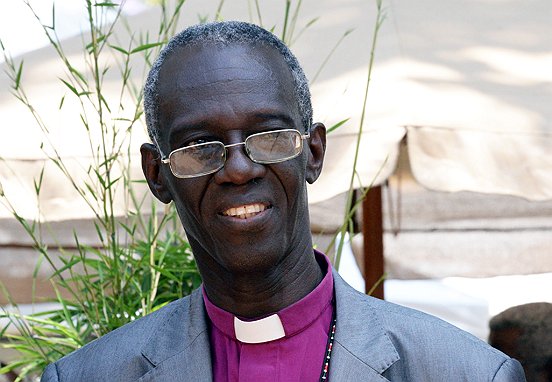
GAFCON is for the sake of our children — Eliud Wabukala
Archbishop of Canterbury’s address to the Gafcon conference
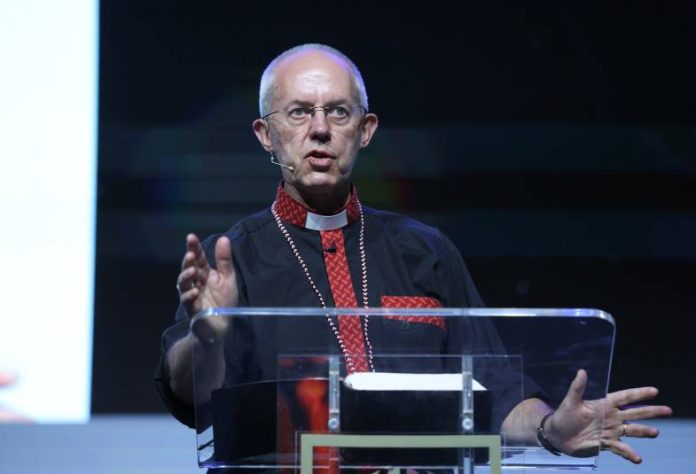
The Archbishop of Canterbury, Justin Welby, has called for the Church to be ‘holy’ and ‘in unity’ as it proclaims the gospel in challenging circumstances around the world.
Gafcon’s episcopal delegates

Three hundred and thirty one Anglican bishops are among the over 1300 delegates to the second Global Anglican Future Conference meeting 21-26 October 2013 at All Saints Cathedral Nairobi.
The Anglican future is Gafcon, Archbishop Jensen declares

Gafcon is the future of the Anglican Communion, Dr. Peter Jensen, the General Secretary of the Fellowship of Confessing Anglicans told the opening session of the 2nd Global Anglican Future Conference on 21 October 2013.
Whether Anglo-Catholic, Evangelical, Charismatic, High or Low Church all those gathered at All Saints Cathedral in Nairobi were confessing Anglicans.
“We believe the apostolic faith and we do not believe the faith of those who contradict the Bible and who deny the uniqueness and supremacy of Christ,” he said “We therefore live under the cross of Christ.”
Dr. Jensen, the former Archbishop of Sydney, outlined the week long conference schedule stating the meeting would end with a communiqué setting out the fellowship’s goals for the future.
But the heart of the archbishop’s talk focused on what all the delegates from 40 countries and 27 provinces shared.
The Biblical mandate to go out and make disciples and preach the Gospel lay at the heart of the fellowship, he said. “We are here to learn how to be disciples of Jesus and to learn how to make disciples of Jesus.”
But the Anglican churches had not been faithful to Christ’s call. “We have failed to make disciples through teaching the commands of Jesus found in the Bible at depth. That is why so much of the church in the west has simply collapsed, capitulated and compromised before a virulent, antagonistic secularism.”
Disdain and ignorance of the Scriptures was not solely a Western disease. “We too are in danger of not teaching our people in Africa and Asia and South America and elsewhere. They too face immense challenges from religion and ideologies opposed to the gospel.”
The “ideologies” that had “emasculated the West” were spreading round the world like a “destructive tsunami. We must teach our people so that they will be ready for it,” he said.
The delegates to Gafcon were the foot soldiers in the fight against apostasy. “We are here to partner with each other in this great work of going into all the world,” teaching, preaching and sharing the good news of Jesus Christ.
“We are here to support one another,” he said, “When Anglicans are made to feel old fashioned and out of touch for believing the Bible, we want to say ‘We stand with you: You are not alone’. ‘
In a rebuke to Archbishop Justin Welby’s suggestion of moral equivalence between the Gafcon churches and the Episcopal Church in the US, Dr. Jensen said: “We will not equate boundary crossing with the teaching that sin is good and that God’s word can be disobeyed. We love good order; but we will even break order, to obey the orders of the Jesus.”
The “crisis” which “provoked” the first Gafcon conference had “awakened Anglicans everywhere” to the failure of the old ways of being church.
“The structures of the Old Communion let us down badly. They could not contain the powerful new wine of today’s confessional Anglicanism,” he said.
In 2008 Gafcon “began a new way of being Anglican; a way which insists on standards of belief and behavior; a way which does not need to go through Canterbury to be Anglican; a way in which we do not have to ask anyone’s permission to defend or preach the gospel; a way which seeks to model fellowship for the 21st century Communion; a way in which we do not sit around waiting for thing to happen.”
The “future” of Anglicanism had “arrived” and it was Gafcon, Dr. Jensen said.
Archbishop Makgoba challenges African leaders to crack down on gay bashing

Banjul — Southern Africa’s Anglican archbishop calls for an end to violence and discrimination on the basis of real or perceived sexual orientation or gender identity, in a video Human Rights Watch released today.
The remarks by the Most Revd Dr. Thabo Makgoba, Anglican Archbishop of Cape Town and Metropolitan of Southern Africa, challenge arguments put forward by several African governments that culture, tradition, and religion justify the marginalization of lesbian, gay, bisexual, transgender, and intersex (LGBTI) people.
“Don’t fear,” Archbishop Makgoba says in his message. “You’ve been given this task of helping the rest of humanity to realize that we are called to respect and we are called to honor each other. People may come and say this is un-African, and I’m saying love cuts across culture.”
Human Rights Watch interviewed the archbishop for the video as part of an effort to highlight supportive voices for the LGBTI movement in Africa.
Makgoba’s statement reinforces the persistent efforts of his predecessor, Nobel Peace Prize laureate Desmond Tutu, to combat homophobia and transphobia in Africa and around the world, Human Rights Watch said.
Tutu has spoken out against a number of laws and practices that violate the rights of LGBTI people, including Uganda’s proposed Anti-Homosexuality Bill and Burundi’s criminalization of same-sex conduct in 2009.
“When you violate somebody on the basis of difference you’re not only violating them but you are demeaning yourself,” Makgoba says in the video. He exhorts leaders to take up their “moral responsibility to stop the violence against people who are different.”
Makgoba’s statement was released amid high levels of violence against LGBTI people in Africa. In Cameroon, Eric Ohena Lembembe, a gay activist, was murdered in July 2013, but government officials have refused to acknowledge that his murder might be a hate crime. In South Africa, lesbian and bisexual women and non-gender-conforming people face endemic rape and assault; the killing of Duduzile Zozo in July is the most recently reported example of such targeted violence.
“Archbishop Makgoba’s statement should serve as a call to national, religious, and cultural leaders across Africa who support the rights of LGBTI people to speak out publicly,” said Graeme Reid, LGBT Rights director. “And the archbishop’s message of respect for everyone’s rights should challenge leaders who have opposed the rights of LGBTI people to reconsider their positions.”