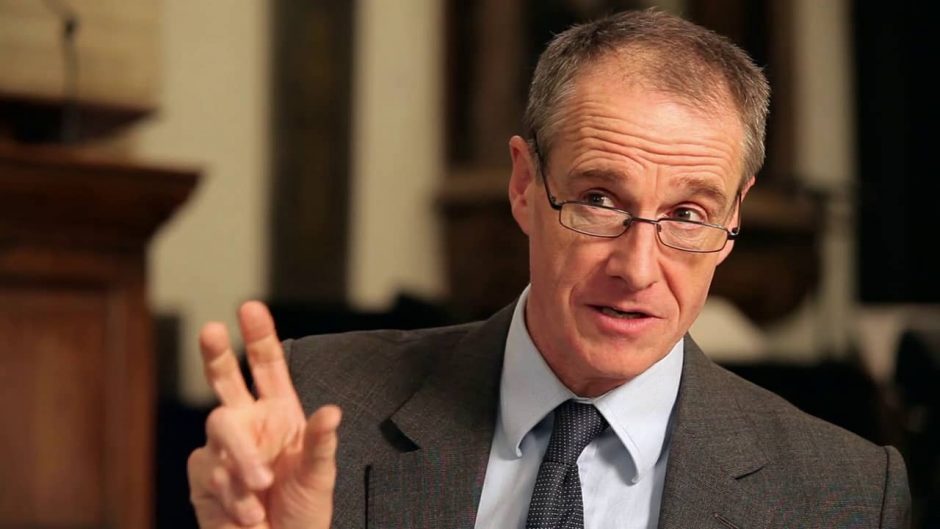
A trustee of the ReNew Conference for Anglican conservative evangelicals in the UK has told Anglican Ink that the network’s chairman, Rev William Taylor, is planning to step down in 2023.
Last year the network conducted a ‘governance review’ where a maximum of two five-year terms was set for the ReNew chairman. The regional leaders of ReNew then elected Rev Taylor for a new five-year term in June 2020.
Brain O’Donaghue said: ‘It was agreed as part of the governance review that a Chairman would be elected for 5 years. However, William recognised that he started serving as Chairman back in 2013. As such William has no desire to go beyond the spirit of the governance arrangements, and so would not look to serve for more than ten years as Chairman of ReNew.’
The ReNew leadership has responded to questions from Anglican Ink about the movement’s governance and accountability. The interview with a spokesman is published below with a commentary following.
The news comes after the ReNew trustees and conference planning team last week announced a ‘reflection exercise’ on the Thirtyone:eight report into the Jonathan Fletcher abuse scandal.
According to a statement posted on the ReNew website:
‘Thirtyone:eight made a series of important recommendations, which we have committed to reflect humbly and prayerfully upon. We have been working with Christian Safeguarding Services on the process of our reflection, and they will also comment on our findings. On 27th April we wrote to every ReNew Church leader to invite them and members of their leadership teams to contribute to our reflections.’
The statement links to a feedback form on which members of the network, which has 50 Anglican churches signed up to its agenda, can offer comments under the numbered recommendations in the Thirtyone:eight report.
‘We aim to complete the exercise by mid-June 2021, ahead of an open discussion at the upcoming meeting of Regional Leaders on 29/30 June,’ ReNew announced.
The Thirtyone:eight review, which was commissioned by Emmanuel Church Wimbledon where Fletcher was vicar from 1982 to 2012, highlighted a culture of fear and secrecy in the British conservative evangelical scene in which the serial abuser was such a dominant figure.
ReNew, which is registered with the Charity Commission, launched in 2013 as a partnership between Reform, of which Fletcher was a trustee and Church Society – both Church of England conservative evangelical groups – and the Anglican Mission in England outside the CofE’s structures. In 2018 Reform and Church Society merged.
Since 2013 Rev William Taylor has been the chairman of ReNew. He is Church of England Rector of St Helen’s Bishopsgate, the City of London church where Fletcher was curate in the late 1970s. Fletcher and Rev Taylor became associated through the Iwerne evangelical camps for pupils from the ‘top 30’ English boarding schools. Fletcher and the savage serial abuser John Smyth groomed victims on these camps.
Interview with ReNew spokesman:
1). I understand Rev William Taylor was given a new five-year term as chairman by the leaders of the regional groups from last summer. Was there a formal vote on this and were they any dissentients?
· In April 2020 ReNew’s Trustees conducted a governance review, which included receiving external advice and also circulating the proposed governance outline to ReNew’s Regional Leaders to ensure openness and transparency. The review agreed terms for Trustees, Chairman, Planning Team, and Regional Leaders and a new process for election of the Chairman of the Planning Team.
· Regional Leaders were invited to nominate candidates to stand for election as Chairman of ReNew. William Taylor was the only candidate nominated by Regional Leaders and was thereby duly elected. The Independent Observers who oversaw the nomination and election process, commented on Friday 26th June 2020:
“It’s great to witness ReNew’s development and growth as an authentic and purposeful Anglican evangelical network in England. It’s heartening to see that ReNew includes reviewing and renewing structures and processes for the sake of good governance, accountability and the healthy leadership of the movement for years to come.” Rt Revd Rod Thomas (Bishop of Maidstone) and Tim Davies (Minister of Christ Church Central Sheffield and AMiE Trustee).
William Taylor – who is currently aged 59 – recognises that he is mid-way through serving his second term, the maximum allowed under ReNew’s new governance arrangementsl
· The Trustees will continue to review accountability, governance, and support of those in leadership positions regularly.
2. Are there any plans to give every ReNew conference delegate a vote in the election of the chairman?
· Under the new governance arrangements, Regional Leaders are chosen by ReNew Church Leaders in each region. ReNew’s Regional Leaders vote for the Chairman of ReNew’s Planning Team.
3. Are there plans to give ReNew regional members a vote in the election of regional leaders?
· Each Regional Group of ReNew Church leaders decided how best to recognise their Regional Leaders – some did so by election and others did so by affirmation.
4. What is Rev Taylor’s view of his own position as ReNew chairman in the light of the 31:8 Fletcher report recommendation that those who have exercised influence in the leadership of the CofE conservative evangelical constituency should step aside?
· Which recommendation from the thirtyone:eight Review does this refer to? (Please see the commentary below).
· Following thirtyone:eight’s Review into Jonathan Fletcher and Emmanuel Church Wimbledon, the ReNew Planning Team and Trustees have been closely considering the Review’s findings and learnings for the future. We are all profoundly grieved at the suffering of those so badly affected by Jonathan Fletcher, and we pray for them, their families, and their friends.
Commentary:
In answer to question 1). the spokesman identifies the ‘independent observers’ in the June 2020 election for ReNew chairman as the Rt Rev Rod Thomas and Canon Tim Davies. Both of these ministers have been prominent leaders in ReNew since its launch. The response raises the question: why did ReNew not choose observers from outside its network to oversee Rev Taylor’s appointment?
I asked ReNew: if Rev Taylor is now mid-way through his second five-year term, when did it begin? In June 2020 or was the start back-dated to 2018?
ReNew trustee, Brian 0’Donaghue, told me: ‘It was agreed as part of the governance review that a Chairman would be elected for 5 years. However, William recognised that he started serving as Chairman back in 2013. As such William has no desire to go beyond the spirit of the governance arrangements, and so would not look to serve for more than ten years as Chairman of ReNew.’
So, under that arrangement, Rev Taylor would step down as chairman in 2023.
Under question 4). the spokesman asks which recommendation in the Thirtyone:eight review calls for resignations in the wider conservative evangelical constituency.
The review into Fletcher’s abuses, which the Christian safeguarding charity published in March, made 66 recommendations under 18 themes. Under Theme 2, ‘Healthy Leadership, Governance and Accountability,’ the report said ‘aspects of unhealthy culture’ across the conservative evangelical constituency ‘might only be addressed fully by those having played a key role in the establishment and maintenance of that culture to no longer enjoy the influence they have had to date (i.e. considering their positions and stepping down)’.
The review does not demand that such key influencers should resign as pastors of their churches or in Rod Thomas’s case as a suffragan bishop. But it does suggest that such leaders, whom it does not name, should consider resigning their positions of influence in the wider constituency. Two have already resigned from a conservative evangelical parachurch organisation.
In the wake of the Thirtyone:eight report, Rev Robin Weekes resigned from the Church Society’s council and Canon Vaughan Roberts from its board of reference.
Rev Weekes, minister of Emmanuel Church Wimbledon, and Canon Roberts, Rector of St Ebbe’s Oxford, were two of four conservative evangelical leaders who signed a letter to ReNew regional leaders in April 2019. The letter told them that Fletcher had lost his Permission to Officiate in 2017 and warned them not to invite him to preach at their churches. “We are deeply saddened at having to write in these terms, where Jonathan has had a very significant ministry over the years and continues to be held in great affection by many,” the four leaders wrote.
The other two signatories were Bishop Thomas and Rev Taylor.
Julian Mann is a former Church of England vicar, now an evangelical journalist based in the UK.


“The review does not demand that such key influencers should resign as pastors of their churches or in Rod Thomas’s case as a suffragan bishop.”
The innuendo in this statement is false. It implies that the Review was referring to +Rod Thomas when it called on “those having played a key role in the establishment and maintenance of that culture” to resign. In the Review, “that culture” refers to the unhealthy culture maintained by Jonathan Fletcher – it does NOT refer to the conservative evangelical constituency as a whole.
+Rod Thomas is only referred to in the Review as one of the leaders of the conservative evangelical constituency.
Seven victims of Jonathan Fletcher recently wrote an open letter complaining about those who have tried to exploit their suffering in order to pursue a private political vendetta against conservative evangelical leaders.
There is no innuendo in reporting that the 31:8 review does not call on key influencers in the UK conservative evangelical scene to resign their pastoral positions and thus lose their jobs. It is a statement of fact. Even in relation to Emmanuel Church Wimbledon, the report does not say that the current incumbent, who is the Rev Robin Weekes, should have to lose his job.
But 31:8 does state quite emphatically on p92-93: ‘It is the opinion of the Reviewers that the aspects of unhealthy culture at ECW and more
broadly across the affected CE constituency might only be addressed fully by those having played a key role in the establishment and maintenance of that culture to no longer enjoy the influence they have had to date (i.e. considering their positions and stepping down). It is not for this review to determine the details of how this should take place, but it should be recognised and considered as a necessary part of a demonstrable commitment towards a safer, healthier culture.’
May I respectfully suggest that your persistent glossing over of this significant statement in the 31:8 review ill serves British conservative evangelicals? May I put to you that they could do with a new start in terms of getting wider constituency leaders with no connection with Smyth or Fletcher?
“…the 31:8 review does not call on key influencers in the UK conservative evangelical scene to resign their pastoral positions…”
Correct – it does not. The report calls on key influencers in the “unhealthy culture” to resign, and it makes clear that this “unhealthy culture” does NOT extend to the entirety of the leadership of the UK conservative evangelical constituency. Those who claim that the Report calls on +Rod Thomas, or Lee Gattiss or William Taylor etc etc to resign are speaking falsely.
“May I respectfully suggest that your persistent glossing over of this significant statement in the 31:8 review ill serves British conservative evangelicals?”
I have never at any time glossed over it. Not once. What I have done is call to account those who try to make it say something that it clearly does not. I am the one who is supporting that statement and calling for it to be given its proper effect, not diverted into the political agendas of others.
“There is no innuendo in reporting that the 31:8 review does not call on key influencers …”
Nor did I ever suggest there was. I did state there was innuendo, and I explained what it was.
That should be taken seriously when apparently unfounded allegations are being made about respected and long-standing church leaders. And when several victims have complained that their sufferings have been incorrectly used by others for their issues against leaders.
“May I put to you that they could do with a new start in terms of getting wider constituency leaders with no connection with Smyth or Fletcher?”
Sure, if you can think up a valid reason for so suggesting. Everyone has “a connection” with people of bad character – certainly everyone who has been in ministry (unless they never did any real pastoral work). Consider:
* Bishop Andy Lines of AMiE and ACE has “a connection” with Jonathan Fletcher – should he therefore resign?
* Andrew Watson, bishop of Guildford has “a connection” with John Smyth – should he therefore resign?
* The late John Stott had “a connection” with John Smyth – should his books no longer be read?
It is absurd to suggest that the 31:8 report was demanding that John Stott’s books should no longer be read or that Andy Lines should have to resign (Bishop Watson is not part of the UK conservative evangelical scene).
However, it is to be hoped that over the next five years a new generation of leaders can emerge in the main conservative evangelical networks and institutions in Britain – eg the para-church organisations under the ReNew umbrella, the Proclamation Trust, and Oak Hill. These emerging leaders would almost certainly not have been part of the Iwerne sub-culture.
It would be unfortunate if these new leaders were to have emerged because of a nasty cancel culture taking root within UK conservative evangelicalism. But it is to be hoped that ministers who had been part of Fletcher’s boarding school world would have the tact not to accept positions of leadership in the wider conservative evangelical scene and allow that new generation to emerge.
Of course, new leaders would bring new problems because they, like the rest of us, carry their sinful natures around with them. But the Lord willing British conservative evangelicalism will be able to make a break from the culture of snobbery, misogyny and bullying that Smyth and Fletcher personified and perpetuated.
“It is absurd to suggest that the 31:8 report was demanding that John Stott’s books should no longer be read or that Andy Lines should have to resign”
Just to be clear, that was never my suggestion (and I am at rather a loss as to how my post could be read that way). I was suggesting that your post (not the Report) appeared to apply a criterion which would catch Stott and Lines (and probably many other respected and decent leaders).
“These emerging leaders would almost certainly not have been part of the Iwerne sub-culture.”
I am still waiting for some evidence that current leaders are or were “part of the Iwerne sub-culture”. The arguments used to suggest they were appear to apply equally to leaders such as Rev. Stott or +Lines, as to William Taylor or Lee Gatiss.