Home Blog Page 4

Fletcher – the silence surrounding the “Superstar” sex-offender

On the 11th of May 2026, a jury at Kingston Crown Court determined that the Revd Jonathan Fletcher had committed at least sixteen acts of indecent assault on a man over a period of about twenty-five years. The majority of assaults involved being beaten on the naked buttocks with a gym shoe, as a punishment for masturbation, including one beating that was so serious it provoked prolonged suicidal ideation.

Another alleged assault involved, an “action replay,” in which Fletcher made the complainant try to masturbate in front of him, before masturbating himself.

Jonathan Fletcher is now 83, a brain scan in 2023 showed early signs of dementia and in 2025 psychiatrists reported there was by then sufficient memory loss for the judge to rule that he was ‘unfit to plead’. Fletcher was therefore not required to attend the trial. Instead, it was decided that the jury, would simply be required to examine the facts before them and, rather than pronounce him ‘guilty’, determine whether he had done the acts.

The legal arguments continued, and after a defence born of technicalities upon technicalities, Fletcher avoided being charged with Grievous Bodily Harm (GBH), essentially because the defence psychiatrist had not had the opportunity to interview the complainant.

Eventually, the defendant was accused of the remaining eight charges of indecent assault. The charges were arranged in four pairs, each pair relating to a different time period. The first of each pair related to a single act of indecent assault, the second to a further ‘three or more’ acts in the same time period. Fletcher had previously pleaded not guilty to all charges and that stance was maintained by the counsel for the defence, James Mulholland KC, throughout the hearing.

The jury were advised that to find that Fletcher committed an indecent assault they had to be sure the act in question occurred, was indecent and was non-consensual. On all eight counts the jury found, “He did the act.”

Further details of the trial can be found in reports by Evangelicals Now, the Daily Telegraph, Premier Christianity News and the Church Times.

It is not publicly known when the complainant first spoke of this abuse to others. During the time of the offences, Jonathan Fletcher was a curate at St Andrew the Great, Cambridge (1973-1976) and St Helen’s Bishopsgate (1976- 1981), and then, after a year of travelling, minister of Emmanuel Church, Wimbledon in 1982, where he remained until he retired in 2012.

In February 2017, the Diocese of Southwark was sufficiently concerned about Fletcher’s behaviour to remove his Permission to Officiate. They did not, however, inform his successor, the Revd Robin Weekes of their decision until November of that year. It took nearly eighteen months for a statement, signed by Weekes among others to be sent to church leaders in the conservative evangelical Anglican ReNew network, and then, merely warning them not to invite Jonathan to speak at their churches.

JF April 1st 2019 Statement.pdf

Download PDF • 114KB

The content of that statement was widely regarded as regrettable in at least three respects. In it was an assurance to the recipients that “no matters of criminal concern had been raised“, at a time when the most that could actually be said was that no such matters had yet been raised with the authors and those whom they had consulted. The letter also failed to consider the precedent, which had already been set in the case of Bishop Peter Ball, that abusive Church of England clergy could be charged with misconduct in public office.

In addition, this risked discouraging those who did think they had been subject to criminal offences to come forward. This is because the statement gave the perception that those assuming leadership on the matter had already determined the actions to be less serious.

As if to leave no doubt, those failings were both compounded due to the letter, inexcusably, making no mention of victims at all, which inevitably gave the impression that the authors, and the process leading to it, were not victim-centred.

The first Daily Telegraph article, published in June 2019, spoke of “spiritual abuse”, with articles outlining reports of physical and sexual abuse coming later that year. This led to an Independent Lessons Learned Review by the safeguarding charity Thirtyone:eight.

The Review focused on Jonathan Fletcher’s time at Emmanuel Church Wimbledon. They spoke to almost one hundred individuals – including twenty-seven who reported experiencing behaviours that some alleged to be harmful, as well as office holders and members of the Church. The pattern it revealed was complicated.

Jonathan Fletcher was a charismatic leader, who the complainant described as, “Very witty, very clever, very charismatic – glamorous is the word that comes to mind – to us he was a Superstar. He bowled us over.” It was said by some that he was an exceptional bible teacher and the Review quoted one individual as saying, “The majority felt wonderfully positive about JF [Jonathan Fletcher]; he drew us to him and we were thankful to God.” (p50).

This made it harder for many to believe that Fletcher could be harming others. The Review described it as the “myth of homogeneity” which “leads to incorrect assumptions that individuals who possess positive giftings and behaviours cannot behave in harmful, and/or abusive ways, which render them unfit for office.”  

It is, therefore, understandable that for many their response to the reports of abuse has been one of cognitive dissonance. As one participant told the Review:

“When a friend emailed me the Telegraph articles, I was angry and upset with the newspaper’s reporting that made judgments about such serious accusations, and further allegations, before a court trial of the eye-witness evidence had been met. I have never experienced anything except kindness and equal mutuality from Jonathan.” (p44)

The complainant in the trial had also struggled to understand what was happening, as he put it, “Never any comment afterwards – it was all very matter of course – everyday, perfectly normal behaviour.”

The Review highlighted another serious problem. It explained that the culture in which Jonathan Fletcher operated is “interconnected”, one where “loyalty was important” and there was “a far reaching and intertwined network and the ability to impact on career aspirations”. This, the reviewers found, made reporting and responding to reports of abuse more difficult.

“His [Jonathan Fletcher] influence over the church and the conservative evangelical wing of the Church…wherever you went everyone knew him, his spiders web of influence meant to stand up against him you were standing up against a lot of people.” (p58).

“As he [Jonathan Fletcher] rose through ranks to become emperor, king, top dog – everyone around him was under him or their boss was – it felt like all roads led to Jonathan.” (p59)

“People are easily written off by whispering campaigns, if you don’t tow the line, or step outside of expectations, loyalty is a big thing.” (p62)

It is disappointing that more than 48 hours after the verdict, there has been no comment from any of the churches in which Jonathan Fletcher served. This stands in stark contrast, to the compassionate approach of Her Honour Judge Sarah Plashkes KC, who took the time to recognise the significance of the findings.

Concerned that some may think that her decision to give Jonathan Fletcher an ‘unconditional discharge’ meant his acts were trivial, the judge went out of her way to explain that because of his dementia the “courts hands are tied.” There are only three possible disposals from a fact-finding hearing; a hospital order, which was not necessary; a supervision order which would be impossible to arrange; or an unconditional discharge.

She continued, “It is important for victims of sexual assault to be heard. The complainant has had his case heard and independently and impartially considered by a jury. They are satisfied so that they are sure that Jonathan Fletcher indecently assaulted [the complainant] without his consent.”

Twelve men and women, who knew none of those involved, who it had been established had no connection to any of the churches that Jonathan had served in, and had not been influenced by prior information, were asked to listen to the testimony of an individual. They heard him, believed him and determined that Jonathan’s behaviour met the criteria for an indecent assault.

The verdict is definitive – it can no longer be said that Jonathan Fletcher’s behaviour was ‘normal’, or that it was neither ‘criminal’ nor ‘sexual’, or that those harmed had consented to the assaults. Those who have said such things in the past should surely not remain silent at this time.

For Lee Furney, a survivor of Jonathan Fletcher, who waived his anonymity, this comes as a relief and a warning. He told the Daily Telegraph:

“This long-awaited guilty verdict is the quiet kind of justice of truth being named plainly. It affirms something essential: that harm matters, that truth has weight and that even when delayed, accountability can find its way to the surface. May this moment be about honouring those who were wronged, restoring dignity where it was taken and reminding us all of the responsibility we carry to protect one another.”

While the experience of any victim of abuse is unique, it is striking how many aspects of the complainant’s testimony have been experienced by others.

In being willing to bring his case to court, the courageous victim, who cannot be named, has done great service by allowing himself to be a specific and publicly tested example of the type of abuses suffered by so many. That this is but a single example of a much wider cultural problem can be seen in the similarity between the complainant’s testimony and the experiences of others.

In that context, the following extracts are offered, in the hope that whatever might be redeemed from this terrible situation can come about. It is hoped that those who have been harmed by Jonathan Fletcher, or others, might be assured that they too can be heard and believed and all concerned might commit themselves to reforming cultures where such abuse has already persisted for far too long.

Open your mouth for the mute, for the rights of all who are destitute. Open your mouth, judge righteously, defend the rights of the poor and needy.

Proverbs 31:8 (ESV)

Spiritual abuse/bullying

“It is hard to quantify… he beat me and it was painful – so what? There was the embarrassing situation – the ‘action replay’ – so what? It was the long term control that he exerted – I couldn’t take any major decision – not just without his advice but without his approval. You know that was the thing that was damaging. Anything of any significance – yeah.”

Complainant’s testimony

” … a number of participants detailed manipulative, controlling or coercive behaviour and bullying and some used the term spiritual abuse to reflect their experiences.”

Thirtyone:eight Independent Lessons Learned Review p38

Behaviour in Bible studies etc

“He would sort of attract to himself people who he regarded as keen. There were 5-6 of us who started to think about following in his footsteps and getting ordained – his fan club/ acolytes – and that sense of being special was cultivated by his comments about you and about other people – you wanted to be in the group.”

Complainant’s testimony

“A number of participants spoke of a shame culture in Bible studies. This, in addition to the focus on ‘sound, solid and orthodox’ theology, for some, resulted in a pressure to get every answer right. These behaviours were also spoken about in relation to preaching groups, staff meetings and Bible study weekends. However, many commented that the challenge that came could be given in a passive aggressive manner, making it difficult to recognise and call out as inappropriate.”

Thirtyone:eight Independent Lessons Learned Review p38

Letter Writing

“Between 2012-3 Jonathan Fletcher contacted the complainant on a significant number of occasions asking him to provide a letter that he had never been abused by him.”

Agreed facts of the case

“In the right context letter writing can be profoundly helpful and demonstrate individual concern and care. However, in the letters shown to the Reviewers there was evidence of encouragement but also of clear manipulation.”

Thirtyone:eight Independent Lessons Learned Review p40

Personal relational work & harmful behaviours

“I first met him and got to know him at the church as a young teenager… we would get bus there and he would drive us home – he dropped me off last and it became a regular thing for us – sitting and chatting in the car.”

The complainant spoke of how, decades later, he met regularly with Fletcher:

He would ask questions about my personal bible study and personal prayer. Various questions but always one question that came up – a touchstone sort of – which became a touchstone of my spiritual health – Actually he first asked it [ …] in the car chatting he said, “What was the worst thing about me?” – I was 16 a rugby player and fairly healthy and red blooded – the worst thing I could think to tell him was masturbation – and that would become a regular question – whenever he was asking me about my spirituality that question was always one.”

Complainant’s testimony

“He invested a large amount of time into mentoring relationships. This was a hallmark of ministry at Iwerne that JF continued in his ministry beyond Iwerne. It is important to recognise here that taking part in these camps was significant for many and these took place during formative years for many young adults… Again, a number of participants discussed positively the impact of personal work on their own spiritual life and career development… Others reflected that looking back they might now conceptualise these behaviours as a form of ‘grooming’ in the sense of preparing the way for future conduct.”

Thirtyone:eight Independent Lessons Learned Review p40-41

Forfeit behaviours/ sanctions

“When I turned 18 he introduced the idea of sanctions – if I had masturbated since I last saw him he would inflict a punishment. His favourite punishment was being hit with a gym shoe. I’ve been thinking about it – I thought it was consensual –and I never said, “No I’m not doing it, but looking back I was never asked – it was taken for granted… The thing that shocked me, surprised me, was I had to remove my trousers and underpants – that surprised me – it was on my bare buttocks that really surprised me.”

Complainant’s testimony

“A small number of participants had been involved with what are termed ‘forfeit behaviours’; these occurred within prayer triplets/quadruplets. These behaviours ranged from being hit on the naked bottom with a gym shoe, being given a cold bath, or being left outside in the cold while the rest of the prayer triplet/quadruplet were inside.”

Thirtyone:eight Independent Lessons Learned Review p43

Impact

“He gave me a particularly brutal beating – I can remember for weeks afterwards the effect – for several weeks when I wasn’t doing anything else, the thought in my mind at all times was “What would be the best way to kill myself?” – the easiest quickest and painless way to kill myself – that was all I could think about for several weeks”

Complainant’s testimony

“The level of fear in talking to the Reviewers at all, and especially about the behaviours experienced, demonstrates the impact these have had. The interviews demonstrated confusion, self-doubt and guilt in some and the difficulty of processing these experiences. There can be no doubt that deep and profound harm has been experienced.”

Thirtyone:eight Independent Lessons Learned Review p40-41

India’s Churches form federation to battle anti-Christian violence and legal restrictions

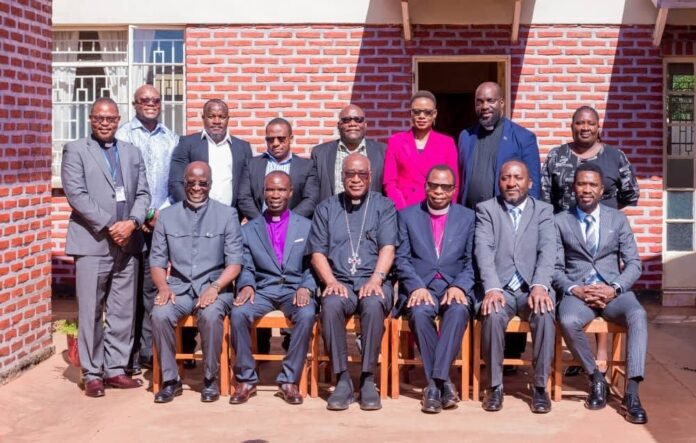
Church leaders from across India’s church spectrum launched the National Federation of Churches in India (NFCI) on May 8 in response to escalating anti-Christian violence and legal restrictions targeting the Christian community.

The federation was established during the Fourth National Ecumenical Bishops’ Fellowship Meeting at St. John’s National Academy of Health Sciences. Approximately 45 archbishops, bishops, church heads, and delegates attended, representing Catholic, Protestant, evangelical, Pentecostal, and independent churches.

The Rt. Rev. Dr. Vincent Vinod Kumar, Bishop of the Church of South India’s Karnataka Central Diocese, was elected as one of three founding Conveners. Cardinal Anthony Poola, Archbishop of Hyderabad and President of the Catholic Bishops’ Conference of India (CBCI), was elected inaugural Chairman. The other Conveners are Archbishop Joseph D’Souza of the Good Shepherd Church in India and Bishop Mar Joseph Kallarangatt, Chairman of the CBCI’s Office for Dialogue and Desk for Ecumenism.

Church leaders cited violent attacks on Christians — some reports indicate at least two per day nationwide — alongside anti-conversion laws in several states, efforts to seize church properties, and proposed amendments to the Foreign Contribution Regulation Act (FCRA). Leaders also expressed concern about a proposed Christian Welfare and Property Board, which they say would give the government control over church assets.

“Recognizing the urgent need for a united and collective response, Church leaders and representatives resolved to create a national ecumenical platform that would represent the Churches in India with one united voice,” the CBCI stated.

While several national Christian organizations exist in India, including the National Council of Churches in India established in 1914, church leaders said none had achieved full denominational representation or functioned specifically as a platform for bishops and heads of churches. The NFCI is designed to respect each member church’s distinct identity, theology, and governance while providing unified representation.

The federation will present a unified Christian voice to government institutions, address legal and property challenges, strengthen fellowship among church leaders, and advance ecumenical cooperation.

The CBCI described the formation as “a significant step towards Christian unity, a milestone in the ecumenical journey, and a new chapter in the fraternity and solidarity of the Churches in India”.

Keith Chen-Cheng Lee Elected Seventh Bishop of Taiwan

The Rev. Keith Chen-Cheng Lee, rector of Good Shepherd Church in Taipei, was elected the seventh bishop of Taiwan on May 9 during the diocese’s annual convention.

Lee will succeed the Rt. Rev. Lennon Yuan-Rung Chang, who announced his retirement plans during the diocese’s annual convention in May 2025 after serving as the sixth bishop since his consecration in February 2020.

The election followed a comprehensive discernment process that began in July 2025 when Bishop Chang formally called for the election of his successor. The diocese’s Bishop Search Committee announced three candidates in December: the Ven. Lily Ling-Ling Chang, archdeacon of the central deanery and rector of St. James’ Church, Taichung; the Rev. Keith Chen-Cheng Lee; and the Rev. Simon Tsai-Shin Tsou, rector of St. Peter’s Church, Chiayi.

The candidates participated in regional gatherings in Kaohsiung, Taichung, and Taipei during March and April to meet with clergy and laity across the diocese.

Following the election, Lee must complete The Episcopal Church’s consent process before his ordination and consecration. Presiding Bishop Sean Rowe is scheduled to ordain and consecrate Lee as bishop on November 7, 2026.

The Episcopal Diocese of Taiwan, also known as the Taiwan Episcopal Church, was founded in 1954 and became a missionary diocese in 1970 before achieving full diocesan status in 1988. The diocese is part of Province VIII of The Episcopal Church. The diocese elected its first Chinese bishop in 1965, marking a significant milestone in indigenous leadership. Lee will be the fourth Taiwanese bishop to lead the diocese, following Bishop John C.T. Chien (1988-2001), Bishop David Jung-Hsin Lai (2001-2020), and Bishop Chang.

In 2024, the diocese reported an average Sunday attendance of 669 persons.

Update: A press release from the Diocese of Taiwan received after we went to print:

The Episcopal Diocese of Taiwan elected the Rev. Keith Chen-Cheng Lee, rector of Good Shepherd Church, Taipei, as its seventh bishop on May 9, 2026, at the diocesan convention held at a Roman Catholic retreat center in Taichung.

One of three nominees, Lee was elected on the fourth ballot. Thirteen clergy votes and 27 lay votes were necessary for election on that ballot; Lee received 14 clergy votes and 27 lay votes.

The other nominees were the Ven. Lily Ling-Ling Chang, rector of St. James’ Episcopal Church, Taichung, and Rev. Simon Tsai-Shin Tsou, rector of St. Peter’s Church, Chiayi. The Episcopal observer was the Rt. Rev. Robert Fitzpatrick, bishop of Hawaiʻi.

Lee, 49, is married to Sindy Hsin-Yi Yeh, a church musician, and they have two children aged 20 and 17, both in full-time education. Lee graduated from Tainan Theological College with a Bachelor of Arts in social work in 1999 and a Master of Divinity in 2002. Growing up in Taiwan’s southern city of Kaohsiung, in a large extended Presbyterian family speaking Taiwanese, Mandarin Chinese and Japanese, Lee’s early experiences accompanying his father as he taught music and trained church choirs led to his great interest in church music.

In 2001, Bishop David J. H. Lai became bishop of Taiwan; one of Lai’s major concerns was a lack of young Episcopal clergy to take the church forward into the new century. Each semester, Lai would be invited by Tainan Theological College to preside at a BCP Holy Eucharist in the college chapel and to share with the students. Through this and with his father’s support, Lee felt called to transfer to the Taiwan Episcopal Church and was confirmed in 2002.  After two years of training, he was ordained a deacon in 2004 and a priest in 2005.  Assigned to serve at St. Peter’s Church, Chiayi from 2004-2011, one of the highlights for Lee was the time spent with Bishop John C. T. Chien (bishop of Taiwan 1988-2001), who had returned to his hometown of Chiayi in his retirement. Chien became a role model for Lee’s ministry as a church leader.  “Even though he was a bishop, he was more like a father, friend and elder to me.  I, too, strive to be always open to everyone, and to treat all with the same level of respect and impartiality.”

Lee’s childhood experiences of speaking Japanese and his three months in 2016 spent in Taiwan’s companion diocese of Osaka, Japan, have helped deepen the diocesan relationship with the Japan Anglican Church NSKK. He says, “Our churches face similar challenges; we have so much to learn from each other, and I hope this close partnership can continue to be a blessing to us all.”

Reflecting on these last seven years working with Bishop Lennon Y. R. Chang, including almost five years serving as an archdeacon, Lee says, “Bishop Chang’s passion for outreach and his love for the church inspire me to continue his legacy sharing the Gospel and helping the Taiwan Episcopal Church become more self-reliant, with a long-term goal of one day becoming an independent province within the Anglican Communion”.

Chang retires in April 2027, and pending consent of the majority of The Episcopal Church’s bishops and standing committees, Lee will be ordained and consecrated as bishop of Taiwan on Nov. 7, 2026, with Presiding Bishop Sean Rowe as chief consecrator.

The Diocese of Taiwan is part of Province VIII of The Episcopal Church.

Computer Scientist Susan Elias Named First Woman Principal of St. Stephen’s College, Delhi

St. Stephen’s College has appointed Professor Susan Elias as its 14th principal and first woman to lead the historic college in its 145-year history. The appointment was announced May 12 by the Rt. Rev. Dr. Paul Swarup, Bishop in Delhi in the Church of North India and chairman of the college’s Supreme Council. Professor Elias will assume office June 1, 2026, succeeding John Varghese, whose term concluded in February.

“The Supreme Council of the College is pleased to announce that Prof Susan Elias will take charge as the XIV Principal of the College and as its first lady Principal with effect from the 1st of June 2026,” the official notification stated.

The appointment represents a significant milestone for the college, which was founded February 1, 1881, by the Cambridge Mission to Delhi in conjunction with the Society for the Propagation of the Gospel. Named after Saint Stephen, the patron saint of Delhi, the institution operated as an all-male college from 1950 until 1975, when it became fully co-educational. St. Stephen’s College, affiliated with Delhi University, remains a religious foundation of the Church of North India, and is considered India’s premier private university.

Professor Elias brings extensive academic credentials to the position. A computer scientist specializing in artificial intelligence and deep technology research, she most recently served as Pro Vice Chancellor for Research at Chandigarh University in Uttar Pradesh from January to May 2026. Her career spans more than 34 years in academia, research, and leadership, including a previous role as Director of Research at Hindustan University.]

In interviews following the announcement, Professor Elias outlined an ambitious vision that seeks to bridge liberal arts education with cutting-edge technology. “We need to be AI-ready and quantum-aware,” she told the media, indicating plans to introduce an MSc in Quantum Computing, develop short AI courses for professionals including lawyers and journalists, and strengthen collaboration with the college’s distinguished alumni network.

The new principal emphasized her commitment to preserving the institution’s legacy while preparing it for contemporary challenges. “I will protect the legacy and make the institute AI-ready,” she stated, acknowledging the college’s reputation as one of India’s leading educational institutions.

The principal’s position had been officially vacant since March 1, following administrative discussions regarding the conclusion of the previous principal’s term.

Bishop Swarup, who has served as the tenth Bishop of the Diocese of Delhi since his consecration in October 2022, signed the official appointment notification. The Diocese of Delhi, part of the Church of North India, maintains its historic Anglican connection and continues to oversee the college’s spiritual mission and governance.

Hope for peace keeps Sudanese Anglican priest among his people

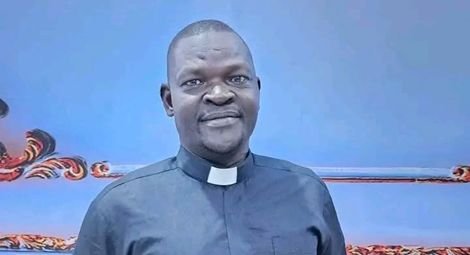
The Anglican priest is the only church pastor in the town, which recently absorbed thousands of internally displaced persons, fleeing war and famine in El-Fasher, the capital of North Darfur State, and the Zam Zam Camp on its outskirts.

The 45-year-old priest arrived in the town from El-Fasher, together with a group of Christians—including children and women—after bomb, gun, and drone attacks forced the closure of his church.

The group had stayed with Abudigin in the city, where he was the last priest standing when all other clerics had fled. Like sheep and their shepherd, the Christians had walked along with their priest, as they sought a safe refuge in Tawila.

“We are living in peace, but it’s difficult to get food or a place to stay,” said the priest from Tawila. “I am the only priest here and I can feel the struggles of the people.”

Abudigin is now caring for 117 families, each comprising 5-7 people, or approximately 500-700 people in Tawila.

The priest’s actions underline the challenges to peace that clerics go through when their communities are caught in conflict.

A critical refuge

The families, drawn from different denominations, assemble for services on Sundays, under a large lalob tree–Arabic for “desert dates” or “soapberry”—in one of the camps. Here, the congregation prays for peace, as they encourage each other, amidst challenges with basic needs such as food, shelter, and medicines.

The priest said meeting under the lalob tree carries a special meaning, as the tree symbolizes peace, hope, and resilience in Sudan and South Sudan. The trees are common venues for peace discussions among the Sudanese communities.

“The people have suffered a lot. So, we need to end this war,” said Abudigin, while describing this as a daily prayer for the congregation and other Christians in Sudan. “The people need peace. They also need something to eat immediately.”

He is, however, concerned that the brutal war is not getting enough international attention, despite the magnitude of the displacement, death, and destruction.

Last year, his resolve to stay with his followers in El-Fasher was strained when a stray bullet killed Roman Catholic priest, Fr Luka Jomo, on 13 June 2025. Abudigin had taken the priest to the hospital after he was hit by a bullet during an attack by the paramilitary Rapid Support Forces.

But while he should have left then, Abudigin instead kept his church open and assembled all Christians in one church to protect them from the random shooting, drone strikes, and bombings.

When an attack by the paramilitary killed two people within the church and injured several others, Abudigin also decided to leave, finally reaching Tawila.

The town became a critical refuge for internally displaced persons fleeing El-Fasher, as the war intensified in the city, triggering famine and disease.

The paramilitary had besieged El-Fasher for a brutal 18-month period starting in April 2024. The siege ended on 26 October 2025.

At the moment, 700,000 to 1 million people have found shelter in camps around Tawila, making it one of the world’s largest settlements for internally displaced persons.

The small town has remained peaceful in the three years of the Sudanese war. Now settled in town, Abudigin appeals: “Give the people food, help end the war. Everyone is tired of it.”

ACNA March 2026 Provincial Newsletter

Julian Dobbs

May 8, 2026

To the People of the Anglican Church in North America,

Grace to you and peace from God our Father and the Lord Jesus Christ.

As we approach the season of Ascension, we are reminded of the glorious truth that our Lord Jesus has ascended to the right hand of the Father, where He reigns in glory. In His ascension, we find our great hope: that He who conquered death is now our Great High Priest, interceding for us and empowering His Church to fulfill the Great Commission. Even as we navigate the complexities of our earthly life and the governance of our Province, we do so under the sovereign authority of Christ, the King of Kings.

It is my desire and intention to provide the province with periodic updates.  As we prepare over the coming weeks for a College of Bishops meeting June 15–17, 2026, in advance of our annual Provincial Council in Tulsa, Oklahoma, on June 17–19, 2026, there are a number of items that I am eager to share with you. 

First, it was a joy to see many of our Provincial Council delegates earlier today for our first of four provincial delegate orientations.  We are grateful for our delegates’ dedicated service to our church. We will offer similar preparation in the coming weeks for delegates serving at the specially called VIRTUAL Provincial Assembly on June 25 at 2 pm ET. 

During our time in Tulsa, the bishops will gather to exercise their episcopal responsibilities and address key matters currently before the Church. Additionally, the Provincial Council will consider important revisions to our Title IV disciplinary canons after nearly a year of public review.  We ask for your prayers for our bishops and delegates as they seek the mind of Christ in their deliberations and oversight. 

We will also share several encouraging updates on the life of our Province, including new data from our enhanced Congregational Report, and we will share a number of ministry highlights from our first-ever Annual Impact Report. These documents reflect the vitality and growth of our churches and the tangible ways the Gospel is transforming lives across North America.  These reports are very good news for which we give thanks to God. 

Disciplinary Updates 

In our ongoing commitment to communicate as clearly as possible about disciplinary matters, I want to acknowledge a few recent developments. First, the Court hosted the first of two scheduled pre-trial hearings in the matter regarding Archbishop Steve Wood yesterday on May 7, 2026. The Court will post any decisions or updates it may have on the Court for the Trial of a Bishop webpage, and we will post subsequent updates to the Archbishop Wood updates page. The next hearing is scheduled for May 20. The Court has set a trial date for July 20, 2026. 

Additionally, yesterday, the Board of Inquiry (BOI) convened to complete a review of presentments against Bishops MacClellan, Williams, and Nordstrom, formerly serving in the Special Jurisdiction of the Armed Forces and Chaplaincy under Bishop Derek Jones, has referred all three cases for ecclesiastical trial. Additional details are available on the SJAFC Updates Page. 

New Staff Appointments

Finally, I am delighted to announce several new members of our Provincial staff who will help lead us into this next season of ministry:

  • Fr. Tony Melton (Diocese of the Southeast – REC) joined us on April 24 as our Lead for Church Planting. He brings a wealth of experience and an entrepreneurial heart for the mission of the Gospel.
  • Marion Ahlers (Diocese of Pittsburgh) began her role as our new Senior Communications Manager on May 4, to help us better share the story of what God is doing in our midst.
  • Dcn. Kelley Munger, PhD (Anglican Diocese of the South), started her role as our new Director of Safeguarding initially in a part-time capacity beginning in mid-April.  She will join us full-time on May 18. Her expertise will be vital as we continue to ensure our churches are safe places for the vulnerable and offer meaningful counsel and direction to help us fulfill our moral duty to provide pastoral care to all people.

Please join me in welcoming these new leaders and in praying for our Province as we prepare for our time together at Provincial Council in Tulsa. In this season of unique challenges, we trust that God is faithful to provide. We hold fast to the truth in 2 Corinthians 9:10 that, “He who supplies seed to the sower and bread for food will supply and multiply your seed for sowing and increase the harvest of your righteousness”. May we continue to walk in a manner worthy of these promises.

Faithfully Yours in Christ,

The Rt. Rev. Julian Dobbs

Dean of the Province

Anglican Church in North America

Independent safeguarding audit of the Diocese of London published

An independent safeguarding audit of the Diocese of London has been published by the INEQE Safeguarding Group, as part of the Church of England’s national audit programme. Commissioned by the Archbishops’ Council in partnership with the National Safeguarding Team, the programme is auditing all dioceses by 2028. 

Overview of main findings

The London audit identifies progress in safeguarding arrangements across the Diocese. It notes that an “overwhelming majority” of respondents from the London Diocesan Fund workforce, parishes and wider worshipping community reported improvements, and said that the importance of safeguarding is now better recognised. INEQE found that a safeguarding culture is becoming “embedded” across the Diocese, with respondents describing a growing sense of confidence in reporting concerns.  

The audit also identifies clear areas where further work is needed. It notes that some victims and survivors do not experience safeguarding as sufficiently person-centred or trauma-informed, and emphasises the importance of ensuring that learning from training is consistently applied in practice. The audit concludes that, while the Diocese is well-led and progress has been made, further investment will be required to ensure safeguarding arrangements are robust and sustainable across the Diocese. 

The London College of Bishops have issued a joint statement responding to the recommendations of the report 

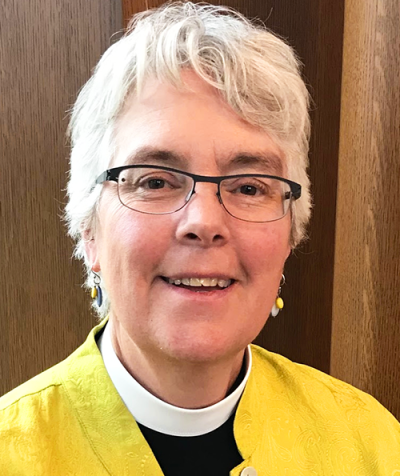
The Rt Revd Dr Emma Ineson, Acting Bishop of London and Bishop of Kensington, said: 

We are grateful for this independent audit of our safeguarding practices by INEQE. The report reflects the sustained work at all levels of the Diocese to strengthen our safeguarding culture and practice.  

Serving London through over 500 worshipping communities brings significant safeguarding responsibility, and I want to thank all of the safeguarding staff and parish officers for the dedication, professionalism and care they show in upholding high standards every day.

As the report recommends, we must ensure we learn and listen to a wider range of victim and survivor voices. This should involve scaling up our training programme to ensure safeguarding is increasingly person-centred and trauma informed.

“We must also increase investment so that safeguarding is properly resourced and consistent across the Diocese.”

Responding to the audit’s findings on St Paul’s Cathedral, The Very Revd Andrew Tremlett, Dean of St Paul’s, said:

We receive the findings of the audit with gratitude and a deep awareness of what still needs to be done. We are pleased that INEQE has recognised the progress made at St Paul’s, and I want to thank cathedral staff and volunteers for their dedication in ensuring this is a safe place to worship, work and visit. 

“We are acutely aware that safeguarding is never ‘finished.’ We owe it to victims and survivors, and to everyone who comes through our doors, to listen carefully, to be honest about what still needs to change, and to respond constructively to the recommendations made.”

Sarah McKimm, Independent Chair of the Audit’s Quality Assurance Group and Independent Chair of the Diocesan Safeguarding Advisory Panel, said: 

We welcome the external scrutiny INEQE has brought to the safeguarding arrangements in the Diocese of London.  The DSAP’s regular programme of scrutiny has observed significant improvements in recent years. The distributed leadership model, the effective risk management through safety plans, the mandatory induction training for new Parish Safeguarding Officers, the wide-ranging training on complex issues – these are examples of developments now reported and validated by the audit. 

The INEQE audit offers an opportunity to reflect on how far safeguarding has come within the Diocese and to thank all those who are part of that. But it also highlights important areas for action. Risks noted include an over-stretched workforce, structural complexity and inconsistency. As such, the audit presents a timely challenge to strengthen the arrangements and go yet further. 

“Parishes across the diocese play a central in role in communities and are trusted to be safe, compassionate places. The INEQE findings will be a touchstone for our future scrutiny programme which will be key to ensuring churches are supported in their vital work”. 

Background 

In August 2023, the INEQE Safeguarding Group was appointed by the Archbishops’ Council to carry out the next round of independent external audits of Church of England dioceses and cathedrals. The purpose of these audits is to ensure that dioceses, cathedrals and palaces are doing all they can to create environments where everyone feels safe, valued and respected. 

The independent audit programme will run for five years, from 2023 to 2028, with audits commencing in January 2024. Audits are now conducted in dioceses and cathedrals at the same time, having previously been carried out separately. 

As part of the Diocese of London audit, INEQE: 

  • collated and analysed 330 documents  
  • held nine focus groups and 70 engagement sessions involving 154 people, including church officers (staff and volunteers), external partners, victims and survivors 
  • received 2,390 anonymous survey responses from victims and survivors, children and young people, worshippers and church workers 

Further information about safeguarding at the Diocese of London, including how to raise a concern or access support, is available on the Diocese’s safeguarding page

Bishop Lopes takes on Australian portfolio as the Anglican Ordinariate streamlines operations

Pope Leo XIV has appointed Bishop Steven Lopes of the Personal Ordinariate of the Chair of Saint Peter to serve as apostolic administrator of Australia’s Personal Ordinariate of Our Lady of the Southern Cross, the Vatican announced May 11.

The appointment means Lopes will now oversee two of the three personal ordinariates established for former Anglicans who have entered full communion with Rome. The third ordinariate, Our Lady of Walsingham, serves the United Kingdom.

Lopes succeeds Archbishop Anthony Randazzo, who concluded his role as apostolic administrator of the Australian ordinariate after serving since July 1, 2023. Randazzo was named prefect of the Vatican’s Dicastery for Legislative Texts in March and will relocate to Rome after a three-month transition period.[3][4][2]

“As I conclude my time as apostolic administrator, I give thanks for the grace-filled growth of the Ordinariate and the faithful witness of its clergy and people,” Randazzo wrote on Facebook May 11. “It has been a privilege to serve the Ordinariate during this period of renewal and hope.”

Lopes was appointed apostolic administrator “sede vacante et ad nutum Sanctae Sedis”—with the see vacant and at the disposition of the Holy See. This suggests the Australian ordinariate leadership remains in transition, with no immediate plan to name a permanent ordinary.

In an email to ordinariate members, Lopes said he has been privileged to come to know the Australian ordinariate over the years and “to now be its custodian for a while”.

The California native has served as bishop of the Personal Ordinariate of the Chair of Saint Peter since 2016, when he became the first bishop appointed to lead the North American ordinariate. Ordained a priest in 2001, Lopes holds a doctorate in sacred theology from the Pontifical Gregorian University in Rome and served as an official at the Congregation for the Doctrine of the Faith from 2005 until his episcopal appointment. The ordinariate’s cathedral is in Houston.

The Personal Ordinariate of Our Lady of the Southern Cross encompasses 17 congregations across Australia, Japan, and Oceania. Personal ordinariates are non-territorial jurisdictions, similar to dioceses but defined by people with Anglican backgrounds rather than geography. Any Catholic may belong to or attend an ordinariate parish.

The Vatican reaffirmed its commitment to the ordinariates in March with the release of “Characteristics of the Anglican Heritage as Lived in the Ordinariates Established Under the Apostolic Constitution *Anglicanorum Coetibus*”. The document from the Dicastery for the Doctrine of the Faith highlighted distinctive features of Anglican patrimony preserved in the ordinariates, including an “ecclesial ethos” of active lay and clergy participation in church governance and emphasis on evangelization through beauty in worship, music, and art.

The appointment comes at a time of transition for the ordinariates globally, as they seek to establish stable governance structures while maintaining their distinctive Anglican heritage within Catholic ecclesiology. The North American ordinariate also underwent recent restructuring with the dissolution of its Canadian Deanery of St. John the Baptist. Canadian operations are now managed directly by the ordinariate’s chancery in Houston. 

According to GCatholic.org, eight ordinariate communities remain in Canada: St. John the Evangelist in Calgary, Alberta; Our Lady of Walsingham Chapel at St. Thomas in Maple Ridge, British Columbia; Blessed John Henry Newman Fellowship at St. Columba in Victoria, British Columbia; and five Ontario communities—St. Edmund, King and Martyr in Cambridge; Good Shepherd in Oshawa; Annunciation of the Blessed Virgin Mary in Ottawa; and St. Thomas More in Toronto. The restructuring reflects the ordinariate’s efforts to streamline governance across North America while maintaining pastoral care for geographically dispersed communities.

Catholic Training in Beijing Centered on Xi Jinping, Not the Pope’s Magisterium

Bishop Li Shan. From Weibo.

Catholics nationwide are being asked to implement the instructions of the 2026 national training session on the “Sinicization of Catholicism,” held in April at the Central Institute of Socialism in Beijing. The event and resulting directives offered yet another unvarnished demonstration of what “Sinicization” means in practice for China’s state‑managed Catholic Church. Nearly fifty representatives from the Patriotic Association and the official Bishops’ Conference were gathered not to study Scripture, theology, or the documents of the Holy See, but to deepen their ideological alignment with the Chinese Communist Party.

Bishop Li Shan, chairman of the Patriotic Association, opened the session by repeating the now‑standard formula: the “general program” of the “religious work in the new era” is to implement Xi Jinping’s directives, strengthen the rule‑of‑law governance of religion, and ensure that Catholicism reflects “Chinese characteristics.” But “Chinese characteristics” means firm adherence to Xi Jinping’s directives. The clergy was told to “learn deeply and understand thoroughly” Xi Jinping’s important statements on religion, to let “socialist core values” guide their preaching and “immerse” their pastoral work.

What was not mentioned—again—was any document of the Vatican or the Pope. Not a single reference to magisterial teaching appeared in the program, despite the Sino‑Vatican agreement, which Beijing regularly cites as proof of its goodwill. The silence is structural. The training’s purpose is to ensure that the clergy’s intellectual and spiritual priorities are reordered so that Party ideology stands above ecclesial authority. 

The Central Institute of Socialism in Beijing. Credits. 
The Central Institute of Socialism in Beijing. Credits

The curriculum made this hierarchy explicit. Participants studied Xi Jinping Thought, Xi Jinping’s statements on religious work, Xi Jinping’s thought on the rule of law, and the Party’s program for “strict governance of religion.” They also received instruction on managing online religious activity and on the “social functions” of religion within the framework of national goals. The only “tradition” emphasized was the one that reinforces cultural nationalism and political loyalty.

Even the field trip—to the China Archaeological Museum—served the same purpose: to cultivate “cultural confidence” and strengthen identification with the Party’s narrative of Chinese civilization. The message was that Catholicism, if it is to exist at all, must be re‑engineered to serve the state’s political project.

At the closing ceremony, representatives from Jiangsu, Hubei, and Guizhou dutifully echoed the political line. They pledged to “raise political standing,” “inherit the patriotic tradition,” and “advance Sinicization in depth and substance.” They promised to build a “theological system with Chinese characteristics” and to translate their learning into concrete measures for the Party’s vision of modernization and national rejuvenation.

What emerges is a model of Catholicism whose primary mission is not evangelization, sacramental life, or fidelity to the universal Church, but disciplined service to the Party’s agenda. The clergy are trained to preach Xi Jinping before they preach the Gospel, to study Party documents rather than encyclicals, and to embody culture as defined by the state. 

Whatever the Vatican’s original intentions in signing it, the 2018 agreement between the Holy See and the regime has not changed anything. The state-controlled Patriotic Church remains self-referential and understands its mission as a CCP propaganda branch for Chinese Catholics rather than as part of global Catholicism.

‘Antisemitism is evil, it must be confronted wherever it appears’, Bishop Lusa tells rally

Address to the Standing Strong: Extinguish Antisemitism rally on May 10, 2026

Friends,

We gather today because something vital is at stake, not only the safety and dignity of our Jewish brothers and sisters, but the soul of our society itself.

And we gather as people of many faiths and convictions. Jewish, Christian, Muslim, Sikh, Hindu, people of other traditions and people of none. We come with different political instincts, different histories, different experiences of the world. Yet we stand here together because some truths must transcend every division.

One of those truths is this: antisemitism is evil, and it must be confronted wherever it appears.

Antisemitism is not an accidental prejudice drifting through history like some natural wave beyond our control. It is a deliberately cultivated and deeply rooted system of hatred, one that has adapted itself across centuries, across ideologies, across nations and political movements. And wherever antisemitism flourishes, other forms of hatred are never far behind: racism, xenophobia, extremism, conspiracy, and they always metastasise into violence.

This is why we must resist the temptation of false equivalencies and whataboutism. Every form of hatred must be challenged. But antisemitism possesses a particular persistence and ubiquity that demands moral clarity. It mutates. It survives. It appears across the political spectrum and feeds on fear, grievance, and division.

And perhaps most dangerously of all, it grows when public voices choose outrage over responsibility; when influence is used not to strengthen the social fabric, but to tear it apart; when platforms capable of shaping culture become instruments for scapegoating, mockery, and suspicion.

Words matter. Platforms matter. Leadership matters.

When public figures trade in conspiracy, humiliation, and division, they do not merely inflame opinion; they corrode the moral foundations of a nation. Leadership that profits from division is not courage. It is recklessness. And rhetoric that dehumanises any community ultimately threatens every community.

History teaches us with terrifying consistency that when antisemitism rises unchecked, democracy itself begins to decay.

That is why the safety and freedom of Jewish citizens is not a Jewish issue alone. It is a democratic issue. A national issue. A human issue.

Antisemitism is not a problem for Jewish people to solve by themselves. It is a test of the moral health of the whole society. And the burden of confronting it cannot rest only on those who suffer from it. It belongs to all of us.

Because no society can call itself free while any community lives in fear.

For those of us shaped by faith, this conviction runs deep. The Jesus I follow was born Jewish, lived Jewish, worshipped as a Jew.

So for Christians, standing against antisemitism is not an optional act of generosity toward somebody else. It is a matter of spiritual integrity. 

We cannot claim to love Jesus while remaining indifferent to hatred directed toward the people from whom he came.

But this gathering is larger than any one tradition. Across our differences, we share a common responsibility: to protect one another’s humanity. To defend one another’s dignity. To refuse the politics of hatred and fear.

And that means we cannot be neutral in the face of antisemitism.

Dr Martin Luther King Jr once said:“We must learn to live together as brothers or perish together as fools.” Those words carry profound urgency today. Our destinies are bound together. The suffering of one community diminishes us all. The flourishing of one community strengthens us all.

So today I want to issue a call,  not only to sympathy, but to solidarity and allyship.

This solidarity starts with a commitment to listen to Jewish voices without defensiveness. Believe people when they tell you what hatred feels like. Interrupt antisemitism in daily life; in conversation, online, in workplaces, schools, places of worship, and public institutions.

Silence has never protected the vulnerable; it has only emboldened hatred.

And let us invest deeply in interfaith friendship, education, and encounter. Because when communities truly know one another, fear begins to lose its power. We need coalitions strong enough, compassionate enough, and courageous enough to build a different future together.

A future where Jewish life flourishes openly and joyfully. A future where hatred is not normalised. A future worthy of the words: Never Again.

But “Never Again” cannot remain a slogan we inherit from history. It must become a commitment we embody through action.

So let us be the generation that refuses indifference. Let us be the generation that interrupts hatred before it becomes violence. 
Let us be the generation that means it when we say: Never Again.

Let us leave this place resolved to build communities where Jewish people are not merely tolerated, but safe, valued, protected, and cherished.

Because ultimately this truth remains: No one is safe until everyone is safe.

Thank you.