Catholics nationwide are being asked to implement the instructions of the 2026 national training session on the “Sinicization of Catholicism,” held in April at the Central Institute of Socialism in Beijing. The event and resulting directives offered yet another unvarnished demonstration of what “Sinicization” means in practice for China’s state‑managed Catholic Church. Nearly fifty representatives from the Patriotic Association and the official Bishops’ Conference were gathered not to study Scripture, theology, or the documents of the Holy See, but to deepen their ideological alignment with the Chinese Communist Party.
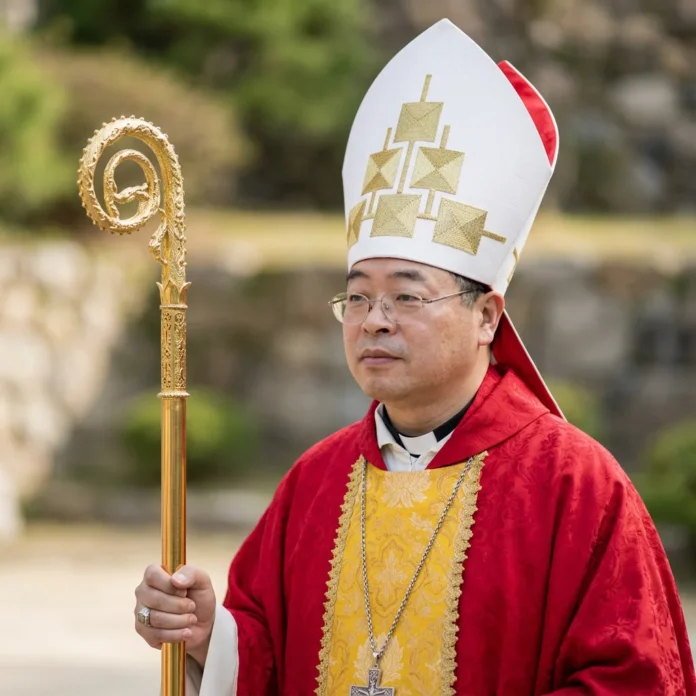
Bishop Li Shan, chairman of the Patriotic Association, opened the session by repeating the now‑standard formula: the “general program” of the “religious work in the new era” is to implement Xi Jinping’s directives, strengthen the rule‑of‑law governance of religion, and ensure that Catholicism reflects “Chinese characteristics.” But “Chinese characteristics” means firm adherence to Xi Jinping’s directives. The clergy was told to “learn deeply and understand thoroughly” Xi Jinping’s important statements on religion, to let “socialist core values” guide their preaching and “immerse” their pastoral work.
What was not mentioned—again—was any document of the Vatican or the Pope. Not a single reference to magisterial teaching appeared in the program, despite the Sino‑Vatican agreement, which Beijing regularly cites as proof of its goodwill. The silence is structural. The training’s purpose is to ensure that the clergy’s intellectual and spiritual priorities are reordered so that Party ideology stands above ecclesial authority.
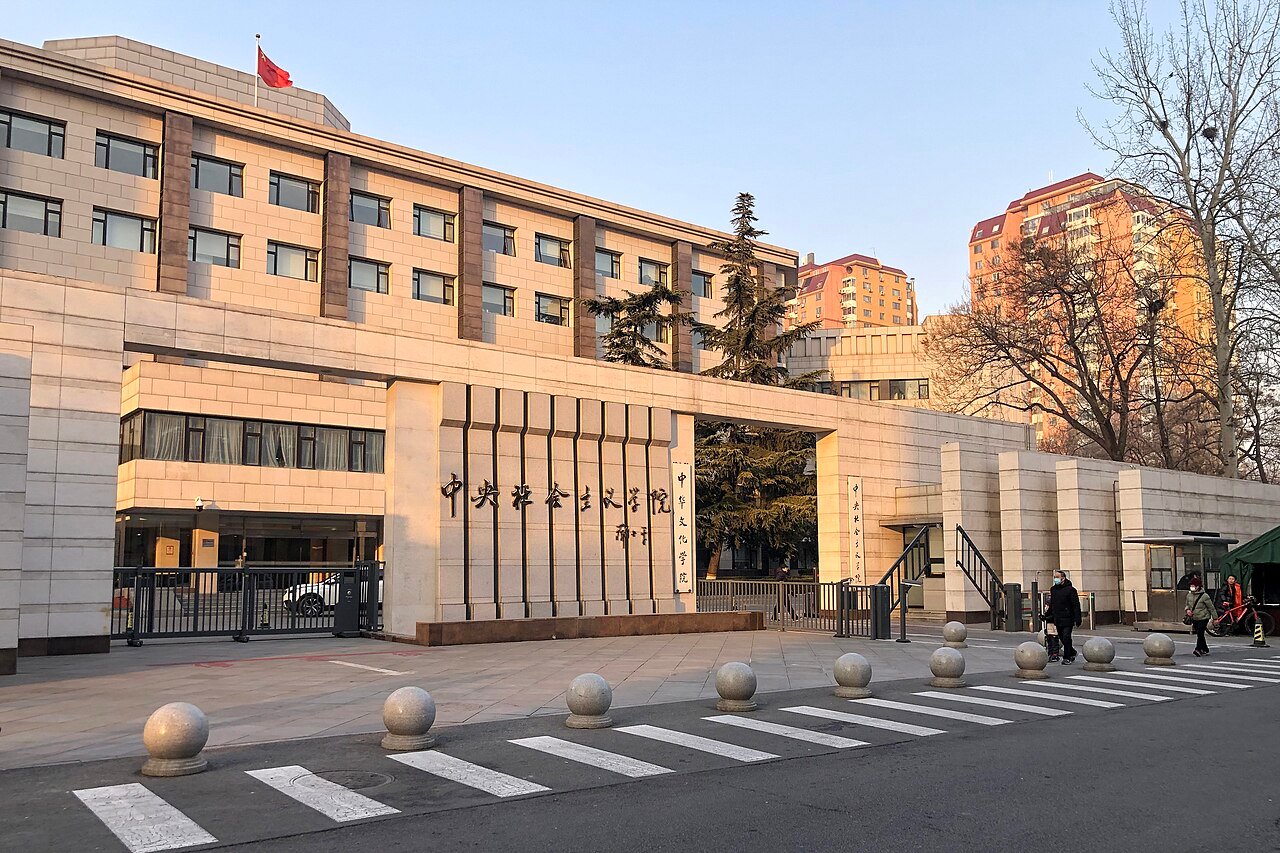
The curriculum made this hierarchy explicit. Participants studied Xi Jinping Thought, Xi Jinping’s statements on religious work, Xi Jinping’s thought on the rule of law, and the Party’s program for “strict governance of religion.” They also received instruction on managing online religious activity and on the “social functions” of religion within the framework of national goals. The only “tradition” emphasized was the one that reinforces cultural nationalism and political loyalty.
Even the field trip—to the China Archaeological Museum—served the same purpose: to cultivate “cultural confidence” and strengthen identification with the Party’s narrative of Chinese civilization. The message was that Catholicism, if it is to exist at all, must be re‑engineered to serve the state’s political project.
At the closing ceremony, representatives from Jiangsu, Hubei, and Guizhou dutifully echoed the political line. They pledged to “raise political standing,” “inherit the patriotic tradition,” and “advance Sinicization in depth and substance.” They promised to build a “theological system with Chinese characteristics” and to translate their learning into concrete measures for the Party’s vision of modernization and national rejuvenation.
What emerges is a model of Catholicism whose primary mission is not evangelization, sacramental life, or fidelity to the universal Church, but disciplined service to the Party’s agenda. The clergy are trained to preach Xi Jinping before they preach the Gospel, to study Party documents rather than encyclicals, and to embody culture as defined by the state.
Whatever the Vatican’s original intentions in signing it, the 2018 agreement between the Holy See and the regime has not changed anything. The state-controlled Patriotic Church remains self-referential and understands its mission as a CCP propaganda branch for Chinese Catholics rather than as part of global Catholicism.