Home Blog Page 1364

Seek peace with honor in TEC wars

IMG_0688-1.jpg

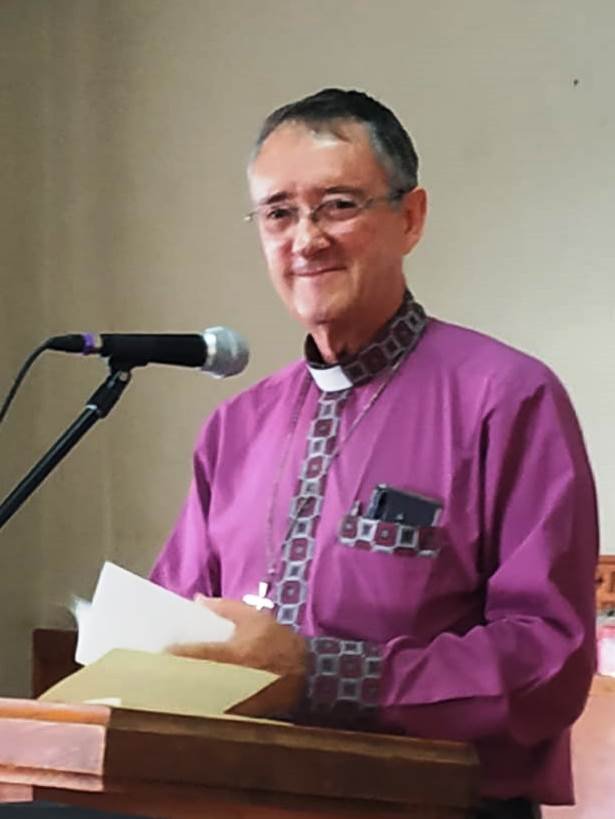
Toronto: Conservatives should seek terms for a negotiated peace to the Anglican wars, the Rev. Canon Christopher Seitz, Old Testament Scholar and Senior Research Professor at Wycliffe College in the University of Toronto and a leader of the Anglican Communion Institute told a conference marking the 50th Anniversary of the 1963 Toronto Pan-Anglican Congress.

The battle had been lost leaving conservatives as “strangers in their own church,” he said on 18 Sept 2013, and “the question for conservatives [now] is about encouragement. Will we be allowed to walk the well-worn paths of the faith,” he asked “or must we follow the trailblazers?”

While engaged in the preparation of a commentary on the Book of Jeremiah while on a study leave at the University of Goettingen, Prof. Seitz stated it was his custom to tread the paths in the forests surrounding the town.  Warming upon this theme, he told the conference participants gathered at St Paul’s Bloor Street in Toronto that traditionalists are being told the “paths of our fathers are wrong paths” and our understanding of God’s plan for salvation has reached its “sell-by date.”

Conservatives are being told they “must rewrite the maps and follow you even if we don’t trust it.”

They are being told their reliance on the faith held by their fathers was unreasonable. “Are we Amish, then, seeking to keep our buggies,” he asked. Yet “many Christians who came to faith used a map similar to our own. The overseas church recognizes our map,” he added.

But the political battled had been fought, and the conservatives had lost. It was “no longer a matter of saying the new ways are wrong. That point has passed. “

“We are in a new time. It is now here. We can see a before or after” in the Episcopal Church since the consecration of Gene Robinson and in the rise to power of Katharine Jefferts Schori. One group has been defeated” and “traditional Anglicans have lost a battle.”

There is now “no single understanding” of the faith. New Prayer Books will emerge that will enshrine the majority faction’s dogmas. The question for conservatives is not whether they can stop this but if the majority will allow “two rites [to] exist side by side.”

Prof. Seitz noted the “intermediate steps” taken at the 2012 to allow each bishop to approve or reject local gay marriage rites had “no long term integrity.”  The General Convention endorsed “diocesan autonomy here, but rejects it elsewhere.”

In the Episcopal Church and Anglican Church of Canada “we are in a genuinely new time. A time of accomplishment and tidying up,” Prof Seitz said, and this is “why encouragement matters” for conservatives remaining in these churches. “Others have left us and our blazing new trails,” but not all hear the call to depart.

Encouragement for the conservative remnant “would be allowing the status quo ante. Not a new church allowing traditional Anglicans” a home, but the existing churches giving conservatives “the moral space and right to exist.”

“Will dioceses and parishes be permitted to do what has been done before,” he asked. Will we be given the “moral space to conserve our traditions? Can bishops let go of parishes? Can dioceses choose to say no? Can we [as Episcopalians] remain a valued and trustworthy expression of the church catholic?”

To do this “it may be necessary to change the office of Presiding Bishop, reform the General Convention, rewrite the Book of Common Prayer” or enact other “constitutional reforms.”

But “if reforms are not enacted it would end the conservative presence” in the Episcopal Church, he said, adding that “both sides acknowledge the fact, at least in their political assemblies and are anxious to move on.”

A negotiated peace “would send a better signal to the world” than the picture painted of “legal battles” and vitriol. “If there is a parting of the ways it could be done in loving kindness.”

Prof. Seitz concluded his address with a quote from the Isaiah 8:16-17. “Bind up this testimony of warning and seal up God’s instruction among my disciples. I will wait for the Lord, who is hiding his face from the descendants of Jacob. I will put my trust in him.”

“Conservative parishes are waiting and trusting,” he said, as “God is hiding his face for a season for his own purposes.”

Tearful meeting at Lambeth with released Nigerian archbishop

Justin Welby meeting Ignatius Kattey at Lambeth Palace.jpg

The Archbishop of Canterbury has said that he was ‘moved to tears’ to welcome recently-released Nigerian archbishop Ignatius Kattey and his wife, Mrs Beatrice Kattey, to Lambeth Palace yesterday.

The Most Rev Ignatius Kattey, who is Dean and Archbishop of the Niger Delta Province, and Mrs Kattey were kidnapped on 6 September near their residence in the southern city of Port Harcourt. Mrs Kattey was released a few hours later, but Archbishop Kattey was held for more than a week.

Lambeth Palace staff lined the main staircase to applaud Archbishop and Mrs Kattey when they visited yesterday morning. They were accompanied their daughter, Josephine; Archdeacon John Chukwuemeka Adubasim, from the Diocese of Niger Delta North, who is on a study visit to the Diocese of Guildford; and Canon Ben Enwuchola, Chaplain to the Nigerian Congregation in London. They had tea with Archbishop Justin and then joined Lambeth Palace staff for Eucharist in the chapel, followed by lunch.

Speaking after the visit, Archbishop Justin said: “I was moved to tears to be able to welcome Archbishop Kattey and Mrs Kattey to Lambeth Palace after their ordeal, and to share Communion with us and all the staff. We rejoice at the love and grace of God which has renewed them in their freedom.”

Archbishop Kattey said yesterday that he had come to Lambeth Palace to thank Archbishop Justin for calling on the church to pray for his release, and to express his thanks to those in the Church of England and the Anglican Communion for their prayers. “They prove that God answers prayers,” he said.

Tearful meeting at Lambeth with released Nigerian archbishop

Justin Welby meeting Ignatius Kattey at Lambeth Palace.jpg

The Archbishop of Canterbury has said that he was ‘moved to tears’ to welcome recently-released Nigerian archbishop Ignatius Kattey and his wife, Mrs Beatrice Kattey, to Lambeth Palace yesterday.

The Most Rev Ignatius Kattey, who is Dean and Archbishop of the Niger Delta Province, and Mrs Kattey were kidnapped on 6 September near their residence in the southern city of Port Harcourt. Mrs Kattey was released a few hours later, but Archbishop Kattey was held for more than a week.

Lambeth Palace staff lined the main staircase to applaud Archbishop and Mrs Kattey when they visited yesterday morning. They were accompanied their daughter, Josephine; Archdeacon John Chukwuemeka Adubasim, from the Diocese of Niger Delta North, who is on a study visit to the Diocese of Guildford; and Canon Ben Enwuchola, Chaplain to the Nigerian Congregation in London. They had tea with Archbishop Justin and then joined Lambeth Palace staff for Eucharist in the chapel, followed by lunch.

Speaking after the visit, Archbishop Justin said: “I was moved to tears to be able to welcome Archbishop Kattey and Mrs Kattey to Lambeth Palace after their ordeal, and to share Communion with us and all the staff. We rejoice at the love and grace of God which has renewed them in their freedom.”

Archbishop Kattey said yesterday that he had come to Lambeth Palace to thank Archbishop Justin for calling on the church to pray for his release, and to express his thanks to those in the Church of England and the Anglican Communion for their prayers. “They prove that God answers prayers,” he said.

Govt shutdown may shutter military chapels

Army chaplain.png

If the government shutdown continues through the weekend, there will be no Catholic priest to celebrate Mass this Sunday in the chapels at some U.S. military installations where non-active-duty priests serve as government contractors.   
 
Military personnel enjoy, like all Americans, the First Amendment guarantee of the “Free Exercise” of their particular religious faith.  But because military personnel are considered a “captive audience,” the laws of our country require the government to provide access to that faith.  This is why we have a military chaplaincy.  This all becomes very clear when one thinks of a military family stationed in Bahrain or Japan.  They cannot walk down the street to the local synagogue, church, mosque, etc.
 
There is a chronic shortage of active duty Catholic chaplains. While roughly 25% of the military is Catholic, Catholic priests make up only about 8% of the chaplain corps. That means approximately 275,000 men and women in uniform, and their families, are served by only 234 active-duty priests.  The temporary solution to this shortage is to provide GS and contract priests.   These men are employed by the government to ensure that a priest is available when an active duty Catholic Chaplain is not present.  With the government shutdown, many GS and contract priests who minister to Catholics on military bases worldwide are not permitted to work – not even to volunteer.  During the shutdown, it is illegal for them to minister on base and they risk being arrested if they attempt to do so.
 
As an example, if a Catholic family has a Baptism scheduled this weekend at an Air Force base that is staffed by a GS or contract priest, unless they can locate a priest who is not a GS or contract priest, the Baptism is most likely cancelled.    If you are a Catholic stationed in Japan or Korea and are served by a Contract or GS priest, unless you speak Korean or Japanese and can find a church nearby, then you have no choice but to go without Mass this weekend.  Until the Federal Government resumes normal operations, or an exemption is granted to contract or GS priests, Catholic services are indefinitely suspended at many of those worldwide installations served by contract and GS priests.
 
At a time when the military is considering alternative sources of funding for sporting events at the service academies, no one seems to be looking for funding to ensure the Free Exercise rights of Catholics in uniform. Why not?
 
*John Schlageter is General Counsel for the Archdiocese for the Military Services, USA. 

South African bishops asked to issue pastoral care guidelines for gay unions

The Anglican Church of Southern Africa has urged its bishops to provide guidelines for giving pastoral care to same-sex couples who have entered civil unions under South African law.

The Church’s ruling Provincial Synod, currently meeting in Benoni, South Africa, on Friday adopted a resolution urging its Synod of Bishops to finalise guidelines “as soon as possible”.

The Church neither marries same-sex couples, nor ordains or licenses priests or deacons who live in same-sex unions. This is in line with the practice of the worldwide Anglican Communion.

However, in the words of the Right Revd Martin Breytenbach, Bishop of St Mark the Evangelist, during a debate at the Synod, “civil unions are a reality, whether we like it or not.”

Proposing the resolution, Bishop Breytenbach acknowledged he was on the “conservative” side of the debate. But, he continued, all God’s people needed pastoral care and “we have people in our church who are same-gender couples who regard themselves as married, even though I find it difficult to accept.”

The Right Revd Garth Counsell of Table Bay – from the diocese of Cape Town, which is seen as more open to recognising same-sex marriage – said the resolution was “not talking about same sex- marriage or whether we will do that or not.” It was rather about “confronting legal reality”.

“Within our membership we do have people who have exercised their right to be in committed civil unions, and the reality is that they are fully committed members of our church. We have a responsibility to be pastorally caring to people in our pews irrespective of who they are.”

Bishop Breytenbach said the guidelines being worked upon involved “living with tension”.

He referred to the church’s breadth of approaches to the issues it faces: on some, rulings might bind the whole church across Southern Africa. On others, individual dioceses could have discretion to adopt their own guidelines.

There might also be situations in which priests could exercise their own discretion, sometimes in consultation with their bishops, and some matters might be left to the individual consciences of church members.

He also highlighted the need to look at the guidelines within the wider context of the church’s approaches to marriage, divorce, polygamy and other related perspectives.

The Right Revd Jo Seoka, Bishop of Pretoria pointed to the human realities at stake. He referred to the pain expressed to him by a young man who wanted to marry his partner. The man accepted that a priest could not marry him, but he was hurt by the fact that his father, an Anglican parishioner, could not escort him down the aisle without breaching church norms.

Issued by the Office of the Anglican Archbishop of Cape Town
Inquiries: Ms Wendy Kelderman, 021 763 1320 (office hours)
The Revd Canon Dr Sarah Rowland Jones, 082 856 2082 (during Synod)


The full text of the resolution adopted by the Synod reads:

This Synod

1. Noting

1.1 The progress that has been made by the Synod of Bishops and various Dioceses in developing guidelines for pastoral ministry in response to Civil Unions, and to those who experience themselves as homosexual;
1.2 That we have accepted Resolution 1.10 of the Lambeth Conference 1998 as the basis for our engagement with the issues of human sexuality
1.3 That we are still not of one mind on these matters.

2. Affirms:

2.1 That God calls us to love and minister to all people, regardless of their sexual orientation, while at the same time upholding God’s standards of holiness;
2.2 That this is a highly complex and emotive area which affects many people deeply and has a far reaching impact on the mission of the Church.

3. Commits the Anglican Church of Southern Africa:

3.1 To journey together in humility and mutual respect as we seek God’s mind on the difficult issues of human sexuality;
3.2 To continue to engage in a process of listening to the whole variety of experiences and viewpoints so as to increase our understanding of these issues;

4. Resolves to

4.1 Respectfully request the Synod of Bishops to work towards finalising the Guidelines for pastoral ministry in response to Civil Unions as soon as possible.

South Carolina judge denies Episcopal Church request to expand lawsuit to include diocese standing committee members and trustees

Diocese’s Trustees and Standing Committee Members are Protected by Judge, Who Cites State Law to Declare They are Immune from Prosecution

CHARLESTON, SC, October 3, 2013 – South Carolina Circuit Judge Diane S. Goodstein released her decision yesterday that the Episcopal Church (TEC) and its local remnant, the Episcopal Church in South Carolina (ECSC) cannot expand their counterclaims against the Diocese of South Carolina to include almost two dozen parishioners who voluntarily serve as diocesan Trustees and members of the Diocese’s Standing Committee.

In her decision, Judge Goodstein wrote, “This court finds that the individual leaders whom Defendants seek to join as Counterclaim Plaintiffs are entitled to immunity” under state law. She also wrote that “adding the additional defendants would be futile.”

In the spring, TEC and ECSC had sought to broaden their lawsuit against the diocese to include dozens of diocesan volunteers, threatening to hold them financially liable. They filed to add these additional defendants to their lawsuit after attempting to move the entire matter to U.S. District Court, where a federal judge decided the issue would best be heard in South Carolina circuit court.

“We are extremely grateful that Judge Goodstein found the law protects innocent parishioners from the threat of legal action,” said Jim Lewis, Canon to Bishop Lawrence. “It is unfortunate that TEC felt the need to intimidate faithful parishioners whose only offence was their loyalty to the Diocese of South Carolina.”

Meanwhile, Judge Goodstein has scheduled an October 11 hearing on the case, at which she will hear several motions, including several filed by TEC and others.

The Diocese of South Carolina disassociated from the Episcopal Church last year.  Following the Diocese’s decision, 49 churches representing 80 percent of the Diocese’s 30,000 members voted to remain in union with the Diocese and not with TEC.

The Diocese has consistently disagreed with TEC’s embrace of what most members of the global Anglican Communion believe to be a radical fringe scriptural interpretation that makes following Christ’s teachings optional for salvation.

About the Diocese of South Carolina

The Diocese was founded in 1785 by the parishes of the former South Carolina colony.  Based in the Lowcountry of South Carolina, the Diocese is one of the oldest religious districts in the United States and counts among its members several of the oldest, continuously operating churches in the nation.

The real story behind our split with the Episcopal Church

Jim Lewis.jpg
Jim Lewis

Canon Jim Lewis of the Diocese of South Carolina reports on the reasons behind the withdrawal of the Episcopal Diocese of South Carolina from the General Convention of TEC