Sixty years after the Second Vatican Council published the conciliar Declaration Nostra aetate, the Dicastery for the Doctrine of the Faith, the Dicastery for Promoting Christian Unity, and the Dicastery for Interreligious Dialogue have published “A Journey of Hope.”
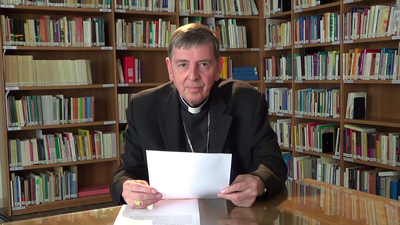
In the following interview with Vatican News, Cardinal Kurt Koch, Prefect of the Dicastery for the Promotion of Christian Unity, speaks about the Church’s desire for dialogue with people of other faiths.
Q: How important is an awareness of its Jewish roots to the Christian faith? How much ground remains to be covered for these roots to be rediscovered?
“As the sacred synod searches into the mystery of the Church, it remembers the bond that spiritually ties the people of the New Covenant to Abraham’s stock.”
Article 4 of Nostra aetate begins with these words, thus highlighting that the relationship with the people of Israel—the people of the Covenant—is an integral part of the Catholic Church’s self-understanding, for the Church could not comprehend itself without reference to Judaism.
Therefore, Nostra aetate calls to mind the Jewish roots of the Christian faith and speaks of a “common spiritual patrimony” shared by Jews and Christians. This heritage must be recalled and kept alive today, both in catechesis and in the proclamation of the Gospel.
A deeper understanding of the profound unity between the Old and New Testaments—within Christian thought and in the Church’s liturgy—can play an essential role in this regard.
Q: The Note acknowledges that “conflicts that have flared up in the Middle East in recent years have also left their mark on Jewish-Christian dialogue. Many bridges of communication have wavered…” How can we ensure that the condemnation of events that have occurred—and are occurring—in the Palestinian Territories does not overshadow the friendship and dialogue with the Jewish people?
Many Christians find themselves in a painful tension between their bond with the Jewish people and their ethical obligation toward those suffering in Gaza, especially the civilian victims.
We must speak honestly with one another about this new situation. For it is precisely in situations like these that it is essential not to let the dialogue break down, as Pope Leo XIV has emphasized: “Even in these difficult times, marked by conflicts and misunderstandings, it is necessary to continue the momentum of this precious dialogue of ours.”
The Church therefore recognizes its obligation to work for peace for both the Israeli and Palestinian peoples. The Holy See has always maintained the conviction that only the creation of two states can bring peace to the Middle East.
Q: Antisemitism on the rise worldwide. What is the duty of Christians in the face of this phenomenon, in light of the teachings of Nostra aetate?
One cannot be a good member of the family without appreciating and loving one’s mother. Judaism is the mother soil from which Christianity sprang. The Council therefore condemns antisemitism not only for political reasons but also out of “evangelical religious charity.”
This means that it is impossible to be a disciple of Jesus Christ and, at the same time, an antisemite. Every Pope since the Second Vatican Council has reaffirmed this with great conviction, and Pope Leo XIV has emphasized it yet again.