Wherever you are in England, whether in a bustling city, a market town or a quiet village, you will inevitably see the spire of a church. Inside, you’ll find architectural and historical marvels that tell the story of our nation and the Christian faith. These are places where the good news of Jesus Christ has been proclaimed over centuries – and where generations have encountered the love of God.
But our churches are far from artefacts of a bygone era. These are living, breathing spaces, open to all for services of worship or silent prayer. They are here for you on your happiest days and your saddest ones. They are destinations for pilgrims and tourists, as well as often doubling up as food banks, crèches and debt advice centres.
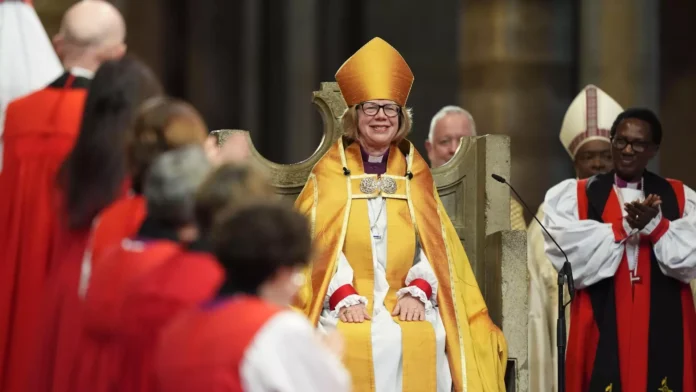
Since becoming Archbishop of Canterbury earlier this year, I have been visiting parishes around the Church of England. I have prayed in great cathedrals and tiny rural churches, and met congregations in cities, market towns and villages.
Wherever I have gone, I have been reminded that these buildings are the Church of England’s Christian presence in every community. They are wellsprings of love, places of welcome and living testimonies of faith.
Nearly half of all Grade I listed buildings in England are churches and cathedrals. With over 16,000 churches in total (12,500 of which are listed), the Church of England today has inherited something glorious.
In a world of polarisation and personalised algorithms, churches remind us that we are part of a story much bigger than ourselves, and that joy and meaning can be found in the slow unfolding of the experience of God in these sacred places. It is wonderful that people have been attending our churches in growing numbers for five years running. Praise be to God for that.
But we know that, for so many of our beautiful old buildings, with age comes wear and tear. In many of our churches, one can’t help but notice fundraising appeals for broken organs or crumbling roofs. These buildings, and the faithful congregations that sustain them, are in urgent need of our help.
This week the Church of England’s newly elected General Synod – inaugurated by the King as our Supreme Governor – met in London. His Majesty spoke of his deep Christian faith, his enduring support for our national Church and reminded us of our calling to offer love, faith and hope to every community.
But as we begin this new chapter, I want to be clear about the challenges we face. As I have visited local churches and communities, I have listened to their joys but also their struggles. Too many of our parishes are struggling – with priests looking after multiple churches, and congregations overwhelmed by fundraising for repairs. While national Church funding is very much welcomed by those who receive it, many don’t see how the benefits reach their area.
As I said in my presidential address, I believe we must be prepared to make tough decisions so that our resources are directed to where they can make the most difference – our parishes. Our clergy, churches and congregations are not a burden to manage; they are the treasures of the Church of England and we must value them as such.
The Church of England supports parishes and cathedrals in many ways, including through a dedicated planning system, grant schemes for repairs, conservation and improvements, building support officers, and resources for supporting care of God’s creation.
But I want to do more, including reviewing our current central funding arrangements for parishes and buildings. This is not about relieving local responsibility; it is about recognising our shared responsibility as custodians of this glorious inheritance. When repair costs threaten the future of a church serving its community, we are all affected.
I am committed to the parish, and to the role our church buildings play. But we cannot do this alone. Successive governments have recognised that churches stand at the heart of our common life. They witness moments of national joy and grief, and give character to our landscapes and continuity to our communities.
They host over 30,000 volunteer-run social action projects and contribute hundreds of millions of pounds each year to the tourism economy. They remind us that we belong not just to the present moment, but to one another. They predate postcodes, but they are in every place – from rural villages, to post-war suburbs, to city neighbourhoods.
Investing in church buildings is an investment in communities, heritage, social action and national wellbeing. Over half a century of partnership has seen public funding supporting all that churches are and do, and I am hugely grateful.
However, the recent cancellation of the long-valued government grant scheme that reimbursed VAT costs means churches face an immediate 20 per cent increase in building costs. This is an intolerable burden on congregations. It is already having an impact, especially in poorer areas.
The Government’s Places of Worship Renewal Fund is extremely welcome, particularly for its focus on places most in need. But I want Church and State to do much more together.
Cathedral and church building projects employ specialist craftspeople, support apprenticeship schemes that train young people, and are visible signs of investment and renewal in their communities. This is particularly impactful in deprived and rural areas that can feel forgotten. This offer of enhanced partnership with the Government is not just an appeal – it’s an opportunity.
Repairing and adapting historic buildings is the most sustainable form of construction, and the tax system should not discourage it. While VAT is zero-rated on new builds, repairs are taxed at 20 per cent, despite the environmental, economic and social benefits they bring. This is a perverse disincentive against care for heritage. A permanent change to the VAT rules could breathe fresh life into the construction sector and help sustain vital heritage and craft skills.
Alongside this, a capital funding scheme which builds on the Places of Worship Renewal Fund could provide churches with simpler access to significant repair funding. Delivered through partnership between the Government, the Church of England, other faith groups and denominations, and philanthropic funders, such a scheme would support a major national asset. It would build on the industry of previous generations and allow us to make our own contribution by strengthening the vital role churches play in the English story.
The blockbuster success of the British Museum’s Bayeux Tapestry exhibition, particularly among younger people, has shown the appeal of history and its ability to anchor our contemporary experience.