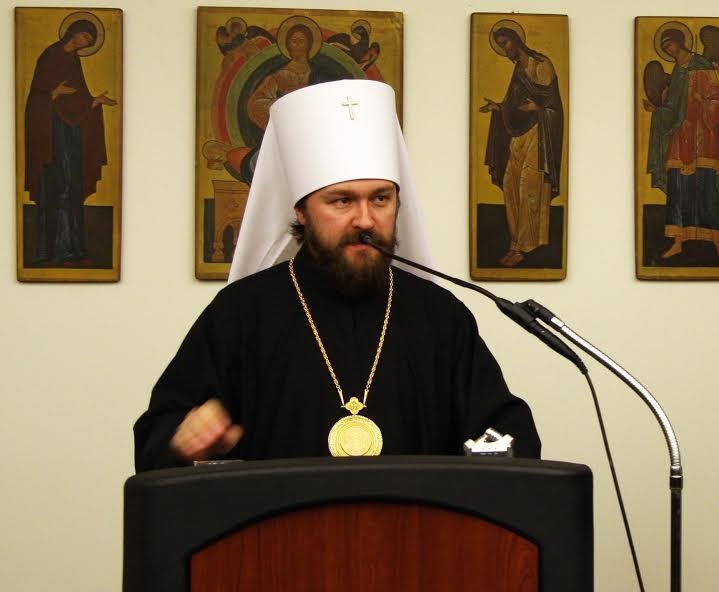
Police in the Czech Republic have officially confirmed that the white powder discovered in the car of Metropolitan Hilarion (Alfeyev), the former head of the Czech branch of the Russian Orthodox Church (ROC), was cocaine.
Against the backdrop of this incident, the senior cleric was urgently reassigned to serve in Brazil. This move effectively amounts to a “promotion” that could facilitate the establishment of new supply channels, given that South America remains the world’s leading producer of narcotics, while Hilarion’s new post is located in one of the key hubs for drug trafficking routes into Europe and Africa.
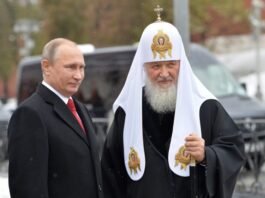
The emergency transfer of Metropolitan Hilarion to Brazil, rather than subjecting him to legal accountability or stripping him of his clerical rank, once again demonstrates that the Russian Orthodox Church functions as a political instrument of the Kremlin and is involved in facilitating and concealing the illegal and criminal activities of the Russian regime.
The discovery of cocaine in the vehicle of a high-ranking Russian cleric in the Czech Republic inevitably recalls the major 2018 scandal involving the seizure of nearly 400 kilograms of cocaine at the Russian Embassy in Argentina. Drug trafficking has long been viewed as one of the Kremlin’s shadow revenue streams, allegedly involving Russian intelligence services, diplomatic missions, and church structures, which enjoy varying degrees of immunity and operational capabilities.
The cocaine incident involving a Russian metropolitan deals a serious blow to the reputation of the Moscow Patriarchate in Europe and beyond, particularly given the Russian Orthodox Church’s persistent efforts to portray itself as a bastion of “traditional values and morality.”
Read it all at the Robert Lansing Institute