Realcommercial.com.au has described as a ‘vast portfolio’ a list of properties the North Queensland Anglican Diocese is selling to fund payments to survivors of abuse under the Federal redress scheme and to resize the church’s footprint.
“Colliers Townsville is handling the sale of the assets, which include three in the Cairns region, two in the Charters Towers region, four in the Townsville region and two in Bowen,” the property website reports.
“The Cairns assets include inner-city St Luke’s Anglican Church, historic Holy Trinity Anglican Church at Herberton on the Atherton Tablelands, and a modern residential house – St Alban’s Rectory – at Innisfail Estate.”
“Out west, the sale includes a high-set house with four bedrooms in Charters Towers, known as St Paul’s Rectory, and four adjoining lots totalling a combined 8092sq m in Pentland.
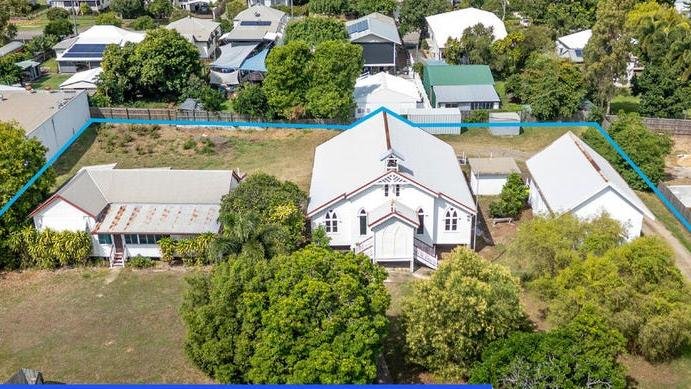
In Townsville, “Three adjoining properties at 30–34 Macrossan Street in South Townsville are also on the market, with the combined site coming in at 3036sq m.
“The site, which includes a church hall, church and a low-set dwelling is known as the St John’s Anglican Church Precinct, according to the heritage register.”
The Other Cheek previously reported that St Matthew’s Anglican church in Mundingburra, a suburb of Townsville, has been listed for sale.
The Other Cheek understands that the payments to survivors are redress payments, which means there are a large number of abuse survivors involved, as redress payments are capped. The abuse mostly relates to children’s homes.
The diocese has paid $9m+ in redress claims and expects $8m to $15m in further claims. +
The diocesan website reports, “As many in our diocesan community will know, the Anglican Diocese of North Queensland is currently undertaking a court-supervised renewal process. This process is intended to help us meet our obligations, restore financial stability, and support a sustainable future for ministry across the region.
“As part of this process, careful consideration will be given to how the Diocese’s assets are managed, including the potential sale of selected properties. We have been blessed with property resources that, in some cases, are greater than we can realistically maintain or use. This creates an opportunity to reflect responsibly on how these assets may help us meet our obligations, while also supporting the future of ministry across the Diocese.”
Answering a FAQ about the diocese being placed in receivership, the website says, “Receivership was necessary because the Diocese did not have sufficient financial capacity to meet its obligations to survivors of historic abuse under the National Redress Scheme. It provides a structured and transparent process under court supervision, with a framework to stabilise finances, meet obligations, strengthen governance, and support long-term continuity.”
North Queensland’s diocesan renewal plan seeks to solve more than the redress payments, setting out its aim: “The change process has shifted to being mission-led, not asset-led. Property, governance and administration are being reshaped to support ministry now and into the future, not the other way around.”
The renewal plan states the diocese has “Too many sites. The current footprint no longer reflects clergy numbers, congregation size, financial capacity or future needs.”