The Anglican Council in Malawi has announced the creation of three new dioceses, increasing the number of Anglican dioceses in the country from four to seven. The decision was announced at a 28 August press briefing at St Thomas Anglican Church, Lilongwe, by the Most Rev Albert Chama, Archbishop of Central Africa and Bishop of Lusaka.
The new dioceses — Likoma, Lake Malawi, and Central Highlands — are to be carved from the present Diocese of Lake Malawi. The transition is expected to begin with the appointment of three vicars general in September, followed by elective assemblies to choose bishops in October. The new dioceses are scheduled to begin operating at the start of 2027.
The Anglican Church in Malawi presently consists of four dioceses within the Church of the Province of Central Africa: Lake Malawi, Northern Malawi, Southern Malawi, and Upper Shire.
The existing Diocese of Lake Malawi, headquartered in Lilongwe, has covered a particularly broad part of the country. Its present bishop, the Rt Rev Daniel Kalonga, was elected in April 2025 after serving as the diocese’s vicar general and rector of St Thomas Church, Lilongwe. He was consecrated in July 2025 as successor to the Rt Rev Francis Kaulanda.
The new plan appears intended to bring episcopal oversight and diocesan administration closer to congregations across central and lakeshore Malawi. Church spokesmen have described the change as a means of taking “the gospel closer to people.”
The new diocese of Central Malawi will be taken from the current Diocese of Lake Malawi, and will be centered on Lilongwe and Dedza. Bishop Kalonga will be translated from Lake Malawi to become the first bishop of the new diocese.
The Diocese of Central Highlands will include the Kasungu and Dowa; other districts may be confirmed in the formal diocesan instruments. The Diocese of Lake Malawi, will be centered around Lake Malawi, while the Diocese of Likoma will be based around the lake and will be based in Likoma.
The proposed Diocese of Likoma carries special historical resonance. Likoma Island in Lake Malawi was a major center of the Universities’ Mission to Central Africa, the Anglican missionary society formed in the wake of David Livingstone’s appeal for Christian mission and opposition to the slave trade in Central Africa.
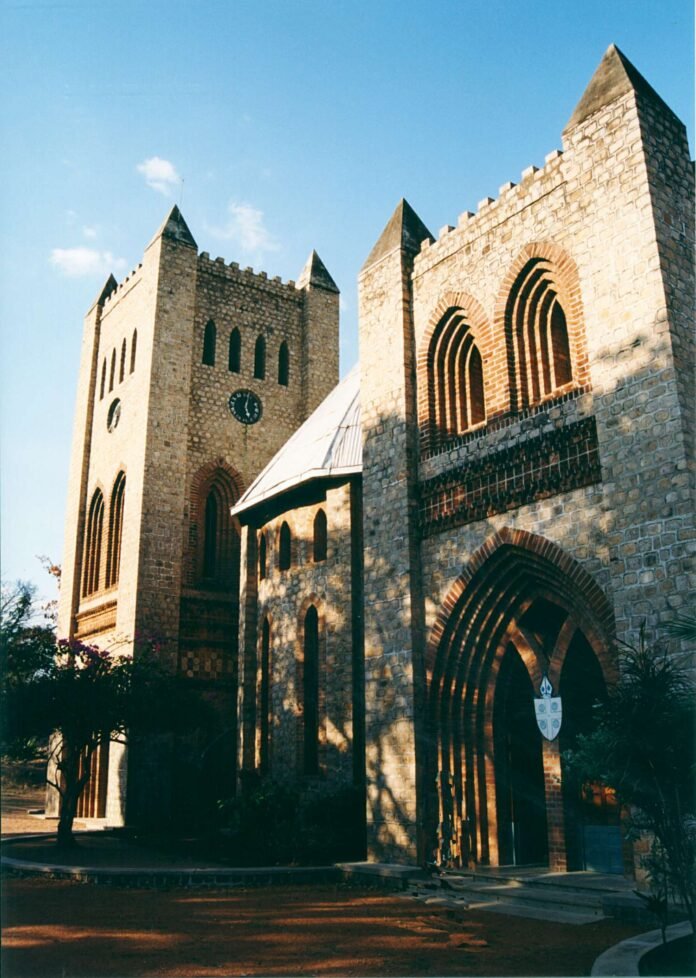
St Peter’s Cathedral on Likoma Island, constructed between 1903 and 1911, remains one of the most conspicuous symbols of that inheritance. The island was formerly the seat of the Diocese of Nyasaland, and later of the Diocese of Likoma, before Anglican structures in Malawi were reorganized over the twentieth century. The establishment of a new diocese bearing the Likoma name therefore represents not simply an administrative adjustment but, in a sense, the restoration of a historic Anglican identity centered on the lake.
The Diocese of Northern Malawi itself was formed out of Lake Malawi in 1995, illustrating a longer Malawian pattern in which growth and geographic distance have led to the division of large dioceses. Northern Malawi is currently led by the Rt Rev Fanuel Magangani, its third bishop.
Questions remain to be answered about the final diocesan borders; the designation of cathedral churches; the treatment of clergy, property, schools, and diocesan institutions; and the process by which the dioceses will become financially and administratively viable.