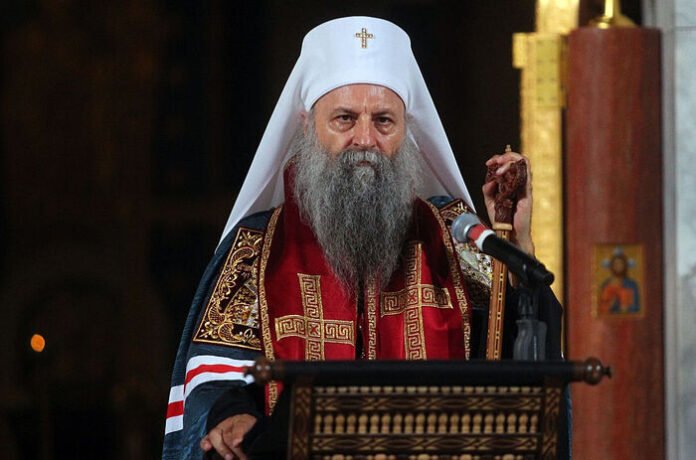
A Slovenian court has convicted the Patriarch of the Serbian Orthodox Church on charges of workplace harassment, handing down a suspended prison sentence and fine in a case that has reignited debate over the limits of state authority in church governance.
The District Court in Ljubljana on 10 July 2026 ruled that Patriarch Porfirije was guilty of harassment arising from his decision, while Metropolitan of Zagreb and Ljubljana, to transfer a priest to another parish. The court imposed a four-month suspended prison sentence and a €10,000 fine.
The Holy Synod of the Serbian Orthodox Church denounced the judgment on 13 July 2026 as “scandalous” and procedurally flawed, stating the Patriarch had not been notified of the proceedings nor given the opportunity to respond. It has advised him not to appeal what it described as a “Kafkaesque process.”
The case stems from a long-running dispute with former priest Željko Lubarda, who alleged sustained psychological pressure after refusing a transfer order during a conflict involving reported financial irregularities by another cleric. A Slovenian labor court had previously found Lubarda to be the victim of severe workplace bullying, citing dozens of incidents, and that ruling formed the basis of the criminal indictment filed in January.
In its response, the Synod asserted that the court had disregarded the Church’s “inalienable canonical right” to appoint and transfer clergy. It argued that this authority is protected under the Church’s statutes, Slovenia’s religious freedom laws, its agreement with the Serbian Orthodox Church, and prior rulings of the Constitutional Court. Church officials also pointed to media leaks ahead of the Holy Assembly as evidence of a coordinated campaign against the Patriarch.
Born Prvoslav Perić in 1961, Patriarch Porfirije was tonsured at the Visoki Dečani monastery and educated in Belgrade and Athens. He gained a reputation for fostering reconciliation in the former Yugoslavia prior to his election as Patriarch in February 2021. Serbian President Aleksandar Vučić condemned the verdict as “shameful,” saying the Patriarch had been convicted for actions he did not commit.
The underlying dispute reflects a familiar pattern. Lubarda had reported suspected embezzlement by another priest at the direction of a previous metropolitan. After refusing reassignment, he was removed from ministry and ultimately deposed by ecclesiastical courts for disobedience, a judgment upheld on appeal. Civil courts, however, took a different view of the conduct surrounding the transfer.
The case highlights a recurring fault line also seen in Anglican contexts, where disputes over clergy discipline, safeguarding, and employment have drawn civil authorities into questions traditionally governed by canon law. The Serbian Synod’s decision not to engage with the legal process signals its refusal to concede jurisdiction in what it regards as an internal ecclesiastical matter.
While the suspended sentence is unlikely to result in imprisonment, it may have practical consequences for the Patriarch’s ability to travel to Slovenia. More broadly, the ruling underscores the unresolved tension between civil oversight and ecclesial autonomy—particularly when secular courts assert authority over the governance of clergy.