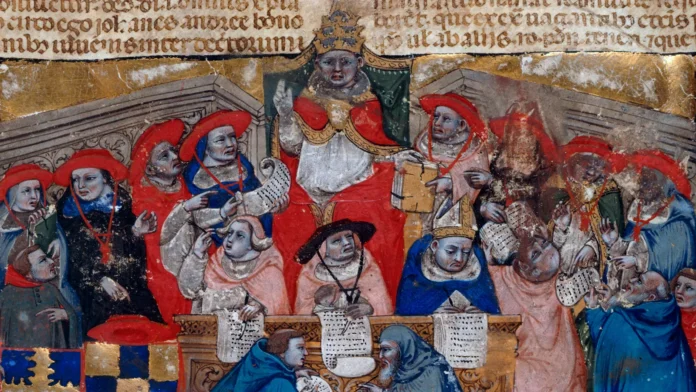
Bad bishops are not a new problem. Bad doctrine promoted by those charged to guard the faith is not a new problem either. What is new, at least for many traditionalists in the Episcopal Church, is the exhaustion that follows years of controversy, litigation, decline, and the wearying sense that every General Convention or episcopal election will bring another test of conscience.
The temptation is understandable: walk away. Find a purer body, a safer jurisdiction, a parish where the fight is over. But the Anglican answer should be slower, sterner, and more catholic. The first duty of a faithful Episcopalian is not escape, but fidelity. One may have to resist. One may have to protest. One may even have to disobey a particular command that contradicts the Word of God. But one should not make separation the default proof of seriousness.
This is not an argument for staying no matter what. That would be servility, not Anglicanism. Fidelity is owed first to Jesus Christ, to the Holy Scriptures, and to the apostolic gospel.
If remaining in a particular parish, diocese, or institution requires the denial of Christ, complicity in sin, or the surrender of the gospel, then conscience has reached a grave boundary. My own journey through the Episcopal Church over the past thirty years has brought me hard up against this boundary, compelling me to leave the Diocese of Pennsylvania, denying me parish calls, blocking preference, promotion and prestige as it is measured among clergy in the church
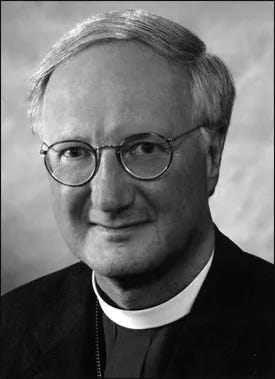
But many traditionalist Anglicans are not yet being asked to deny Christ. They are being asked to endure a confused and often faithless ecclesiastical environment while continuing to preach, pray, teach, baptize, absolve, feed, and bury in the name of Christ.
The Anglican formularies give us a better grammar. Article XIX defines the visible Church not by the personal quality of its rulers, but as “a congregation of faithful men, in which the pure Word of God is preached, and the Sacraments be duly ministered according to Christ’s ordinance”. That definition is bracing. It tells us to look first for Word and Sacrament. It does not tell us to flee whenever ecclesiastical authority becomes confused, compromised, or cowardly.
An Evangelical Anglican will rightly say that Article XIX cuts both ways. If the pure Word of God is not preached and the Sacraments are not duly administered, then ecclesiastical branding cannot make a church healthy. But the Article requires concrete judgment, not abstract denunciation. One must ask whether, in this parish, at this altar, in this pulpit, Christ is still preached and given. The Episcopal Diocese of Central Florida remains a place where Christ is still preached and given. The sins of General Convention or the folly of a bishop do not automatically erase the Church’s marks wherever the Creed is confessed, the Scriptures are read, and the Sacraments are administered according to Christ’s ordinance.
Article XX is just as important, because it refuses both anarchy and ecclesiastical absolutism. The Church has “power to decree Rites or Ceremonies, and authority in Controversies of Faith,” yet it is “not lawful for the Church to ordain anything that is contrary to God’s Word written”.
That is classical Anglicanism in miniature. The Church has real authority, but it is ministerial, not magical. Its authority is bound by Scripture. Therefore the faithful Episcopalian owes the Church reverence, patience, and obedience, but not surrender of conscience to false teaching.
Article XXVI speaks even more directly to our moment. It says that “in the visible Church the evil be ever mingled with the good,” and that sometimes “the evil have chief authority in the Ministration of the Word and Sacraments”. Yet the Article concludes that the ministry may still be used, because ministers act not “in their own name, but in Christ’s,” and the grace of God’s gifts is not diminished when the sacraments are received by faith. That is not an excuse for wicked clergy. It is a warning against making our access to Christ depend upon the moral or doctrinal heroism of every bishop.
Here again the Evangelical warning must be heard. Article XXVI protects the efficacy of Christ’s ordinances; it does not command believers to sit passively under a false gospel. A wicked minister does not invalidate the sacrament, but a false teacher can still imperil souls. Therefore the faithful Episcopalian must hold two truths together: Christ’s gifts are not nullified by unworthy ministers, and Christ’s sheep must not be fed poison.
The Prayer Book deepens the same point. In the Baptismal Covenant, Episcopalians promise to “continue in the apostles’ teaching and fellowship, in the breaking of bread, and in the prayers”. The order matters. Apostolic teaching is not separable from fellowship, Eucharist, and prayer. To remain is not to approve every error. To remain is to keep one’s baptismal post: learning, praying, receiving, repenting, serving, and bearing witness.
The Ordinal also tells us what bishops are for, and therefore what we may rightly expect of them. In the Episcopal Church’s rite for the ordination of a bishop, the bishop is charged “to guard the faith, unity, and discipline of the Church” and to “proclaim Christ’s resurrection and interpret the Gospel”. The newly ordained bishop receives the Holy Scriptures with the charge: “Feed the flock of Christ committed to your charge, guard and defend them in his truth, and be a faithful steward of his holy Word and Sacraments”. When bishops fail, faithful Episcopalians are not imagining a grievance. We are measuring bishops by the Church’s own vows.
But that same Ordinal also prevents us from treating the episcopate as a personality cult. Bishops are to obey Christ and serve in his name, and their office exists to feed Christ’s flock and steward Christ’s Word and Sacraments. They are not owners of the Church. They are not creators of doctrine. They are not authorized to replace the apostolic faith with the ideology of the hour.
Bishop John Bauerschmidt of Tennessee reminds us that Richard Hooker helps here. Hooker gives Scripture “the first place both of credit and obedience,” then what can be concluded by reason, and only after that “the voice of the Church”. Hooker’s hierarchy does not make the individual Christian a law unto himself. It does, however, forbid the Church from demanding that Christians call darkness light simply because a synod, bishop, or commission has said so.
The Church of England homiletic tradition says much the same thing in a more severe register. A Church Society edition of the Homily against Disobedience and Wilful Rebellion says Christians may not obey rulers or any authority, “even our own fathers,” if commanded to do anything contrary to God’s commandments, and in that case must say with the apostles, “We must obey God, rather than human beings”. But the same tradition rejects violent, disorderly, or rebellious resistance and calls Christians to patient suffering rather than sedition. Transposed from civil to ecclesial life, this is a demanding discipline: refuse falsehood, but do not make rebellion your spirituality.
This is also a missionary discipline. Evangelicals are right to ask whether institutional confusion damages evangelism. It does. A church that speaks with two voices about sin, grace, repentance, and salvation harms both the faithful and the seeker. But it does not follow that departure is always the best missionary act. A parish that remains, preaches Christ crucified, catechizes children, visits the sick and prisoners, buries the dead, and celebrates the Eucharist reverently may be a clearer evangelical witness than another separation announced in the language of purity. In my rural county in north central Florida, the Episcopal Church does this work without hindrance.
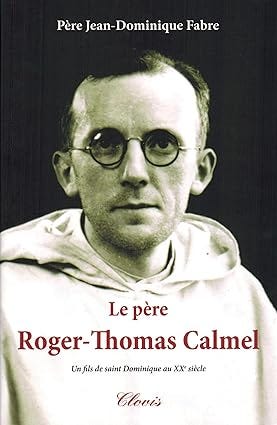
This is where the French Dominican Roger-Thomas Calmel is unexpectedly useful for evangelical Episcopalians. Calmel wrote from within a Roman Catholic framework and spoke about the pope in ways we cannot simply adopt. Yet his central spiritual insight is profoundly catholic: Christ is the Head of the Church, and all visible authority is derivative, limited, and accountable to him.
In the Rorate Caeli essay “The Pope is Just the Vicar,” Calmel is presented as teaching that “the Head of the Church is one, our Lord Jesus Christ,” who is “always infallible, always sinless, always holy”. That premise should be even easier for Anglicans than for Roman Catholics. We do not confess an infallible diocesan bishop, presiding bishop, General Convention, Lambeth Conference, or archbishop of Canterbury. We confess Jesus Christ as Lord, and every office in the Church is judged by its conformity to him.
Calmel’s next move is equally valuable. He does not say that bad leadership abolishes visible order. Rather, he says the Christian’s interior life must be directed to Jesus Christ and not to the pope, while still embracing “the Pope and the hierarchy” in their proper place.
A faithful Episcopalian can translate this readily: our spiritual life is directed to Christ, not to bishops, conventions, parties, networks, pressure groups, or online polemics. We do not remain because bishops are reliable. We remain because Christ is.
Calmel also gives us a way to resist without despair. The Rorate essay quotes him to the effect that “the Church … is not the mystical body of the Pope,” but “with the Pope, is the mystical body of Christ”.
For Episcopalians, the equivalent is clear. The Church is not the mystical body of the Episcopal Church, the House of Bishops, Canterbury, GAFCON, or any continuing jurisdiction. The Church is the Body of Christ. That conviction allows us to resist errors in our own household without pretending that Christ has abandoned his people.
Calmel’s teaching is especially strong on obedience. He insists that obedience is real, but “far from being unconditional,” and that it must be practiced “in the light of theological faith and natural law”. This is close to Article XX’s Anglican principle that the Church may not decree anything contrary to God’s written Word. Obedience is Christian when it is ordered to truth. Obedience becomes servility when it requires complicity in falsehood.
Calmel therefore distinguishes fidelity from compliance. The Rorate essay gives his severe but necessary line: “We are docile children of the Pope, but we refuse to enter into complicity with the papal directives that lead to sin”.
An Anglican version would say: we are loyal children of the Church, but we refuse complicity with episcopal or synodical directives that lead away from Christ, Scripture, and the apostolic faith.
The positive force of Calmel’s teaching is ascetical as much as ecclesiological. In the same Rorate essay, the faithful are told to orient the interior life more strongly to Christ, feeding on apostolic tradition, dogma, catechism, prayer, and penance.
That is not the program of a crank. It is the program of a penitent. The faithful do not overcome bad bishops by becoming ecclesiastical consumers. They overcome by becoming saints.
For traditionalist Episcopalians, then, remaining faithful should mean at least seven things.
First, stay where Word and Sacrament remain available. Article XIX gives the marks: the pure Word preached and the Sacraments duly ministered according to Christ’s ordinance. If those gifts are present, do not despise them because the wider institution is confused.
Second, refuse false teaching clearly but lawfully. Article XX says the Church may not ordain anything contrary to God’s Word written. That means clergy and laity may say no when conscience and Scripture require it, but they should do so as Christians under discipline, not as ecclesiastical free agents.
Third, recover the Prayer Book as a school of resistance. The Baptismal Covenant calls the faithful to continue in apostolic teaching, fellowship, Eucharist, and prayer. A parish that says the daily office, teaches the Scriptures, celebrates the Eucharist reverently, and forms children in the faith is already resisting the acids of the age.
Fourth, hold bishops to their vows without hating them. The Ordinal charges bishops to guard the faith, unity, and discipline of the Church and to defend the flock in the truth of Holy Scripture. Faithful Episcopalians should quote those vows, pray them over their bishops, and appeal to them when bishops fail.
Fifth, distinguish staying from surrendering. Calmel’s great contribution is the insistence that the faithful can remain attached to the visible Church while refusing complicity in falsehood. That is not cowardice. It may be harder than leaving.
Sixth, refuse quietism. Remaining faithful is not sitting still. It means forming clergy and laity, teaching doctrine, writing and speaking publicly, voting in convention, strengthening orthodox clergy and lay networks, appealing to the Church’s own formularies, withholding cooperation from falsehood, and building parishes where the faith is actually practiced.
Seventh, protect the vulnerable. Families, seminarians, ordinands, and wounded parishioners should not be sacrificed to institutional loyalty. Sometimes the right answer is to move to a faithful parish or diocese, seek safer pastoral oversight, find better theological formation, or refuse a diocesan program that corrodes faith. Remaining in the Episcopal Church does not require remaining in every spiritually dangerous setting.
There may be extreme cases in which a Christian concludes that remaining in a particular parish, diocese, or jurisdiction is no longer possible. Conscience is not a theatrical prop, and no one should pretend that every institutional situation is spiritually safe. But departure should be a grave last resort, not the badge of seriousness. Too often we have treated separation as proof of orthodoxy, when the harder proof may be long obedience in a compromised communion.
Nor should “schism” be used as a club against every troubled conscience. There are times when those who leave a corrupt body are not the authors of division but witnesses against it. Still, the catholic instinct is to preserve communion where communion can be preserved without denying Christ. The burden of proof rests on those who would make separation ordinary.
The faithful Episcopalian who stays should not stay because the Episcopal Church is healthy. He should stay because baptism is not a mood, because the Eucharist is not a political reward, because the parish still needs fathers and mothers in the faith, because children must be catechized, because the dead must be buried, because the Scriptures must be read, because the Creeds must still be said, and because Christ has not resigned his headship over his Church.
Bad bishops may test the Church. Bad doctrine may wound the Church. But they do not become lord of the Church. The answer to bad shepherds is not always to scatter the sheep. Sometimes the answer is to remain at one’s post, keep the prayers, teach the faith, refuse the lie, receive the Sacrament, protect the vulnerable, and wait upon the Lord of the Church, who remains faithful when his ministers do not.