In a recent column for Religion News Service titled “As Gaza starves, churches must lead on Palestinian recognition, the Rev. Jim Wallis made the same case that increasing numbers of European governments have already been making: specifically, that recognition of a Palestinian state, ASAP, is the best way to end Palestinian suffering. Churches, Wallis argued, can play a critical role in backing up this strategy, writing in RNS:
Governments hold the power here, and any U.N. resolution in September recognizing a Palestinian state can be vetoed by the United States. But what if the churches in the U.S. and around the world took the lead in recognizing a Palestinian state? That would send a clear moral message – the recognition and protection of the Palestinian people is a matter of faith and conscience, grounded in a commitment to sovereignty, security, and multifaith pluralism for all Elevating these moral truths in the public narrative is now essential. It may be the only path forward.
A clear moral message? A commitment to sovereignty?
Exactly whose sovereignty, one might ask Rev. Wallis, are we speaking about here? Does a 14 or 15-year-old Gazan boy recruited by Hamas to be a soldier on the battlefield have any say in the sovereignty discussion? Does an eight-year-old little Gazan girl whose Hamas father hides RPG missiles under her bed have any say when the official bigwigs of Mainline Protestantism take their “votes of conscience” on Palestinian sovereignty? To be sure, Wallis writes, and with almost perfect perfunctoriness, that “Hamas cannot be a part of a future Palestinian state.” Yet he provides no guarantee that the group itself, or another one with similar aims but better window dressing, won’t win landslides in Palestinian elections.
Yet there is no question that images of starving men, women and especially children, which have flooded television, computer and cell phone screens across the entire globe are not only gut-wrenching, but have sent a singular message to all of humanity. The message is this: the American people, who have principally provided the Israeli government with the funds to implement its war strategies, simply don’t care about the Palestinian people.
Our moral standing as a nation in the eyes of the global community is at its lowest point, and it is not because the war to defeat Hamas is unjust. Rather, it is because the American people and the United States government continuously give Israel one tool, and one tool only, to defeat the genuinely existential threat posed by Hamas: namely, weaponry. As a consequence, our goodwill as a nation inevitably gets lost in geopolitical translation.
The Hamas government of Gaza, which should never be referred to as a mere “terrorist organization,” as the title only obscures both its hard and soft power in world affairs – including its de facto takeover of the United Nations Relief and Works Agency (UNRWA) – must be completely defeated if there is to be any hope of a normal life for both Palestinians and Israelis.
The United States government, under this and the previous administration, has been completely derelict in aiding Israel’s defeat of Hamas while ensuring Palestinian civilians are not harmed. The evidence of that harm is overwhelming, and it is shaping our national character on the world stage.
It is this that has to change immediately, not, as Jim Wallis and others would have it, forcing from outside, and from on high, a two-state solution when there is no consensus between Israeli and Palestinian societies on what a two-state solution would mean.
The United States can turn a new page on the Gaza humanitarian crisis as well as Israel’s increasing international isolation if we, the American people, had the will to resolve our own domestic political conflict: namely, working on ending the bitter enmity that exists among Palestinian sympathizers and the pro-Israel American Jewish community, whose approaches to this conflict span the entire political spectrum. Only when these various camps, which currently see each other as mortal enemies, decide to work together on some Mideast policy area that they can agree upon, even while disagreeing in other areas, can members of the U.S. Congress pass legislation that is genuinely pro-peace, pro-human being.
For example, as a workable two-state solution will most likely take many more years, if not decades, to come to fruition, as will a safe cleanup of the live ordinance-littered Gaza Strip, an entirely separate constructive diplomacy track could be taken that would not prejudice the ultimate political resolution of the Israeli-Palestinian conflict; other than, of course, to make the American people’s commitment to the safety, health and well-being of both peoples perfectly and abundantly clear.
The United States should seek to lease from Israel, for a period of 99 years, an uninhabited swath of land in the Negev Desert for the express purpose of building up a massive medical and housing hub, staffed by American medical professionals who wish to participate, to serve the needs of Gazans who have specifically renounced Hamas and all other groups and ideologies bent on seeking Israel’s destruction.
The entry and exit points of this state-of-the-art medical and housing hub would be under the full control of the IDF, operational details of which would be spelled out between U.S. and Israel under a Memorandum of Understanding. The Israeli government, working in tandem with the U.S. State Department, would determine which Palestinian civilians would be allowed entry into the medical and housing hub.
No U.S. troops would be deployed in conjunction with this 99 year land lease.
Congress would appropriate funds to this land lease and its infrastructure, which would include massive incentives for America’s premier medical institutions to establish satellite hospitals in the Negev medical and housing hub. Israel could use the funds from this U.S. land lease – which would be an entirely separate package from its current U.S. funding package that is subject to increasing congressional scrutiny – to shore up its border security on all fronts. Indeed, former IDF spokesman and commentator Jonathan Conricus has frequently remarked that terrorist networks are still managing to smuggle arms right into the West Bank from the Jordanian border, to say nothing of the violent chaos on the Syrian border.
While this Negev medical and housing hub cannot address all the complex variables required to bring about peace between the two peoples, it could achieve what U.S. foreign policy has very clearly failed to do: assert our collective American commitment to the lives and security of all the people in that troubled land, without exception.
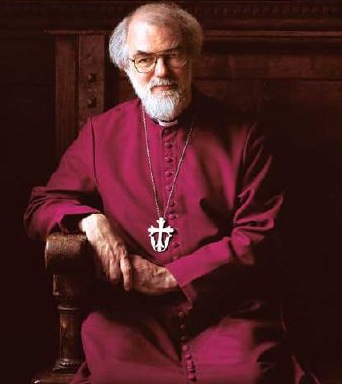
Indeed, after a May lecture at St. Paul’s Cathedral in London addressing the spiritual legacy of Dietrich Bonhoeffer, former Archbishop of Canterbury Rowan Williams was asked about the war in Gaza, and how Bonhoeffer, himself murdered by the Nazis, might assess this crisis were he alive. His Grace responded with this reflection:
Never forget why the state of Israel exists, whatever you think of what it’s doing, never forget why it’s there. It’s us. Don’t just point fingers. I think he might say…maybe this is Williams rather than Bonhoeffer…he might say that the whole situation illustrates what happens when communities are convinced that no one is with them or for them. Israel has long believed that no one is really with them and for them. The Palestinians believe, with a good deal of justification, that nobody is with them and for them. What happens when that sense of abandonment prevails? Nothing to lose. That’s the tragedy. Whatever solution we are praying for and working for has to be something which says to both communities, you are not as vulnerable as you fear because we are committed.
Perhaps with the establishment of a long-term medical and housing hub inside Israel’s Negev, the American people will finally be able to demonstrate that we are committed to the safety and security of both peoples, and that we will not tolerate the abandonment of either.
Timothy Villareal’s social and religious commentaries have been published by The Washington Post’s On Faith, Christian Century, Tikkun, Patheos, Chicago Tribune, Austin American-Statesman, Albany Times-Union, among other U.S. dailies.