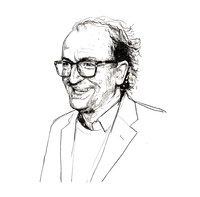
A Church of England disciplinary tribunal has removed the Rev. Dr. Johnny Douglas as Vicar of Swanley and barred him from ordained ministry for life. It found that he coercively controlled his former wife and carried on a secret sexual relationship with a vulnerable parishioner who had come to him for spiritual counsel. The Bishop’s Disciplinary Tribunal for the Diocese of Rochester, chaired by His Honour Peter Collier KC, found eight of the nine particulars proved in a 55-page determination dated Nov. 10, 2026. It imposed removal from office and lifetime prohibition in a penalty decision issued the following day.
The diocese has said little since the ruling. Its Nov. 18 notice said only that the decision “remains subject to an application for leave to appeal under the Clergy Discipline Measure.” It added that “due to the ongoing legal process, the Diocese of Rochester is unable to comment further at this time.” The notice pointed people to Safe Spaces, the independent service for adults affected by church-related abuse, and to the diocesan safeguarding team. It also set up an email address for pastoral support for the Hextable and Swanley congregations.
Dr. Douglas, 51, was made deacon in 2011 and priest in 2012. He was instituted on Jan. 29, 2018, as Vicar of St Paul’s, Swanley, a benefice that includes St Peter’s in the neighboring village of Hextable. From 2021 to 2026 he sat in the General Synod as one of Rochester’s elected clergy proctors. The tribunal noted that on Feb. 6, 2023, he sent the parishioner, known in the proceedings as XY, a draft of a speech he hoped to give in the Synod’s Living in Love and Faith debate. The panel called this an indication of “the utter hypocrisy of much of his public persona”.
How the case began
The tribunal set out a long account of how the diocese handled the case. In April 2024 the Rt. Rev. Jonathan Gibbs, Bishop of Rochester, asked the Ven. Sharon Copestake, then Archdeacon of Tonbridge, to look into two earlier complaints against the vicar. She was given the job because the Archdeacon of Rochester considered himself conflicted after his relationship with Dr. Douglas had “suffered a significant deterioration”. Archdeacon Copestake had barely begun when she received a letter from XY dated April 24, 2024. “First of all, I have to tell you that the vicar and I had a sexual relationship,” it said.
Archdeacon Copestake took the matter to the diocesan safeguarding adviser, Gregory Barry. He told her there were parallels between XY’s account and information he had already received about the vicar’s marriage. When she left her post in October 2024, the Ven. Nicholas Cornell took over the investigation and became the formal complainant. Bishop Gibbs suspended Dr. Douglas on Dec. 13, 2024. The Deputy President of Tribunals refused his appeal against the suspension on Jan. 17, 2025.
Dr. Douglas told the tribunal the proceedings were retaliation for his complaints about how the diocese had handled the earlier complaint, and he described himself as a “whistleblower.” The panel rejected that claim. It found the investigation had begun in April 2024, four months before the earlier matter was dismissed, and “had almost concluded” by then. The tribunal said Bishop Gibbs “really had no alternative” but to send the matter for formal investigation once Dr. Douglas failed to file an answer in the form the rules require. He did so despite repeated reminders and extensions of time.
The diocese’s public statements
The diocese’s public statements came up at the hearing. Mr. Barry accepted that the diocese had first used the word “safeguarding” after the suspension, and the panel said this had led to “unhelpful speculation, including on Facebook”. After a local petition asked what had become of the vicar and criticized the bishop and senior staff, the diocese posted a notice on June 14, 2025. It confirmed that Dr. Douglas was suspended “following several allegations of misconduct.” It called suspension “a neutral act which implies no particular outcome” and asked people not to speculate.
Dr. Douglas complained to the tribunal that the posting had damaged him and forced his family out of the vicarage. The panel disagreed. Given “the disinformation that was circulating in the public domain,” it said a statement was “entirely appropriate” and in keeping with the Clergy Discipline Measure Code of Practice.
The panel also noted that the diocese had already been supporting the former wife, whom the tribunal identifies only as Julie, well before any complaint was filed. Mr. Barry testified that the diocese paid for 46 counseling sessions for her, which ran until January 2023.
The findings
Thirteen parishioners and church members filed statements on the vicar’s behalf. The tribunal accepted that his ministry had been “fruitful and effective,” with churches growing and people coming to faith. But it found Julie’s account “compelling and truthful.” It said a covert recording Dr. Douglas made the night before the couple separated “entirely supports her account” rather than his. The panel added: “Of course it is his narrative which has been the predominant one circulating in the church.” When Julie asked how he could give her communion while their marriage was in such difficulty, she said he replied, “in that situation I am Jesus to you.” The tribunal called this “an indicator of the spiritual nature of the emotional abuse to which she was subjected.”
On XY, the panel relied on a WhatsApp thread running to more than 11,000 lines, with “1381 occasions where multiple kisses (xxxx) are included.” Dr. Douglas maintained the relationship had been purely pastoral and said he had “no adequate answer” for the messages. The tribunal also found that he pursued an improper relationship with a second parishioner. He shared his own divorce papers with XY. And he hid his ownership of two residential properties when he applied for grants from the English Clergy Association and the Clergy Support Trust. The one particular not proved was a claim that he took food from a local food waste hub without paying. The panel said nothing in the evidence contradicted his account.
“She was clearly vulnerable and he took advantage of that,” the penalty decision said. XY told the tribunal she had left the church and the Hextable community “and have been unable to tell people why.”
The national church’s role
The Church of England’s national machinery shows up in the record mainly through its procedures. On Oct. 8, 2026, Dr. Douglas asked the President of Tribunals to order an attempt at conciliation. The President replied that conciliation “would be wholly inappropriate” given how serious the allegations were. The penalty decision also disclosed that a retired archdeacon had been giving Dr. Douglas pastoral support for about a year “at the instigation of Lambeth Palace.” The tribunal noted that the archdeacon’s supporting statement, dated as recently as September, “reflected the Respondent’s persistent narrative” and “says nothing about any remorse for wrongdoing”.
In deciding on a lifetime ban, the panel cited the church’s Guidance on Penalties. That guidance says controlling and coercive behavior short of violence “should not necessarily attract a lesser penalty,” and that adultery with someone in a cleric’s pastoral care is “a significant aggravating factor.” The panel noted “a degree of contrition” at the penalty hearing but called his stated path of repentance “completely untested” and concluded that “risks to others remain a real possibility”. It added that he could not return to Swanley and Hextable in any case, given “the conflicting narratives” and “his difficult relationships with senior staff in the diocese.”
Kent Online reported that it had approached Dr. Douglas for comment. The parishes have been without an incumbent for almost two years. Under the Clergy Discipline Measure, the ruling can be appealed only with permission, and the diocese says an application for leave to appeal is still pending.