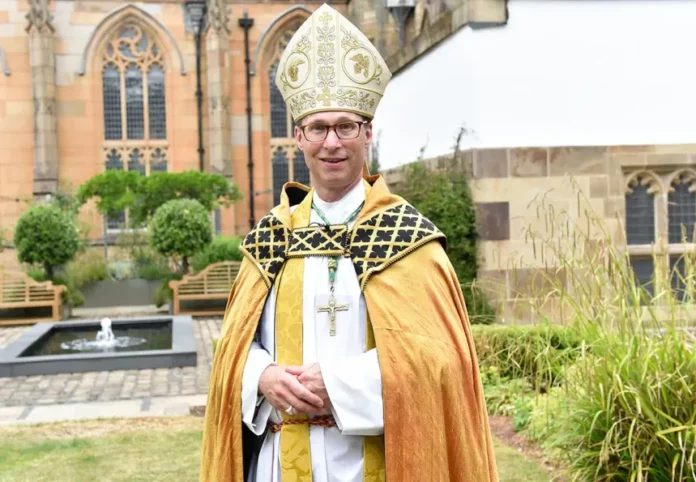
The Rt. Rev. Philip North, Bishop of Blackburn has used his Diocesan Synod presidential address to reject narratives of managed decline and to call Lancashire’s churches to prayerful, confident evangelism. His address frames the Diocese’s forthcoming ‘Joyful Followers of Jesus’ vision as a summons to proclaim Christ, strengthen parish life, and expect spiritual renewal.
Speaking on 10 Oct 2026, Bishop North pointed to signs of renewal in France and within his own diocese: young adults exploring Christianity online, new families appearing in churches, and unusually large numbers of adult confirmation candidates. He argued that churches must not allow a “mindset of scarcity and anxiety” to prevent them from imagining thriving congregations and renewed Christian witness.
The Bishop linked this confidence to the diocese’s new vision, which will be launched next month. Its aims include helping people “know Jesus,” loving neighbours, sharing the faith, reaching children and young people, and forming Christ-like leaders. North stressed that support for parish ministry and clergy numbers is not simply institutional maintenance, but serves the Church’s central responsibility: proclaiming the Gospel.
Bishop North’s address is significant because it supplies a distinctly traditional and evangelical-catholic note amid the continuing turmoil of the Church of England. Rather than treating the Church principally as a body needing bureaucratic reform, political accommodation, or managed contraction, he presents it as a missionary people whose confidence rests in the risen Christ and the power of the Holy Spirit.
His rhetoric is also unambiguously Christ-centred. Jesus, Bishop North said, does not “tinker” with the world, but transforms lives, confronts evil, purifies what is corrupt, and offers salvation. That language stands in contrast to an increasingly common ecclesiastical tendency to substitute therapeutic spirituality, institutional survival strategies, or social consensus for the Church’s historic vocation to call men and women to repentance and faith in Jesus Christ.
Notably, Bishop North placed prayer—not diocesan machinery—at the foundation of the new vision. Parishes are being asked to appoint “Prayer Enablers,” rather than simply vision champions, so that renewal is understood to be God’s work rather than the product of managerial effort.
That emphasis will resonate with Anglicans concerned that the Church of England’s present debates have too often been conducted in the language of process, policy, and power. North does not deny the reality of ecclesial failures, divisions, financial pressures, or cynicism; he
For Bishop North, the parish remains an indispensable instrument of evangelism. His defence of the parish system is therefore neither nostalgic nor merely administrative: the parish and the chaplaincy are places from which the Gospel is declared to particular communities.
The address’s force lies in this refusal to concede that English Christianity’s future is necessarily one of retreat. North’s call is for churches to invite every person in their care to become “a joyful follower of Jesus”—a straightforward declaration of the Church’s missionary duty at a time when clarity, confidence, and orthodox proclamation are in short supply.