xThe former St Paul’s Episcopal Church building in Darien is to be demolished and its 14.4-acre campus prepared for sale for residential development, bringing a physical end to the home of the charismatic renewal once celebrated as the Miracle in Darien.
Darien’s Planning and Zoning Commission voted on Oct. 6 to approve the Episcopal Church in Connecticut’s plan to raze the church, two houses and a garage at 471 Mansfield Avenue and divide the land into four single-family residential lots. The lots will range from 2.48 to 4.84 acres, while approximately 54 per cent of the property will be preserved in its natural state under a conservation easement.
The property has not yet been sold, according to the latest public account. The diocese’s engineer, Craig Flaherty of Redniss & Mead, said the Episcopal Church in Connecticut intends to sell after completing the subdivision, but has not decided whether the buyer will be one developer or whether the four lots will be sold separately to individual purchasers. The distinction matters: diocesan bodies authorized a sale in 2024 and a sale or joint venture in 2025, but the newly approved subdivision is intended to make that future transaction possible.
The congregation stopped holding services on the site in 2022. Flaherty told the commission that the property was no longer needed to fulfil the church’s mission, while Rosanna Rosado, the diocese’s canon for finance and operations, described the plan as “responsible stewardship” that would release resources for active congregations and ministries.
Yes, this is the St Paul’s made famous by Bob Slosser’s *Miracle in Darien* — more precisely, “in” rather than “at” Darien. The contrast could hardly be sharper. A church once too large for its sanctuary, and influential far beyond the Episcopal Church, now has no congregation worshipping in the building and no institutional plan to preserve it.
St Paul’s began in 1958 as a chapel of St Luke’s, Darien, when 34 families met at Hollow Tree School under the Rev. Alfred Persons. It became a diocesan mission station in 1961 under the Rev. William Bartlett. The following year, 14.7 acres at 471 Mansfield Avenue were given to the church; after 100 families pledged $100,000 in one month, the present building was constructed in 1964.
The mission became a parish in 1967, with the Rev. H. Arthur Lane as its first rector. Under Lane, the parish adopted the watchword “To know Christ and to make Him known,” emphasizing prayer, personal Bible study, conversion and the baptism of the Holy Spirit.
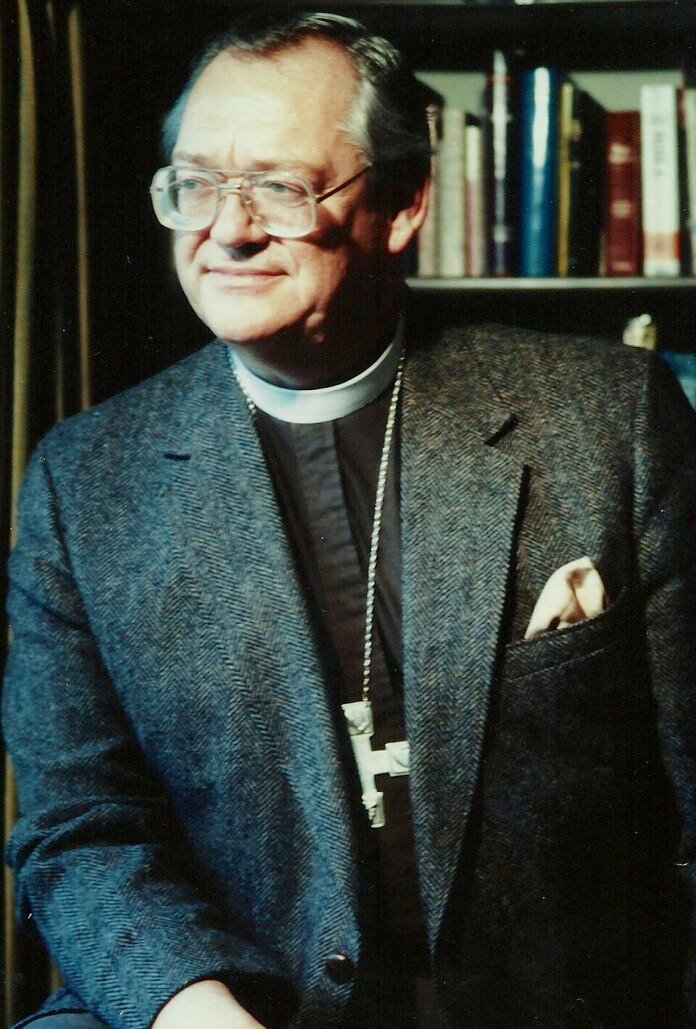
The decisive chapter opened in 1972 with the arrival of the Rev. Everett L. “Terry” Fullam. A musician, biblical teacher and Episcopal priest ordained in 1967, Fullam emphasized apostolic teaching, scriptural preaching, joyful worship, charismatic gifts and the ministry of the laity.
Growth was rapid. By 1975 the Sunday morning congregation had outgrown the church and moved its principal service to Darien High School. Parish teams led conferences and retreats for clergy, vestries and laypeople in other churches, spreading a model of renewal that combined Anglican worship, evangelical preaching and charismatic experience.
Bob Slosser’s Miracle in Darien, first published in 1979, made the parish and Fullam internationally known. The parish’s own history records that attendance reached 1,300 across its services in 1980. Contemporary Episcopal reporting attributed much of the parish’s rapid growth to Fullam’s Bible-centred preaching, while later accounts recalled that Sunday traffic at the high school required police direction.
Fullam’s influence extended well beyond Darien. St Paul’s hosted visiting clergy and lay leaders, dispatched ministry teams to other congregations and released its rector for an extensive teaching ministry. He became a leading figure in Episcopal charismatic renewal and remained rector until 1989.
The collapse did not occur in a single moment. It came in stages: a decline after the departure of a defining rector, a prolonged estrangement from diocesan authority, and finally an internal rupture that left two small communities where one parish had stood.
St Paul’s own historical account acknowledges that attendance continued to decline after Fullam resigned in 1989. The Rev. Carl Russell arrived in 1992 after a 28-month search, but resigned in 1996 because of advanced Lyme disease. Under interim rector Anthony Bullman, the parish undertook what it described as a process of “corporate healing”; membership began growing again before the Rev. Christopher Leighton became rector in 1998.
Leighton served for 17 years, preserving St Paul’s evangelical and charismatic identity. But the consecration of Gene Robinson as Bishop of New Hampshire in 2003 brought St Paul’s into the widening Anglican dispute over sexuality and authority. St Paul’s joined five other conservative Connecticut congregations in seeking delegated episcopal oversight from a bishop who had not supported Robinson’s election or the ordination of non-celibate homosexual clergy. The parish stopped contributing money to the diocese, and in 2005 clergy and lay leaders from the six congregations sued Connecticut Bishop Andrew Smith and others; a federal judge dismissed the case in 2006.
This first conflict did not immediately close St Paul’s, but it entrenched mistrust between the parish and the diocese. By the time Leighton left in 2016, the parish was a fraction of the congregation that had once filled Darien High School. A former parish officer claimed in 2018 that St Paul’s had more than 200 members before the arrival of its next rector, although that figure was offered amid litigation and is not an independently audited attendance count.
St Paul’s called the Rev. Canon George Kovoor as rector in 2016. Within roughly a year, relations between Kovoor and the vestry had broken down over leadership, Episcopal identity and the parish’s relationship with the diocese.
The two sides gave sharply different accounts. Former wardens and vestry members accused Kovoor in court of misrepresenting his credentials when he applied for the position. Diocesan accounts said the deeper dispute concerned the vestry’s attempt to dismiss its rector without the bishop’s authorization; Church Times reported that Kovoor wanted to end delegated oversight and restore normal relations with the diocesan bishop, a course resisted by lay leaders opposed to the Episcopal Church’s direction on human sexuality.
Bishop Ian Douglas ordered reconciliation efforts and then ruled in June 2018 that Kovoor remained the duly elected and canonically recognized rector. When lay leaders continued efforts to remove him, stopped his salary and sought to evict him from the parish rectory, the diocesan convention voted unanimously in October 2018 to reduce St Paul’s from parish status to a worshipping community under the bishop’s direct control. That action dissolved the authority of the existing wardens and vestry.
The former parish leaders sued over the rector and control of the property. The courts dismissed the actions in 2019, holding in the rector case that judicial intervention would entangle the state in religious hiring, practice and polity. The diocese and the national church also sued three former trustees over the 2011 sale of parish real estate, which they said had occurred without the approvals required by church canons.
A December 2019 settlement ended three pending cases and concluded a series of five lawsuits dating to 2005. St Paul’s recovered control of funds held from the earlier land sale; the former wardens and vestry members relinquished claims to the Episcopal property; all appeals and accusations against Kovoor were withdrawn; and both sides agreed not to sue again.
The settlement did not reunite the congregation. Up to 40 former members organized separately as New St Paul’s Church, while a much smaller Episcopal worshipping community remained at Mansfield Avenue. The legal victor therefore recovered the name, property and funds, but not the congregation that had made the campus viable.
Worship at 471 Mansfield Avenue ended in 2022. In March 2024, the diocesan Mission Council reviewed the site: 14.5 acres in all, but only 5.9 considered developable, with 6.6 acres of wetlands and two acres of peripheral land. Its Finance Committee recommended sale rather than full development or donation, and the council authorized the Missionary Society of Connecticut to sell the entire property.
In March 2025, the Mission Council approved a proposed sale or joint-venture opportunity. The diocese then pursued a conservation subdivision, ultimately securing approval for four residential lots in October 2026. The planned houses will use public water and sewer; three existing septic systems will be removed.
The diocese has not publicly fixed a sale price or identified a buyer. Nor has it announced precisely how the net proceeds will be allocated. In 2024 it said the Mission Council would decide after a sale, with one possibility being a donation to St Luke’s, Darien, for the Person-to-Person Food Pantry capital campaign.
The available record does not support a simple story in which one vote, one bishop or one rector destroyed a flourishing megachurch. St Paul’s peak had passed decades before the final crisis: its own history dates the beginning of continuing decline to Fullam’s departure in 1989. The parish later recovered some ground, but its identity remained unusually bound to the memory, theology and methods of a charismatic rector whose ministry was difficult to reproduce.
The disputes after 2003 added a second source of erosion. St Paul’s retained its conservative convictions, but its resistance to diocesan policy consumed attention, money and trust. The 2017-20 confrontation then transformed theological estrangement into an institutional struggle over who possessed authority to employ the rector, govern the parish and control its assets.
Finally, the settlement formalized separation rather than reconciliation. The Episcopal body retained the historic property but lacked the numbers to sustain it; the departing members retained a Christian community but surrendered their claims to the campus. Services at the old church ceased two years later, and the diocese eventually judged that maintaining an empty, underused building no longer served its mission.
The “Miracle in Darien” was real in the historically verifiable sense that St Paul’s experienced extraordinary growth and exercised influence far beyond one Connecticut suburb. But it was not permanent. Fullam himself warned his former congregation against living on memory: “A church whose past is its greatest day is a church that is dying.”
The demolition now approved at 471 Mansfield Avenue is the last stage of that warning. The movement once overflowed the building; then the memory outlived the movement; finally, the institution outlived the congregation. What remains of the miracle will survive in people, recordings, books and congregations shaped by Darien — but not, it appears, in the church that gave it a home.