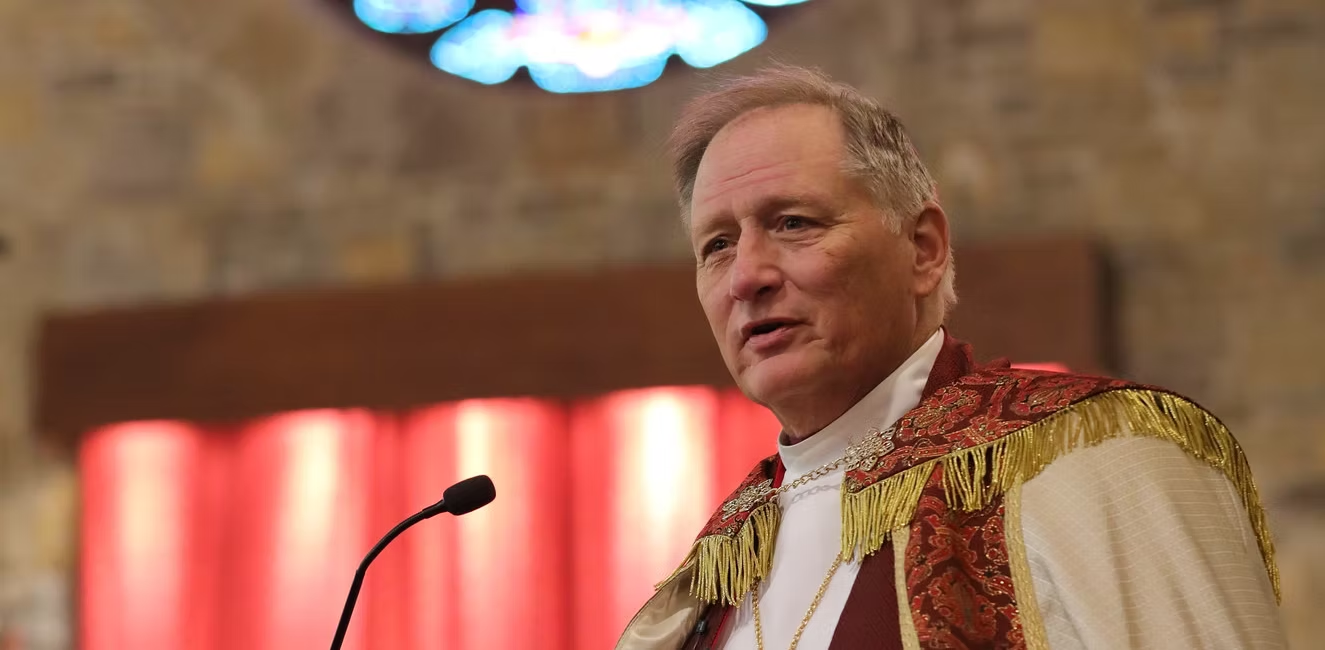
A federal judge in South Carolina has dismissed the Jurisdiction of the Armed Forces and Chaplaincy’s lawsuit against the Anglican Church in North America, holding that the dispute cannot be decided by a civil court without intruding into matters of church discipline, governance, and polity. The dismissal for lack of subject-matter jurisdiction is without prejudice.
U.S. District Judge Bruce H. Hendricks issued the order on 28 September 2026 in Jurisdiction of the Armed Forces and Chaplaincy v. Anglican Church in North America, Civil Action No. 2:25-cv-12848-BHH. The court granted ACNA’s motion to dismiss under the church-autonomy, or ecclesiastical-abstention, doctrine.
The Jurisdiction of the Armed Forces and Chaplaincy (JAFC), led by the Rt. Rev. Derek Jones, sued ACNA in October 2025 after the breakdown of their relationship. The complaint alleged infringement of the registered “Jurisdiction of the Armed Forces and Chaplaincy” service mark and “Anglican Chaplains” trademarks, false advertising, unfair trade practices, trade-secret violations, conversion, and interference with its relationships with chaplains and government agencies.
JAFC characterized the dispute as a civil conflict between independent nonprofit corporations and alleged that ACNA had sought to take over its chaplaincy-endorsing ministry following the inhibition of Bishop Jones and JAFC’s purported withdrawal from the province. Its original filing sought damages and broad injunctive relief concerning the use of its marks, communications with chaplains and federal agencies, and ACNA’s claims of authority over the chaplaincy ministry.
The dispute followed JAFC’s September 2025 notice of withdrawal from ACNA. ACNA responded that the Special Jurisdiction for the Armed Forces and Chaplaincy was not a diocese able to withdraw from the province, but a canonical ministry established under Title I, Canon 11 and subject to provincial oversight.
The court had previously granted JAFC limited interim relief in November 2025 after ACNA’s counsel agreed that the province would refrain from using the service mark “Jurisdiction of the Armed Forces and Chaplaincy,” the “Anglican Chaplains” trademark, and the plaintiff’s logo. The court denied the requested emergency relief in other respects.
That earlier ruling did not resolve the merits of the larger dispute. Instead, it left for later consideration ACNA’s argument that a civil court could not adjudicate claims dependent upon ecclesiastical questions.
JAFC argued that its ministry began in 2007, before ACNA’s formation, and had operated independently while supplying chaplaincy endorsement services to ACNA and other Anglican bodies. It maintained that neither ACNA’s canons nor its relationship with Bishop Jones gave ACNA ownership of JAFC, its marks, its accounts, or its chaplains.
ACNA countered that the Special Jurisdiction was created by its 2014 canons, operated within ACNA’s hierarchical structure, and remained under the Archbishop’s ecclesiastical authority. It argued that adjudicating JAFC’s claims would necessarily require a court to determine whether Bishop Jones and the chaplaincy ministry remained subject to ACNA discipline and authority.
ACNA’s public statements in September 2025 said the Special Jurisdiction continued within the province despite Bishop Jones’s withdrawal and that chaplains retained their ACNA orders and endorsements unless they chose otherwise. Archbishop Steve Wood appointed Archbishop Emeritus Robert Duncan and Bishop Jerome Cayangyang for interim oversight, and ACNA subsequently elected Cayangyang as bishop of the Special Jurisdiction.
Judge Hendricks treated ACNA’s motion as a jurisdictional challenge under Federal Rule of Civil Procedure 12(b)(1), noting that courts in the Fourth Circuit have generally treated ecclesiastical abstention as a bar to subject-matter jurisdiction.
The court recognized that the doctrine does not bar every civil lawsuit involving a religious organization. Civil courts may decide genuinely secular disputes through neutral principles of law, but may not resolve disputes over doctrine, discipline, internal organization, ecclesiastical rules, or church polity.
In this case, the court concluded that the claims, notwithstanding their trademark, trade-secret, tort, and unfair-competition labels, could not be separated from the underlying ecclesiastical dispute. It found that deciding the claims would require determinations over who led the chaplaincy ministry, whether it belonged within ACNA’s hierarchical structure, whether Bishop Jones remained subject to ACNA discipline, and which church authority controlled the ministry’s name, records, and marks.
“These are quintessential ecclesiastical questions,” the court wrote in adopting the substance of ACNA’s argument.
The civil ruling follows ACNA’s internal disciplinary proceedings against Bishop Jones. In August, the ACNA Court for the Trial of a Bishop found Jones guilty on four canonical charges, including refusal of a Godly Admonition, contravening the canons, conduct giving just cause for scandal or offense, and causing schism. On 23 September, the ACNA College of Bishops deposed Jones from the ordained ministry.
The district court’s dismissal does not determine the ownership of JAFC’s assets, marks, or records on the merits. Rather, it holds that the federal court lacks authority to decide the claims as pleaded because their resolution would require it to enter territory constitutionally reserved to the church’s own ecclesiastical processes.