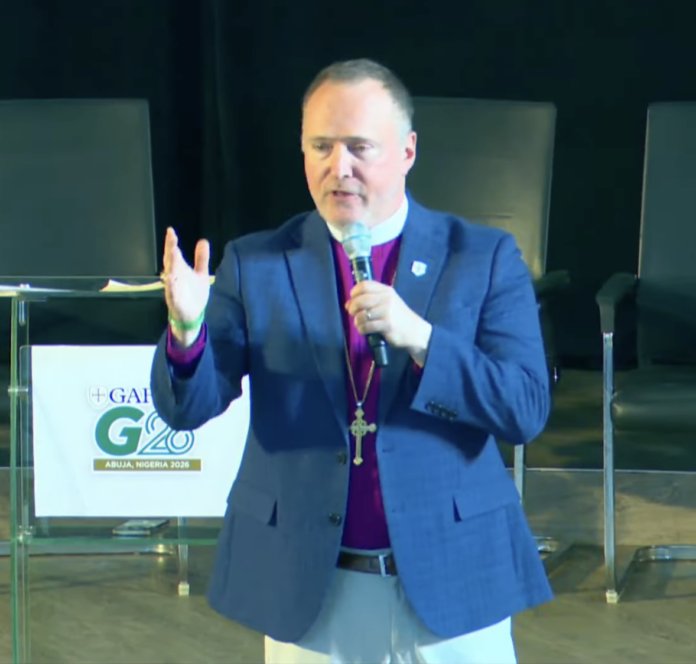
The Diocese of the Western Gulf Coast has called an electoral synod for Nov. 7 to choose its second bishop, with the Rt. Rev. Paul Donison standing as the sole nominee, while the Great Plains Missionary District is preparing to join the diocese if the election succeeds and the result is confirmed.
The proposal was first put to the diocese and the district on Sept. 1 by the Rt. Rev. Julian Dobbs, provincial dean and acting archbishop, who asked them to consider an amalgamation plan tied to the election of Bishop Donison as bishop ordinary of the Diocese of the Western Gulf Coast. According to the proposal, a sole-nominee election is permitted under the diocese’s canons and under the former episcopal elections customary of the College of Bishops. The document states the old customary governs this process because approval for the election of the second bishop was given in 2025, before the new customary adopted at the June 2026 meeting of the College of Bishops took effect.
The matter has been under discussion for weeks. The Rt.Rev. Ryan Reed, interim bishop of the Diocese of the Western Gulf Coast, presented the proposal to the diocesan council on Sept. 1, to rectors and clergy on Sept. 2, and to Great Plains rectors on Sept. 3, with copies distributed for wider circulation. Clergy meetings followed in Louisiana on Sept. 9, in Houston on Sept. 17, and in the Hill Country on Sept. 19, with Bishop Donison joining part of each session by Zoom.
After those meetings, and with the backing of the Rt. Rev. Alan Hawkins, bishop of the Diocese of Christ Our Hope, Bishop Reed, and Bishop Dobbs, the proposal was revised and simplified. The Great Plains Missionary District is canonically resident in the Diocese of Christ Our Hope.
On Sept. 22 Bishop Hawkins convened an in-person meeting of Great Plains rectors, with Bishop Dobbs and Bishop Reed in attendance, to consider whether the district should prepare to transfer if the Diocese of the Western Gulf Coast approved the proposal and elected Bishop Donison. The rectors voted unanimously in favor. They agreed to work with their churches so that all Great Plains congregations could transfer into the Diocese of the Western Gulf Coast through the proper canonical process after a successful election. The district’s Dec. 5 summit would then become a time of administrative transition, celebration, and thanksgiving.
The transfer is not proposed to take place before the Nov. 7 synod. Great Plains churches will not participate in the electoral synod, but would instead move afterward if Bishop Donison is elected. As part of that preparation, most Great Plains clergy and staff are scheduled to travel to Houston on Oct. 8-9 for joint meetings with clergy and diocesan council members from the Diocese of the Western Gulf Coast.
The diocesan side of the process moved ahead on Sept. 22, when Bishop Reed convened a Zoom meeting of the diocesan council with Bishop Dobbs and Bishop Hawkins in attendance to give notice of the proposal. The proposal called for a Nov. 7 electoral synod with Bishop Donison as sole candidate, publication of the notice of synod and nominee profile on Sept. 28, walkabout meetings in Louisiana on Oct. 19, Houston on Oct. 20, and Central Texas on Oct. 21, and confirmation by the College of Bishops at its January 2027 meeting if the election is successful. If confirmed, the seating of the second bishop of the Diocese of the Western Gulf Coast would follow in February 2027.
On Sept. 29 the diocesan council approved the proposal and notice of the electoral synod, together with Bishop Donison’s nominee profile.
The proposal cites Canon I.4 section 2, which says the bishop, with the advice and affirmation of the council of the diocese, determines the date, time, and place of meetings of the synod. It also cites Canon I.4 section 3, which says the bishop, with the advice of the chancellor, proposes rules of order for adoption by the synod at the outset of each meeting and leads the synod. On the advice of the diocesan chancellor, Bishop Reed further determined that in the absence of an episcopal nominations team, its functions fall to the diocesan council, making the council the body responsible for acting on the sole-candidate proposal and publishing the nomination.
This is the latest step in a process that has been underway for months. The Diocese of the Western Gulf Coast failed to elect a bishop at its May synod after repeated ballots ended in deadlock, and the matter was referred to the College of Bishops. Shortly afterward, Bishop Dobbs announced that no new election would proceed at that time and that the Rt. Rev. Clark Lowenfield had shared his intention to retire as bishop ordinary effective Aug. 15. Anglican.Ink later reported that the College accepted Bishop Lowenfield’s resignation, named the Rt. Rev. Bob Duncan interim bishop, and then received Archbishop Duncan’s decision to step back from the post, after which Bishop Reed became interim bishop.
The long-range plan attached to the proposal is administrative as well as electoral. After seating, the new bishop ordinary would lead a team of regional leaders and diocesan council members in preparing revised diocesan structures, systems, and processes for the November 2027 synod. Those proposals would include constitutional and canonical amendments for an expanded region, possible consideration of a new diocesan name, leadership representation for five deaneries, and plans for increased income to support church planting and curacies.
The draft proposal, seen by Anglican.Ink, says Bishop Donison would step back from his global responsibilities in order to focus on the enlarged diocese. It adds that the Diocese of the Western Gulf Coast now consists of 14 churches and one plant, while the Great Plains Missionary District has eight churches, two plants, and several new church plants in process.