The Alliance in the Church of England released a short promotional video on 14 September 2026, marking the opening of the General Synod election campaign with a deliberate bid to broaden its appeal beyond the orthodox networks that formed its original base — and to present itself to the wider Church not as a party of resistance but as a movement of gospel renewal.
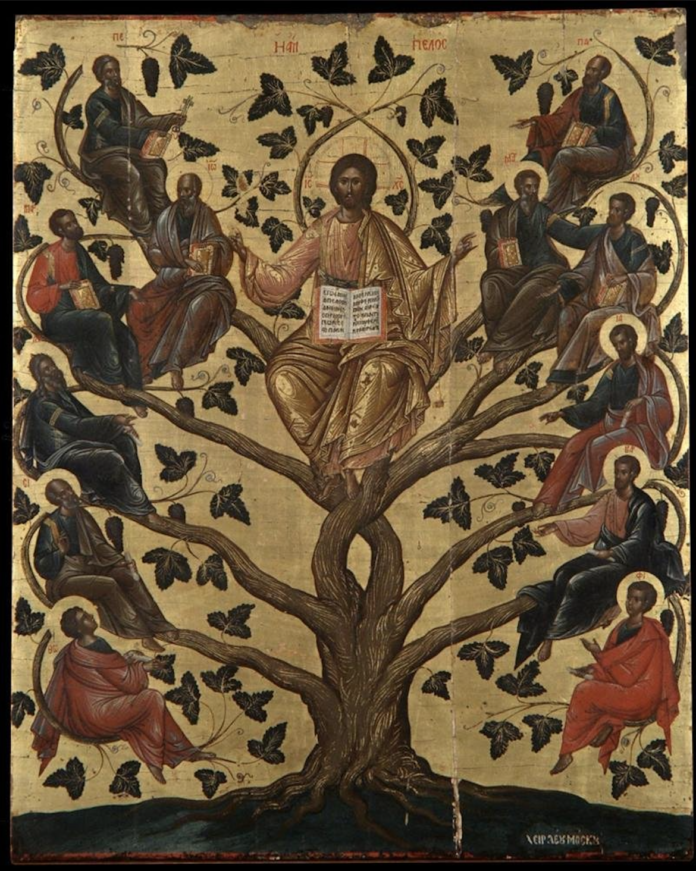
The two-minute film, built around the “vine and branches” passage from St John’s Gospel — “apart from me you can do nothing” — frames the Alliance’s ambitions in studiedly irenic terms. Evangelism, mission, church revitalisation, and national renewal: the language could have come from any Decade of Evangelism document, any New Wine conference, or any HTB Leadership Summit of the past thirty years. That, of course, is precisely the point. With Synod elections approaching and the Living in Love and Faith process formally closed by the House of Bishops in January, the Alliance is pivoting from institutional confrontation to institutional capture — and this video is its opening move
A Network of Networks
The Alliance describes itself as “a network of networks within the Church of England committed to our Anglican heritage of faith, holding to the received teaching of the Church of England.” In practice it is a coalition of striking theological breadth and, to some observers, equally striking political convenience — spanning HTB and New Wine charismatics, CEEC and Church Society Reformed evangelicals, Forward in Faith Anglo-Catholics, ReNew, the Global Majority Fellowship on General Synod, and Living Out, the ministry affirming celibacy for same-sex-attracted Christians. Holding a charismatic renewal network, a Tridentine-adjacent catholic grouping, and a Calvinist confessional body in the same ecclesiastical tent is no small feat of ecumenical dexterity. Whether it constitutes a coherent theological movement or a tactical alliance of temporary convenience is, depending on one’s viewpoint, either its greatest strength or its most pressing question.
The coalition claims the support of more than 2,000 Church of England clergy, and has argued — not without challenge — that it represents approximately 42 per cent of the Church of England, a figure that critics at Via Media News and elsewhere have contested with some vigour.
The Moment That Made the Alliance
The Alliance did not emerge from a vacuum of pious aspiration. It crystallised in the heat of the Living in Love and Faith process, the decade-long exercise in structured discernment that sought to determine whether the Church of England would extend formal blessing and eventually canonical permission to same-sex unions and clergy in same-sex marriages.
In June 2024, with the House of Bishops pressing toward proposals that orthodox leaders regarded as canonically irregular, the Alliance sent a formal warning to the Archbishops of Canterbury and York: proceed, and we will have no choice but to “rapidly establish a de facto parallel Province within the Church of England”. Eleven orthodox bishops signed a parallel letter on the same day. The Alliance also announced a new pre-ordination stream for orthodox ordinands, in partnership with sympathetic bishops — an alternative pipeline bypassing diocesan structures deemed theologically compromised.
It was a shot across the bow that the House of Bishops could not easily ignore. By October 2025 the bishops had placed the entire LLF process on hold. In January 2026 they formally brought it to a close, acknowledging that standalone blessings and general clergy permission for same-sex marriage would require full canonical and synodical process under Canon B2 — the very point the Alliance had been making for the better part of two years. General Synod voted in February 2026 to pause the process, leaving the underlying questions unresolved but, for the moment, off the immediate legislative agenda. The Alliance did not claim outright victory. It did not need to.
What the Video Does Not Say
What makes the Alliance’s promotional video interesting is what it deliberately omits. There is no mention of same-sex blessings, the LLF process, parallel provinces, or canonical disputes. There is no mention of the General Synod elections of 2026, for which the Alliance has been quietly but methodically preparing a slate of orthodox candidates. There is no mention of the Alliance Campaign Manual — a document that emerged in late 2025 setting out a granular parish-by-parish strategy for PCCs to pass resolutions against the Prayers of Love and Faith and write to their diocesan bishops on Action Day.
Instead there is a vine. There are branches. There is the promise of much fruit.
This is not naivety. It is strategy. The video is aimed not at the already-convinced orthodox networker who follows General Synod papers, but at the ordinary parish Anglican — the churchwarden, the Sunday school teacher, the curate two years out of theological college — who responds to a call for gospel confidence and recoils from ecclesiastical politics. The Alliance wants to be a mass movement, not a pressure group, and it knows that mass movements are built on vision, not on synodical procedure.
Criticism and Context
Critics have not been slow to point out the gap between the Alliance’s missional presentation and its political operation. Via Media News challenged both its claimed membership figures and the coherence of a coalition that combines theological traditions with sharply divergent views on ministry, sacraments, and ecclesiology. Anglican Futures, itself broadly sympathetic to orthodox aims, has noted plainly that what the Alliance is seeking is a structural separation — a separate episcopate, a separate province — and has asked the Alliance to be transparent about that goal rather than wrapping it exclusively in the language of renewal.
The Alliance’s cross-traditional breadth, which is its most distinctive feature, is also its most obvious fault line. Anglo-Catholics and Reformed evangelicals share a commitment to received teaching on marriage. They do not share a theology of orders, a view of the sacraments, a position on women’s ordination, or a common understanding of what the Church of England actually is. Whether those differences can be indefinitely subordinated to a common institutional cause, or whether they will eventually reassert themselves with force, remains to be seen.
The Larger Picture
The Alliance’s emergence as a disciplined, cross-traditional, synodically organised coalition is the most significant development in the internal politics of the Church of England since the formation of Forward in Faith in the 1990s — and arguably since the founding of Reform in 1993. It has demonstrated that orthodox networks, long accustomed to operating in parallel rather than in concert, can coordinate strategy, communicate a common message, and achieve measurable institutional results.
The House of Bishops’ January 2026 letter effectively acknowledged the canonical limits the Alliance had been asserting. The General Synod’s February vote confirmed that no further advance on same-sex provisions would occur in the current quinquennium without full legislative process. Those are not small concessions.
The video’s closing appeal — “join with us and use your voice, to celebrate and uphold the life-giving, life-changing message of the gospel” — is a recruitment call for the next General Synod, and the quinquennium beyond it. The Alliance has learned that in the Church of England, as elsewhere, it is not enough to be right. One must also show up, organise, and vote.
The vine, it turns out, requires tending.