What would be the impact of an extra £100 million in grants from the Church Commissioners for frontline parish ministry in the Church of England?
An outlay of £1 million would easily fund a parish minister for 10 years, provided the diocese getting the grant had not sold off the vicarage to pay for a platoon of Net Zero bureaucrats or DEI enforcers. So, £100 million would fund 100 vicars for 10 years.
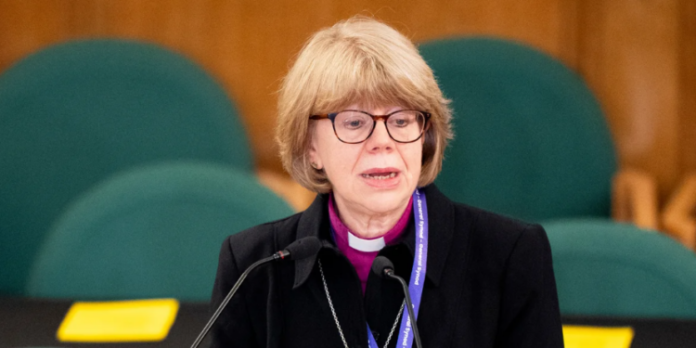
On her recent visit to Ghana, the Archbishop of Canterbury, Sarah Mullally, doubled down on the Church’s Project Spire plan to pay £100 million in slavery reparations benefiting businesses and community projects in the Caribbean and parts of Africa.
The BBC reported: “The Archbishop of Canterbury has renewed her commitment to a controversial £100m fund over the Church of England’s role in the transatlantic slave trade. Dame Sarah Mullally was speaking on a visit to Cape Coast Castle in Ghana where enslaved Africans were held before being trafficked to the Americas. She said touring the castle made her reflect on the crimes committed by the institution she leads. “We played a part in the transatlantic slave trade. That is clear. Part of the Christian belief in repentance is about action, so we are putting in place action to support those communities that feel the legacy of the slave trade,” she added.’
The morally dubious justification for Project Spire has been ably challenged by a Member of Parliament. Christian Today reported Conservative MP Katie Lam calling the C of E’s justification for the £100 million spend ‘a complete joke’.
In a video posted on X on July 22 she said:
‘The Church of England is planning to give away £100 million in slavery reparations and their justification is a complete joke. Apparently, they’re required to do so because a fund established by Queen Anne in 1704 had invested in a company involved in the West African slave trade.
‘The problem is that it turns out that the supposed link between the Church and slavery is fake. The original report seems to have confused South Sea Securities, which would have been money invested in the slave trade, with South Sea Annuities, which is just money that was lent to the British government.
‘There is no evidence that the Church of England made any money at all from the slave trade in this way. And even so, this idea that we are uniquely guilty for historic slavery and therefore to pay reparations is totally wrong. Almost every society in the world participated in slavery at some point in its history. The unique thing about Britain is the fact that we spent so much time and money on trying to end the slave trade.
‘We were only the second country in the world to decide to do so and we spent a huge amount of money, political capital, and ultimately the lives of navy sailors doing it. And if that weren’t bad enough, to fund all of this, the Church is using a charitable fund that is supposed to be used on maintaining local parish churches. That is illegal.’
The MP for Weald Kent added: ‘The idea that the Church of England should now, hundreds of years later, pay £100 million in slavery reparations, while so many parish churches are literally crumbling is absurd.’
Project Spire is in fact facing a legal challenge, the Bishop of Norwich, Graham Usher, revealed in an answer to a question about the scheme at July’s General Synod in York. The action by opponents of Project Spire is delaying the registration of the fund with the Charity Commission.
Katie Lam’s passionate concern for frontline parish ministry raises the question: what impact on the cure of souls would one minister funded by a £1 million Church Commissioners’ grant have on a local community whose parish church is currently in vacancy and very unlikely to be filled by the diocese?
Or to put the question another way: what is the price of one lost soul saved for eternity through that minister’s proclamation of the Gospel and pastoral care in the parish?
Julian Mann, a former Church of England vicar, is an evangelical journalist based in Lancashire, UK.