Americans’ trust in their institutions have rapidly declined in the last 25 years. Meanwhile, institutions have done a poor job defending their credibility. It’s a bad cycle. To make matters worse, according to sociologist Ryan Burge, even religious and highly educated Gen Zers are much more distrusting than older generations.
As the leadership handoff of Boomers to younger generations accelerates, this low trust will sink future initiatives in the church unless the residential, provincial seminary model returns to its historic place as the normative center of spiritual formation.
If the ACNA wants to do better than merely reflect national trends, and lead the youth in a new, regenerated direction, there is no better place to start than by building trust among the future leaders of the ACNA. Especially with the future leadership class of the church, the seminarians.
My wife and I spent our dating relationship long distance. We were never with each other for more than eight days at a time before we got married. Early on, we realized that after ten days of distance our communication began to break down, and fear or suspicion would mount. Hard conversations would get more difficult. We agreed that after the ten day mark, we would save difficult conversations for when we were in person.
Trust is a currency, like money, and when it is lacking, necessary tasks become more burdensome. Communication breaks down. Quick emails become sit down meetings, meetings become struggle sessions, and disagreements become occasions of HR intervention. Policies and rules are then formed to formalize processes for disagreement that can no longer be managed between adults.
Christ’s bride is in the trust-building business, and any church, seminary, or province which continues in a low trust register must consider it a threat to their existence and a blow to their witness in the world.
Fighting low trust does not mean manufacturing consent or giving a mandate to current leadership to strong arm those under them. That would simply perpetuate the problem and affirm my generation’s worst fears. There are no instant fixes. But there are some long term investments.
The future leaders of the ACNA must actually know each other in the flesh. Until now, efforts to get clergy to know each other have been remedial, such as lengthening diocesan synods, making discernment meetings into retreats, and various cohort models for existing clergy. These seem good and should be continued. They are also just that: remedial. They on their own are not a replacement for the friendship that develops over years treading the same ground underfoot and praying shoulder-to-shoulder, not yearly or quarterly, but daily.
While online education is probably not going away altogether, online education does not build the trust necessary between young folks needed to be the backbone of a Province. Our forebearers knew this. Until 2003, the Episcopal Church relegated locally trained clergy under separate canons for discipline and training, requiring more parish references, higher age minimums, and less autonomy.
If the ACNA wants to patronize the best and brightest from across the Province, relying on online or irregular in person communication is simply insufficient. Personal flaws are too easily covered. Misunderstandings easily arise. Diocesan accents turn into mutually unintelligible languages. The Province is not in a position to weather the national zeitgeist as an independent center of gravity unless it has a fixed place to gather, to live, to learn, and to worship.
Worship in particular is key. Nowhere are the full effects of study and prayer so joined and reliant upon each other as residential seminary. To debate in class and then bend the knee together, or stay up late counseling a friend and roll out of bed and join each other in prayer are windows into the integrated way of life that Cranmer imagined and the Province desperately needs to convey to its future leaders.
Hooker understood that the most compelling element of the daily office was in its daily communal participation: “whereas secret neglect of our duty in this kind is but only our own hurt, one man’s contempt of the common prayer of the church of God may be and oftentimes is most hurtful to many” (Laws V.xxiv.2). Bearing each other’s burdens—daily—was part of the purpose of Common Prayer.
Common Prayer is one of the duties of the clergy in the Province, and it’s a deep counter-catechesis to the prevailing winds that discourage trust at every juncture.
I got into an intense discussion with a professor about the legacy of Article XXII in the 2019 Prayerbook. It was the kind of thing that could have resulted in diminished trust for his authority if it was an online classroom. But after praying the evening office, we came together and reassured each other of our deep love for the province, the tradition, and each other and went our separate ways in peace and reconciliation.
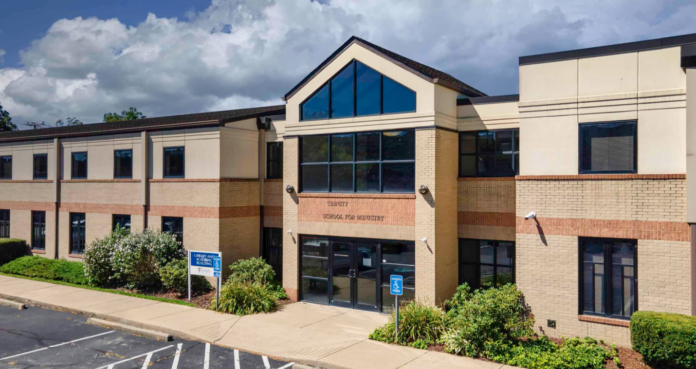
That is the kind of every day breaking apart and coming together that can happen dozens of times at Trinity Anglican Seminary, yet cannot be simulated by an online or occasional environment, just as phone calls with my now-wife could not replace the trust cemented by actually being together.
The ACNA’s bones are calcifying, and if they aren’t broken and reset, slowly taking on weight in a residential community, we might not survive the falls that come with age.