28 June 2026
Members of the Anglican Consultative Council, Brothers and Sisters in Christ,
Friends in our shared calling, Grace and peace to you in the name of our Lord Jesus Christ.
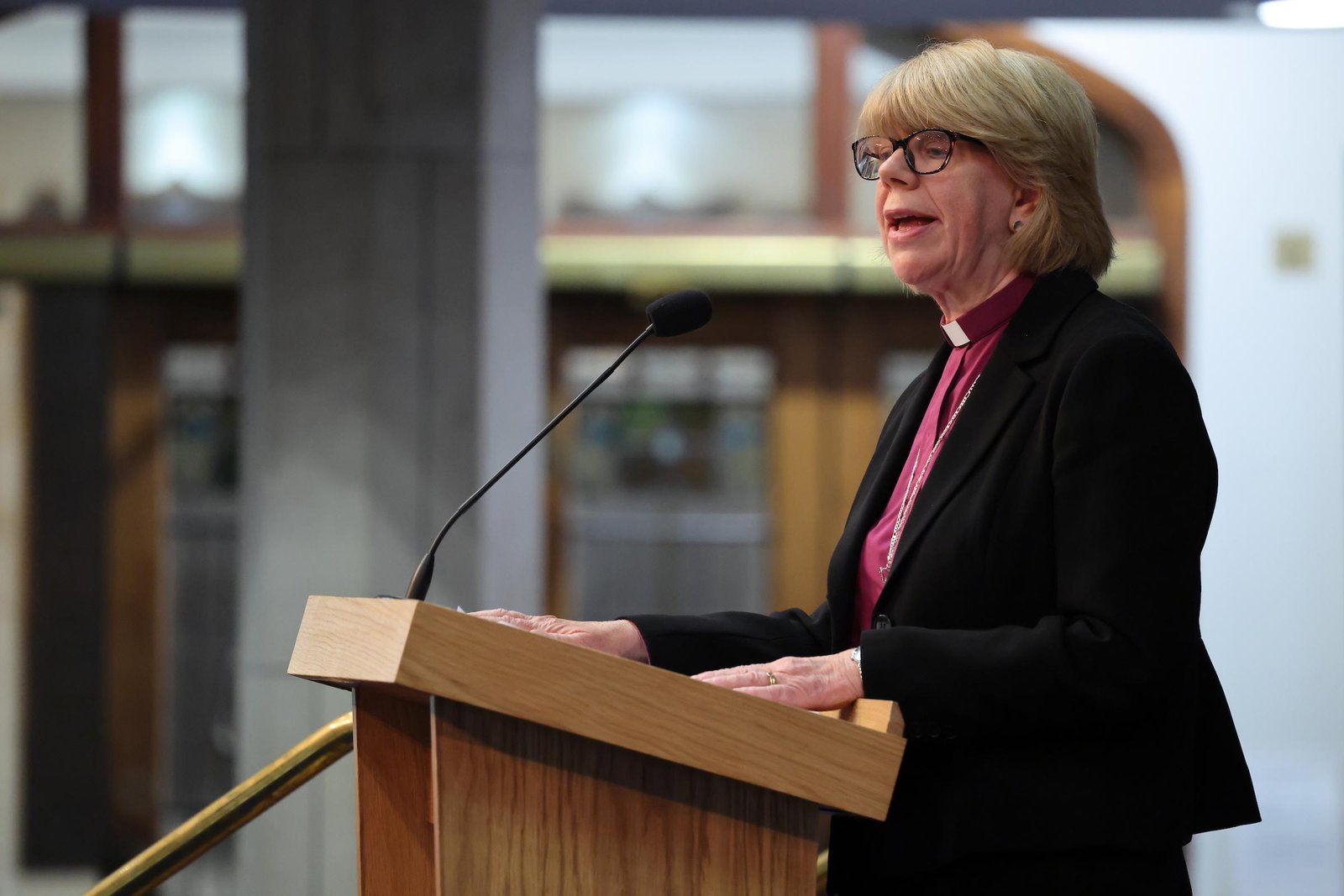
It is a joy to gather here in Belfast. It is an opportunity for us to share our joys and our challenges from our diverse communities. I am conscious that many of you will have left difficult situations, conflict, global health challenges, and difficulties in your own personal ministries and lives. I am aware that there are some who have been unable to join us and I hold them and you in my prayers.
I am aware that each of you carries the hopes, the wounds, the stories, and the prayers of your Provinces. You serve Christ’s people in contexts ranging from the smallest islands of the Pacific to the largest cities of Asia; from the expanses of Africa to diverse landscapes of the Americas; and from the ancient Christian soils of Jerusalem and the Middle East to the historic and evolving churches of Europe. Gathered here in fellowship, we embody the wideness of God’s family—spread across continents, living in different cultures, and speaking many languages, yet drawn together by the same Gospel and the same Lord Jesus Christ.
It is therefore with gratitude that I welcome you. Gratitude for your faithfulness, for your willingness to serve, and for the generosity of spirit with which you have gathered for this nineteenth meeting of the Anglican Consultative Council. I thank the Council, Commissions and Networks for all your hard work in support of our beloved Anglican Communion. I am particularly grateful for the work of the Inter-Anglican Standing Commission on Unity, Faith and Order (IASCUFO) for their work on the Nairobi-Cairo Proposals (NCPs).
I also want to thank the Church of Ireland for hosting us. It is a privilege to be here in Belfast. This is a city, a country and a Church that has much to teach us about faith in the reconciling power of Christ and holding onto the hope that we find in him. I am sure our time together will be enriched by the hospitality and spirituality of our Anglican sisters and brothers in this land.
At my installation in Canterbury on the Feast of the Annunciation, the Scripture readings reminded us that as a Church, we are a pilgrim people, who, like Mary, are called to trust in those words: ‘that nothing will be impossible with God’. Those words are particularly important when we see so much in the world that makes hope seem impossible.
We have hope because we make this journey ‘with God’ – ‘we do not bear the weight of this calling in our own strength, but only by the grace and power of God’.
We walk ‘with God’ – trusting that God walks with us. We trust that in all that we face, in the sorrows and challenges, as much as in the joys and delights – we do not walk alone. We even trust that through all this God will do a new thing and build the Church!
The theme that gathers us –’Called to One Hope’ – is a challenging one, and rightly so. It’s an invitation – despite our differences and disagreements – to trust the God who has called us together, and therefore to hope in the future he is preparing for us.
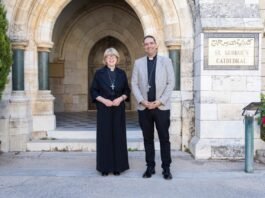
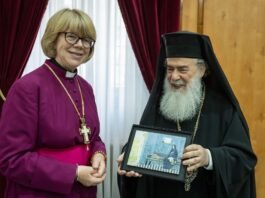
My recent pilgrimage in the Holy Land with my brother Archbishop Hosam was an opportunity to sit and listen and pray with our Christian brothers and sisters in that land and hear with deep concern the profound suffering and injustice that so many are facing. We did not hear a lot of optimism. But we did witness Christian hope – a faithful daily resistance against injustice and despair, lived out by those who carry the light of Christ in their hearts, even in times of darkness. The opening narrative of John’s Gospel reminds us hope is not born of blood; it is not born of the will of flesh; it is not born of the will of man: it is born of God.
John’s Gospel speaks directly to our lives—to the experience of light and darkness dancing together. Hope breaks into our present like shafts of sunlight. Hope points to a future a world of justice and of peace, where there are no more tears and where death is no more. It is this hope which carries us when we find ourselves in the dark night of the soul.
Christian hope is a form of attention; it is a posture. Christian hope is an active choice; one we sometimes make despite what we see around us. It is a refusal to despair. Hope is an act of resistance.
The ultimate act of hope is the incarnation. When God becomes one of us and overcomes death in the resurrection, it is the pinnacle of resistance—against even death itself. It is in that mysterious and marvellous truth that I find hope for the Church.
I also find hope in the ordinary and extraordinary life of the church, where I see God’s hand at work. All around the world, the Church is rolling up its sleeves and getting stuck in, joining in where God is already at work: in both the local and the global.
Ultimately, hope is an act of faith. In a world marked by fragmentation and fear, to speak of Christian hope is an act of faith. It is an even greater act of faith to put that hope in practice through an act of service.
All of this is a reminder that what unites us is greater than what divides us. As Christians, as a communion, we are a community of people who love God and seek to follow the Lord Jesus Christ. When we treat others with dignity and honesty, gladly caring for another’s needs, we represent the hands and feet of Jesus. In this way, we proclaim with confidence the hope we have found in Jesus Christ, and we become the body of Christ.
Paul teaches us that, the purpose of that body is that the weakest are cared for and honoured alongside all other parts. Paul’s image reminds us that unity is a shared connection to Christ as the head. The lesson is that it is only when we see how we fit together with each other under God, that we can reach maturity and grow up into the head that is Christ. Our union with Christ comes with the blessing of both unity and diversity. In Christ, we come to recognises that diversity and difference exist in the service of our mission.
Now, then, what does it mean for us to live as a body, knowing what divides us? It requires us to admit we live in a body which is messy. That may not be what we desire, but our experience of our own bodies is enough for us to know everybody has imperfections. Paul knew this too.
Aware of his own weaknesses, Paul was inspired by the words of the Lord to him: ‘My grace is sufficient for you, for power is made perfect in weakness.’ saying: ‘I will boast all the more gladly of my weaknesses, so that the power of Christ may dwell in me’. And so, it is with sacrificial compromise and aware of our own weaknesses and shortcomings that we seek to be the body God created us to be. Our unity is a gift, given by God through grace and received by faith. God has chosen to work through our messy body to love the world he saved. For me, that is hope.
But hope cannot grow without trust.
Relationships of trust are the soil from which hope springs. If hope is the fruit, trust is the root. And roots grow slowly, through patience, listening, and the steady work of walking together.
Across our Communion there is no shortage of passion, conviction, or commitment. Yet many of us would recognise that trust is fragile. In some places it has been wounded. In others it has been tested by distance, misunderstanding, or disappointment. We cannot simply vote trust into existence, nor can we create hope through anxiety, fear or urgency.
The temptation for any family under pressure is to seek immediate solutions. Yet the Church has always known that some questions cannot be resolved by speed. They require patience, prayer, the study of Scripture, conversation, and the work of the Holy Spirit. This pattern reflects something very Anglican.
There are matters before us and matters that will come before us in the years ahead, on which faithful Anglicans hold differing convictions. We must not be afraid of those conversations. But neither should we imagine that structural decisions alone can heal what is relational and spiritual. Lasting unity is built by trust.
That is why our task this week is not simply to determine what changes we may wish to make. It is first to listen. To learn. To pray. To study scripture. To deepen our understanding of one another. To create the conditions in which trust may grow and hope may flourish.
For Christian hope is the confidence that God is still at work among us. And because God is faithful, we need not act from fear. We need not act from anxiety. We need not imagine that the future of the Communion rests solely in our hands.
Instead, we can take the time necessary to discern well, trusting that the God who has sustained this Communion through many challenges has not ceased to guide it now.
Hope invites us forward. Trust teaches us how to walk together.
So let me say again: I am profoundly grateful for your presence. Your very willingness to be here is a sign of hope, a sign of the faithful companionship that continues to sustain our Communion, even when our journeys are complicated and our perspectives diverse.
I look forward to walking alongside you as pilgrim people and partners in the Gospel – sometimes simply, sometimes courageously—but always trusting that God is faithful.
Brothers and Sisters, thank you for your friendship. Thank you for your ministry. I look forward to our time together —to learn, to listen, and to be a blessing to one another. May God bless our time together.