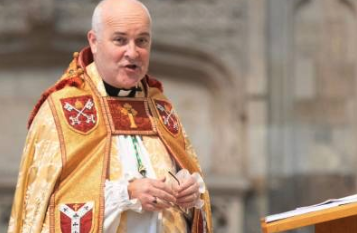
Archbishop Stephen has written in today’s Yorkshire Post on the task of ending poverty.
One in five people across the United Kingdom are living below the poverty line. In Middlesbrough and Hull, two places in the diocese where I live and serve, recent statistics paint a shameful picture of the depth of poverty across neighbourhoods. I have heard moving stories from charity leaders and staff who spend their waking hours making sure that families have the clothes, sanitary products, and basic appliances they need. I have met children who take empty lunchboxes with them into school so they can fill them up with food provided during the day, in case there is nothing for dinner when they get home.
I think most of us can sense deep in our bones that something is wrong here. This is a country with so much wealth, yet at the same time so many people are struggling to heat their homes and feed their families. Make no mistake, the scale of the challenge is significant and the pain is not equally shared. Children, disabled people, and people from some minority ethnic groups face particularly high and deep levels of poverty. But we must resist the pessimism which says that this is all too difficult for us to confront and change. Turning the tide on poverty is one of the moral missions of our times.
Poverty may be a pressing issue, but it is not a new one. This winter marks forty years since the Church of England published its landmark ‘Faith in the City’ report, a compelling call to action towards justice in urban areas. Faith in the City called first on the Church, and then on the Government, to shift its priorities towards supporting the poorest and most marginalised people and communities. The impact of the report was profound. It inspired many Christians of my generation to pursue ministry within the church, and it gave fresh energy, vision and purpose to our calling to serve the whole nation. Many of the projects run by churches today – from food banks to night shelters – have their roots in a report which reminded us to practise what we preach.
Faith in the City also reminded us that we cannot shy away from some of the structural issues which cause and exacerbate poverty. The report states: ‘The exclusion of the poor is pervasive and not accidental. It is organised and imposed by powerful institutions which claim to represent the rest of us.’ Norman Tebbitt described ‘Faith in the City’ as Marxist, which wasn’t an accurate reflection of the report’s themes or conclusions, but it demonstrated that a nerve had been struck at the heart of government.
So where does all of this leave us today? I think we need to set out a clearer vision of how we tackle poverty and injustice. We need to articulate and embrace our shared responsibility to contribute and care for one another. There is an argument to be won in defence of a welfare state which protects people in their moment of need, strengthening the Beveridge post-war settlement whilst remembering that we have an important role to play as citizens, both in caring for one another and recognising our shared stake in a society without poverty.
Some of the changes we seek can only be made by our political leaders. As the Budget approaches, I am mindful that the Prime Minister and Chancellor face difficult decisions as they seek to chart a fair and equitable economic course. But I cannot help thinking about those children in Middlesbrough with their empty lunchboxes. What will be in the Budget to give those children and their families hope that a better future lies ahead of them? Abolishing the two-child limit would not answer that question in full, but it would be an enormously helpful start.
Poverty causes despair and desperation in our communities. This is not what God longs for the world he created and loves. The task of ending poverty is significant and requires us to work together in partnership. I have the privilege of seeing so much good work taking place across the country– bringing together people of faith and goodwill – underpinned by a shared vision of what it looks like for people and communities to flourish, living lives free of poverty and able to pursue their aspirations. There is a role for all of us as individuals in our communities, doing what we can to point towards a more different future, whilst calling on the Government to prioritise action which offers much-needed hope and opportunity.