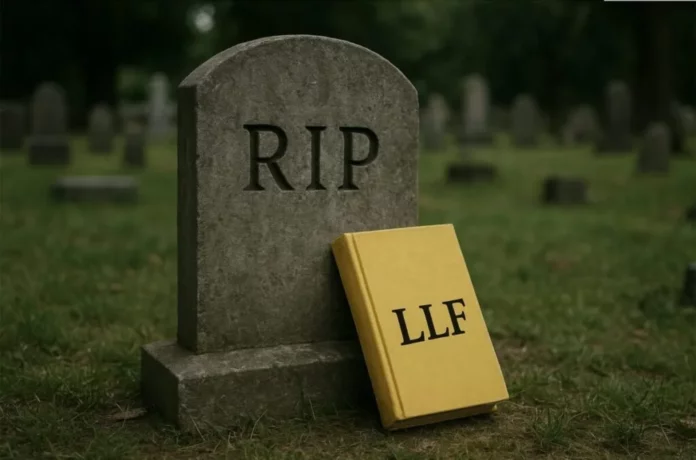
On Wednesday at about a quarter to five, the House of Bishops released a very significant statement, following their meeting the previous week in which they spent six and a half hours discussing the next (and final?) steps in the LLF process. The timing was odd; my understanding was that they were planning to release the statement on Thursday, but a newspaper had had sight of the documents from the Faith and Order Commission (FAOC, chaired by Dr Robert Innes, the bishop in Europe) and so their statement was released early.
There is much to note in the statement itself; there will be more to say when the FAOC documents and legal advice which informed their discussion are published. It is worth reflecting on why they are now (at last) so radically changing direction. But it will also be important to ask why we have got here after the launch of LLF in 2017, and the Shared Conversations prior to that.
In a nutshell: this looks to me very much like the end of the process. It is a momentous statement.
The Statement
In the opening section, the statement comments:
The PLF are a set of prayers, readings and liturgical material which, for the first time, enable same-sex couples to come to church for public prayers of dedication, thanksgiving and asking for God’s blessing as part of a regular church service.
The phrase I have emphasised illustrates the petard on which the House hoisted themselves in this phase of the LLF process. Rather than authorising the PLF prayers, in October 2023 a very divided House decided to commend them. This makes the claim that the prayers do not do anything which is not already permitted in our liturgy, but makes a specific provision for it. A group of 11 bishops publicly dissented from this:
We welcome the fact that the House recognised the need for General Synod to exercise its legitimate responsibilities in relation to liturgy and doctrine under Canon B2. However, the decision to commend the suite of prayers for use in public services bypasses those procedures and does not permit the General Synod to consider the full significance of the prayers. Nor can Synod determine whether the bishops have fulfilled their intention (supported in February) that the final form of the prayers should not be “indicative of a departure from the doctrine of the Church of England”. Indeed, legal and theological advice the House has received suggest clearly to us that the decisions of the House may fall short of this commitment.
And the nub of the issue of process is that the House refused to release that ‘legal and theological advice’, despite repeated calls to do so. This has led to a serious corrosion of trust in the House of Bishops.
The next stage in the process involved considering three issues:
Could the Prayers of Love and Faith now be used on their own, in a ‘bespoke’ (previously called a ‘standalone’) service?
Could clergy now enter a same-sex (sexually active) civil marriage, rather than merely a civil partnership which was pledged to be celibate?
And what provision would be made for those who could not in conscience accept these developments as consonant with Anglican doctrine?
The statement addresses these three questions, and does so immediately and concisely before expanding:
While final decisions will be made by the House in December, the bishops agreed in principle that both bespoke service and clergy same-sex marriage would need formal synodical and legislative processes to be completed before they could be permitted.As a result, they also concluded there is currently no need for a new code of practice setting out special arrangements such as Delegated Episcopal Ministry.
Stand alone services of blessing
Taking these in turn, the most significant is that the bishops have now agreed that Canon B2 is the only possible route for any further development of the Prayers. This is the canon that regulates the normal approval of new liturgy, and it contains two key phrases:
any form of service or amendment thereof approved by the General Synod under this paragraph shall be such as in the opinion of the General Synod is neither contrary to, nor indicative of any departure from, the doctrine of the Church of England in any essential matter…
and
Any approval, amendment, continuance or discontinuance of any form of service under paragraph 1 above shall not have effect unless the form of service or the amendment, continuance or discontinuance thereof is finally approved by the General Synod with a majority in each House thereof of not less than two-thirds of those present and voting.
Since it requires a two-thirds majority in all three Houses in Synod, and we have never, any time in the last ten years, had that kind of balance, (and likely will not on the future) it effectively means a dead end. This threshold is designed to ensure that controversial subjects have a clear majority consensus, something that the debates around same-sex marriage have never had.
What is encouraging is that, finally, the House of Bishops is doing the honest thing which seeks consensus and maintains unity. In June 2023, Andrew Goddard published three articles (here, here, and here, with a summary here) on the question, and concluded:
The way in which these prayers are introduced into the church will say a lot about the church we want to be. Are we committed to respecting good, long-established and inclusive processes for approving liturgy and deciding contentious matters in Synod? Are we embodying the Pastoral Principles such as ‘paying attention to power’ and enabling people to speak rather than silencing them? Are we providing the best legal protection for parish clergy? If we are, then the only defendable route has to be canon B2.
But here is the crazy thing: we have known the legal position on this since 2017. (A friend online, in response to the statement, said ‘I am relieved—but it feels as though I have just been told that the sky is blue after all.) The paper issued by the House of Bishops in 2017, GS 2055 (which you can read here) included an Annex of legal advice, and this set out the difficulties in affirming people in a same-sex relationship.
Canon B 30 summarises the doctrine of the Church of England in relation to marriage. The effect of Canon B 5.3, in the light of the doctrine described in Canon B 30, is that it would not be lawful for a minister to use a form of service which either explicitly or implicitly treated or recognised the civil marriage of two persons of the same sex as equivalent to holy matrimony. (emphasis original)
It also set out a possible way forward, which included the bishops needing to:
explain that it would be lawful for the clergy to use a form of service which celebrated the relationship between two persons of the same sex provided that the form of service did not explicitly or implicitly treat or recognise their relationship as equivalent to holy matrimony. (emphasis original)
Further legal advice made it clear what this would mean: anyone conducting such a service would need to preface it with an explanation of what marriage was in Anglican understanding, that this relationship was not marriage, and that any sexual relationship outside male-female marriage was regarded by the Church as sinful, and therefore should be met with a call to repentance. This would hardly make for a useable service.
Interestingly, in a previous paper to Synod from the Episcopal Reference Group, part of FAOC, it was noted that, in thinking about standalone services, the question of context was as important as content in determining whether or not this would be indicative of a departure from doctrine.
In coming to a judgment on whether the PLF are contrary to or indicative of a departure from the doctrine of the Church of England, the ERG is of the view that both text and context are relevant and belong together. The ERG recognises that the PLF in themselves (considered in the light of the Nine Theses), do not characterise the relationship of any given couple as marriage and do not, therefore, impinge directly upon the doctrine of marriage. Nonetheless, the contexts in which the PLF might be used could impinge upon this doctrine. This contextual risk is likely to be higher in a bespoke (i.e., standalone) service than in any use of the PLF within existing services.
That is, the service might use all the right language, and avoid all language which hinted at the relationship in question being a quasi-marriage—but if the context in which the blessing happened looked to those involved like a marriage, then this itself would be indicative of a departure, and therefore not permitted. (If it looks like a wedding duck, and quacks like a wedding duck, it is a wedding duck, even if the words ‘wedding’ and ‘duck’ are never used.) This is pertinent, since I noted in my open letter to Stephen Cottrell in July:
In York Minster a few months ago, Canon Tim Goode presided over an act of blessing a same-sex couple, in which the service appeared to be a special occasion, it involved the exchange of rings over which Tim prayed a pray of blessing (in secret, except for posting a picture on Facebook), and afterwards there was a celebration described as a reception. All this is outside the guidelines, and will have been experienced by those attending as a quasi-marriage celebration.
If the FAOC papers that informed the bishops last week explores further this kind of thinking, then it could even put the continued use of the existing commended PLF prayers in question, precisely because of the reasons set out by the 11 dissenting bishops. So this might not just be a dead end in the discussion—it could even lead to a rethinking of decisions made so far.
Clergy entering Same-sex (civil) marriage
…..
How did we get here
There are two other rather important comments in the statement which could easily be missed. First, there is a new commitment to openness and transparency:
The bishops reviewed advice both from the Church of England’s Legal Office and the Faith and Order Commission (all of which will be published in due course)…Although there remains a wide range of views within the House on questions of sexuality and relationships, there was strong consensus on the need for unity, transparency and proper process alongside pastoral care.
This is precisely what has been missing in the past, as the House has used Standing order 14 to meet in camera instead of in public as a House of the General Synod. This is a welcome commitment—but it immediately raises the question ‘How far will this go?’ Will we now see the previous legal and theological advice? Will we see full minutes from this meeting, including the voting, so we can see how much of a consensus there was?
And will we be told how we got into this mess in the first place? Whose idea was it that the details of discussion should be kept secret? Why did some bishops feel the need to dissent publicly? What was happening in the House all this time? Someone said to me yesterday that their bishop commented to the effect that ‘Actually, most of us want to go down this route [of openness, following legal and theological advice] a long time ago!’ So what prevented it?
The other fascinating comment in the statement relates to appointments:
They also agreed they would provide pastoral reassurance through: …A commitment that diocesan decisions around allocating resources, placement of ordinands and curates, or appointments, should not be affected by views held on LLF matters;
This must mean that no appointment, at any level, can be limited to those who will use or will encourage the use of the Prayers of Love and Faith—including episcopal appointments. That is, no diocesan process can now exclude any candidates who refuse to use them, and recommend that they are not used, and do not think this is a ‘thing indifferent’. And of course, all bishops should routinely be expected to believe, uphold, and teach the doctrine of the Church as it currently is.
We might, perhaps, reflect on why we have reached such a changed position now, after ten or more years of agonising, expensive, and divisive debate. (One liberal person commented to me yesterday on X ‘I thought the process might at least allow us to understand each other better—but it has just made us more divided.’) And it is truly bizarre that only now is the theological and legal work really being taken seriously. Tim Wyatt, in his discussion of the route to change, and the role of Martyn Snow when he was lead bishop, puts it rather well:
Ever since [Martyn] took on the PLF job halfway through the process, he has shown an admirable willingness to try and think things through properly rather than be governed by fear of a liberal backlash. Yes, it’s of course absurd that only now are we bothering to check in with our theological advisors on FAOC to see if our plans might contradict our doctrine—clearly this should have been done long, long before the bishops brought anything to synod back in 2023.
So why is this being taken seriously now, when it wasn’t before? There have been a multiplicity of factors: there is no doubt that discussion in the House of Bishops has been a good deal easier since Justin resigned/retired; and the absence of an archbishop who has been pushing the agenda for change must be important; the growing confidence of ‘orthodox’ bishops, including the 11 who dissented, and Andrew Watson’s courageous theological statement will have had an impact; and the careful campaigning of ‘orthodox’ groups like the Alliance and CEEC will also have made a difference and given ‘orthodox’ bishops confidence. Perhaps the most significant thing is that key liberal bishops, who have been pushing hard on this, have retired or will soon retire—Martin Seeley (Eds and Ips), John Inge (Worcester), Viv Faull (Bristol), and soon Steven Croft (Oxford).
Today’s surprising decisions from the House of Bishops on LLF underline how very, very poor this process has been for several years. The legal advice, concerning both ‘bespoke services’ and clergy in same-sex marriages, could and should have been articulated clearly years ago. Much pastoral and missional damage within the CofE and beyond could have been avoided—instead we seem to have enshrined uncertainty and disunity. And meanwhile LGBT Christians will rightly ask what happened to the ‘radical new Christian inclusion’ that was once promised.
So there is much damage to be repaired still—not least the sense of trust in the House of Bishops.
But perhaps, at last, we can now focus on things other than our internal dispute about marriage and sexuality. We can rest within that ‘consensus of the church‘:
The creational-covenant pattern of marriage…is a consensus doctrine of the church catholic. Until the present generation, all Christians everywhere have believed, and every branch of the Christian tradition has taught, that marriage is man-woman monogamy… Marriage, the whole church has always confessed, is not only a monogamous union but also a man-woman union.’ (Belousek, Marriage, Scripture, and the Church p 52).
We can ensure we welcome all, and in particular walk with those who find the teaching of Jesus here challenging, but confident that he is our good shepherd whose teaching is life giving.