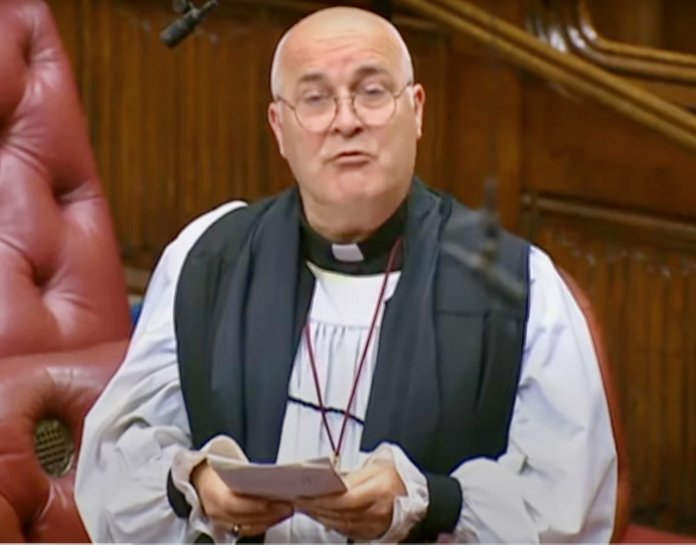
Archbishop Stephen spoke today (19 Sept 2025) as part of the debate in the House of Lords on the Second Reading of the Terminally Ill Adults (End of Life) Bill. His speech follows in full.
My lords, it’s an honour to follow Baroness Hollins, and I speak of course, for myself, but also knowing that I represent views held by many not just Christian leaders, but faith leaders across our nation in whom I’ve been in discussion and have written to me.
Jesus teaches us that how we live our lives in relationship to others is vital for the health of our society and our own personal well being. We belong with and for each other. This bill is wrong because it ruptures relationships, serving one need, but creating many others. The noble lord Lord Baker and several others in this important and moving debate gave the game away early on. No government, he said, will be prepared to provide palliative and social care in the way it’s needed. Thus revealing that this bill’s impact will be economic as well as social. Several speakers said there were too many safeguards, others that provision for assisted dying ought to be expanded. As the noble lord, Lord Harris pointed out, if this is where compassion leads, then the logic of compassion demands the scope be widened.
On this side of the argument, and also motivated by compassion, we must say that whilst we share the same anguish as we witness the death of a loved one and long for the suffering to end, there is a moral universe of difference between doctors and clinicians in consultation with families, withdrawing treatment in the last days of someone’s life to picking out six months as the point at which life for some can be extinguished. If we do this, we unleash into our society a fundamental change in our relationships. The relationship between death and life, between doctor and patient, between parent and child, between citizen and state. And I saw this first hand in Canada last year where priest after priest told me heartrending stories of people choosing an assisted death because it was better for their family than spending an already meagre inheritance on expensive care, and sometimes feeling forced into this choice, they felt it was their duty to die.
I know this is not what we want here, but this is what we are proposing. Do we seriously think that if this bill was passed, palliative care won’t be detrimentally impacted, or that six months won’t in due course become twelve. I think we can do better than this. Of course I don’t want any one to die a painful agonizing death, but nor do I want poor and vulnerable people to be faced with such agonizing choices. Better palliative care can massively ease the first dilemma, assisted death will turbocharge the latter.
Before I trained for ordination, I worked for a year at Saint Christopher’s Hospice, probably the most formative year of my life. On my first day on the ward I was terrified, all I could see was cancer and death, but during that year I learned that it is possible to live until you die, and although there are some illnesses so hideous that they cannot be completely controlled, in most cases they can, honouring people’s dignity and upholding their value as someone made in the image of God until their life’s end. Why I ask Lord Falconer then does the bill deny the right of hospices to opt out and yes I welcome Lady Berger’s amendment. But I also want to say, alongside the Bishop of London that if this bill does reach a third reading, then we from these benches will be prepared to table an amendment to offer us a vote.
Meanwhile I give the last word to Dame Cicely Saunders –
“You matter because you are, and you matter to the end of your life. We will do all we can, not only to help you die peacefully, but to live until you die.”