The Church of England’s General Synod has overwhelmingly approved a call for candidates for ordination no longer to be required to agree to a 34-year-old document on sexuality.
On Tuesday, Synod backed a motion asking the House of Bishops to remove any requirements relating to the 1991 document Issues in Human Sexuality from the vocations process and instead make use of the Guidelines for the Professional Conduct of the Clergy.
The motion was supported by nearly all Synod members, encompassing a breadth of theological standpoints
Originally intended as a teaching document, Issues in Human Sexuality had assumed a more definitive role to set out expected conduct within the Church’s discernment and vocations process.
Although in its time it aimed to be sensitive, the tone, language, and some of the assumptions in ‘Issues’ are now contextually inappropriate and appear prejudicial and offensive to many people, a paper introducing the item to Synod members noted.
Diocesan Directors of Ordinands are presently asked to confirm that candidates have agreed to “live within the guidelines in Issues in Human Sexuality”.
The motion does not alter the Church’s doctrine or canonical requirements, which remain in place. Rather, it reflects a desire to ensure that the discernment process for ordained ministry is both theologically robust and pastorally sensitive.
The Private Member’s Motion, tabled by the Rev Mae Christie and presented by Paul Waddell (both from the Diocese of Southwark), was passed by a near-unanimous show of hands.
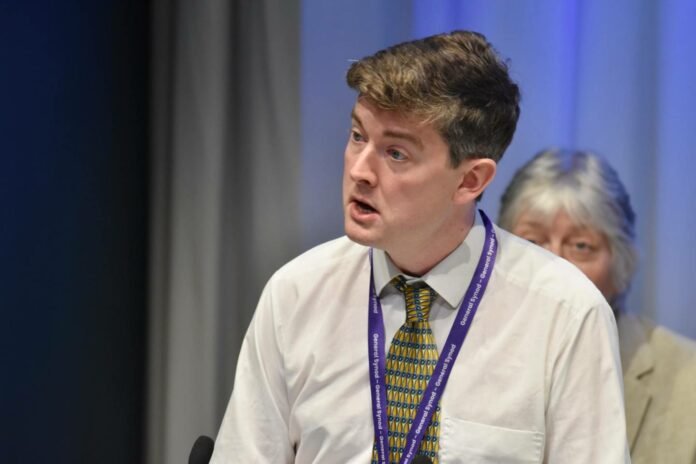
Introducing the motion, Paul Waddell (pictured) said:
“As people on both sides of the Living in Love and Faith debate have said, the length of this process is causing damage to ordinands, and broadly speaking, the wider church. We are in a vocations crisis, and this is not helping.
“We have before us an opportunity to come together to do something small but significant on Living in Love and Faith that’s in the common interest. And we get to change the tone ahead of February.”
This followed an amendment from the Rev Jenny Bridgman (Chester), ensuring that during the period of transition, candidates will instead be asked to live consistently with the Guidelines for the Professional Conduct of the Clergy. First adopted in 2003, the Guidelines were substantially revised and declared an Act of Convocation by the Convocations of Canterbury and York in 2015.
The Church is already committed to completing a new set of Pastoral Guidelines, a Code of Practice, and a Bishops’ Statement – work that was agreed by Synod in July 2024 and is which is currently underway.
The decision allows for the outdated guidance to be removed while the Living in Love and Faith process concludes.
The interim use of the Guidelines for the Professional Conduct of the Clergy ensures that expectations for clergy conduct remain clear and grounded in the Church’s wider understanding of ministry as a public and representative calling.
During the debate Synod heard from a range of speakers who hold a variety of positions on broader areas of debate on Living in Love and Faith, who were in support of this step being taking and in their view that Issues should be removed.
The full replacement package of guidance is expected to come before Synod in 2026.
Following the debate, the Bishop of Chester, Mark Tanner, who chairs the Church of England’s Ministry Development Board, said:
“Ordinands and those in discernment are becoming public servants of the church and representatives of the Good News we share: this is an important and welcome recognition of the life and expectations they are taking up.”
Notes
The motion as passed was:
‘That this Synod request that the House of Bishops remove any requirements relating to Issues in Human Sexuality from the Vocations (Shared Discernment) Process and replace it with an interim requirement of living consistently with the Guidelines for the Professional Conduct of the Clergy (GPCC) during the period of discernment and training, and complete work on the package of the Pastoral Guidelines, Code of Practice, and Bishops’ Statement, as agreed at General Synod in July 2024.’