
On Monday 27th April a number of volunteer curates across our diocese will start a four week period of furlough.
In a first for the Church of England the pilot scheme is part of the many prudent actions we are taking to manage our finances through the current crisis. It enables the diocese to use the Government’s Job Retention Scheme in the same way it has furloughed staff at St James House. We believe this decisive, prudent action will mitigate the financial impact of the crisis and ease pressure on parish share.
We have only chosen to consider a voluntary scheme for furloughing curates as this is new territory for us and for the Church of England. We are able to consider curates because of the technical, legal status of their ministry. It is not a value judgment on the ministry of individuals or of curacy in general. Nor is it a judgment on the parishes. And if a curate or their training incumbent has not wanted to be furloughed then that is perfectly fine.
The diocese of Liverpool has always sought to be realistic about how to manage this crisis. Our aim is not simply to survive for a short period of time. We are clear about the financial challenges we face. We have to look at all ways in which we not only come through this crisis but have a platform to be able to continue to build the church and sustain a Christian presence.
We have considered this prayerfully and carefully. Through this we will be able to explore the impact of taking an absolutely key group of people out of frontline ministry so that if we had to take similar measures in the future when the situation would undoubtedly be more acute for us, we will know the best way to do this to serve and protect our ministers, lay people and churches.
This is a limited action with a limited aim. We have not made any decisions about furloughing other clergy. If we did start to think about that we would look at wider consultation with colleagues, parishes and worshipping communities across our diocese. But the learning from this pilot would be crucial to that wider decision-making process.
The diocese of Liverpool has been very honest about the financial implications of the crisis. As a small diocese with limited historical reserves we are accustomed to sensible financial management. As with any diocese our stipendiary budget is the biggest source of expenditure and mitigating costs here is a big financial boost. This action is part of a package of cost savings of c. £0.5 million in the next 3 months, including furloughing staff at St James House, salary sacrifice of staff at St James House and a range of other cuts in other expenditure lines. These actions considerably ease our short-term financial pressures; furloughing curates is a small but significant element of this package.
Our financial prudence has been supported by the generosity of parishes who, while facing their own local challenges, have offered advances on their parish share payments. We are also in constructive talks with the national church about how we, like other dioceses, can be supported by the national church.
Mike Eastwood, Diocesan Secretary commented “whilst fundamentally this crisis is a health crisis and we must all stay safe if we are to maintain a Christian presence into the future the steps we take now are crucial. The willingness of so many to take a step in partnership with our diocese is tremendous. As a diocese we will continue to be prudent and practical in our response and honest about the challenges we face.”
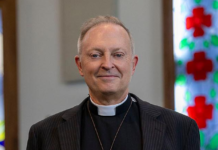
Bishop Paul added “This is new territory for us and for the national Church. I continue to thank God for the way in which colleagues in the Diocese are exploring a range of different approaches to the present crisis, including this one. As with so many aspects of this situation we have been humbled by the gracious and generous way in which these efforts has been received and by the understanding shown.
Despite the human and economic stress of these present days, Liverpool Diocese remains faithful to its call to bring the Gospel to present and future generations and to make a bigger difference in the world. That plays out in our lives in so many ways, and in this instance it is about staying home, staying safe.”



This action – and there will be more dioceses following with even tougher measures – results from a frightening melange of naive idealism, incompetence, and disingenuous devotion to the preservation of an institution rather than faithful adherence to the Gospel, not to mention warnings, of its Founder. By slavish adherence to the institution of the C of E, all manner of ills and evils have resulted and the ‘leadership’ must be held responsible for having neither the character, the competence, nor often, sadly, the desire to take the requisite action: strategic and financial incompetency with dioceses failing to cut their cloth according to their purses; the covering up of abuse at the highest level ‘for the sake of the good name of the institution or for career prospects’; the preservation ‘for the sake of ‘balance” of churches which either will not rather than cannot pay their way, or will not preach a faithful Gospel but teach a different one; the list goes on and it is not only shameful in itself but will result in a shameful end. The growth and exaltation of the ‘centre’ at the expense of local parishes, the throwing of money at projects and initiatives like seed on rocky ground, the introduction of contracts for clergy in order to undermine the independence of the clergy so as to make them pawns rather than players in the game, these and many other failures, whilst eventually destroying the Church of England, will strengthen the Church IN England. The hierarchy have only themselves to blame but many of us have come to realise that, despite their words, they don’t actually care.
Does this mean that the Diocese of Liverpool is close to bankruptcy? It would seem so. I wonder how some of the other dioceses in financial difficulties are getting on? Presumably the problem is that no money is being collected in then plate on Sundays. I find this puzzling, as I thought that standing orders were the norm, nowadays.
Speaking as a parish church treasurer (not in Liverpool diocese) it’s not just that we’re not getting the plate collection on a Sunday (standing orders are the norm for more wealthy church members, but for many others the collection is the norm, and every little helps) but also we’re loosing the hall-letting income from various community groups that are no-longer meeting, both because of their own rules and the C of E’s decision that churches should remain closed.
How come the bishop of the Diocese of Liverpool, one of the most important of the Church of England, can be an heretic, who openly rejects the Christian stance on human sexuality, encourages people with same-sex atraction to engage in aberrant sexual behaviour and supports same-sex marriage? Paul Bayles endorsement of homophilia is to the point that he has supported several times the Gay Pride March. I wonder where are the orthodox members of his diocese? Is that diocese really totally lost to homophilia? How many members the diocese has lost since Paul Bayles took office?
The next pandemuc has been in the news for a good few years now. We’re been prepped to expect the big one and whether this is it or not the response has been appropriate to it. We’ll find out in the next year or two if this was it or if the real disaster is yet to come.
At the least we should all sit up an take notice. It is quite likely this exercise will be repeated a time or two in the coming years as what has been rolled out is the planned global response developed by the WHO and national health services.
All of us need to take a hard look at our finances and at how we will minister to God’s people the next time this happens without having to let people go when the trenches are full of frightened, needy and angry people.
Will we go without pay? Not if we’re spending everything we get. That is true for individuals as well as a diocese.
in the 1990s the Diocese of Chelmsford decided to suspend all new appointments to livings for 6 months, just as a cost saving measure. When I suggested doing the same for episcopal appointments in the Diocese I wasn’t taken seriously, even though the saving was greater. Why not furlough all the Bishops? After all they can’t get out to do ordinations or confirmations. I’m not sure the government offer was meant to bolster big institutions- but to help struggling businesses. I think this is as outrageous as the billionaires who ask the government to pay for their furloughed employees.
[…] diocese of Liverpool has decided to furlough its curates, on a voluntary basis. Which might strike us as a good idea, but then we’re not curates in […]