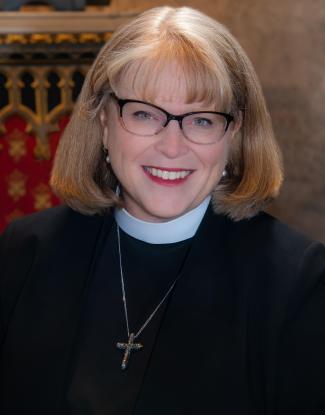
The Episcopal Diocese of Massachusetts will spend up to $280,000 to shield its congregations from a 10.5 per cent health insurance premium increase, the Rt. Rev. Julia Whitworth announced on 16 Sept 2026 — cutting the effective increase for parishes to 5.25 per cent for 2027 in what she described explicitly as a one-time measure.
Writing directly to clergy, wardens, and treasurers rather than leaving the announcement to diocesan human resources staff, Bishop Whitworth said the Diocesan Council had voted unanimously to approve the emergency offset after she brought the matter to it the previous weekend. “This is a tangible sign of our commitment to strengthen congregations in every way possible,” she wrote.
The intervention is among the more direct and substantial diocesan responses to the healthcare cost crisis now pressing on Episcopal parishes across the country, and it comes with an unusually candid warning: the relief is temporary, and harder conversations lie ahead.
The Church Medical Trust, administered by the Church Pension Group and mandatory for all Episcopal dioceses and their congregations, notified the Diocese of Massachusetts this autumn of a 10.5 per cent premium increase for the 2027 plan year — double the roughly 5 per cent annual increases the diocese has experienced in recent years, and accompanied by modest rises in co-pays and annual out-of-pocket maximums.
Bishop Whitworth noted that her diocesan Compensation and Benefits Committee had confirmed the increase was “squarely in-line with national averages across comparable employers” and in fact lower than increases facing several other Episcopal dioceses. That contextual framing will offer cold comfort to small congregations already stretched thin, but it signals that Massachusetts is not an outlier — it is a bellwether.
The $280,000 appropriation, spread across all congregations in the diocese, effectively absorbs half of the premium increase for one year, bringing the parish-level impact to 5.25 per cent rather than 10.5 per cent. No means-testing or application process was described; the offset appears to apply to every congregation in the diocese.
Bishop Whitworth was forthright about the limits of what the council had done. “I wish to be very clear: this is a one-time offset. It will only delay, not eliminate, substantial rate increases anticipated in the future,” she wrote. Benefits consultants have advised the diocese to budget for at least 10 per cent increases in future years — meaning that after the one-year cushion expires, parishes may face a compounded shock in 2028 as both the deferred increase and future market rises land simultaneously.
“Given the one-time relief that we are providing for 2027, that increase will likely be even greater in 2028,” the bishop acknowledged.
The announcement frames the coming year not simply as a reprieve but as a planning window — time for “the necessary, and perhaps difficult, conversations to develop diocesan-wide strategies for addressing the extraordinary cost of health care and health insurance in this country, while maintaining our commitment to provide meaningful benefits for employees and their dependents.”
The Diocese of Massachusetts is navigating a crisis that is structural and churchwide rather than local. The Episcopal Church’s Denominational Health Plan was established by General Convention in 2009 precisely to aggregate buying power and spread risk across the whole Church. In principle, mandatory participation prevents healthier, younger congregations from exiting the pool and leaving sicker, older members behind. In practice, the pool itself is ageing, and the costs that flow from it are testing the financial capacity of small congregations that constitute the majority of Episcopal parishes.
The Church Pension Group’s Medical Trust reported that DHP claim costs run approximately 18 per cent above those of the average US employer, driven by an ageing workforce, rising prescription costs, and the extraordinary growth of GLP-1 weight-management medications, whose year-over-year claim trend within the DHP reached 148 per cent in 2024. Mental health parity provisions mandated by the 81st General Convention’s Resolution 2024-A102, while pastorally important, added further cost pressure across all plans.
For a small parish paying a full-time rector in a mid-range market, family healthcare coverage on a standard PPO plan in many dioceses now approaches or exceeds $50,000 annually — in some cases more than half the rector’s cash salary. The Diocese of Michigan, for example, listed family PPO 100 premiums at $4,292 per month for 2026, a 9.03 per cent increase over 2025. Massachusetts figures will differ, but the order of magnitude is comparable.
The 81st General Convention acknowledged in Resolution 2024-A101 that healthcare costs represent “among the most acute pressures faced by the domestic dioceses, congregations, and faith communities of The Episcopal Church,” and urged CPG to pursue equitable churchwide pricing. What it did not do — and what no General Convention has yet done — is provide a structural mechanism for redistributing healthcare costs from small congregations that cannot afford them to larger ones that can.
What distinguishes the Massachusetts announcement is not the scale of the expenditure — $280,000 is a meaningful but not enormous sum for a diocese of its size — but the directness of the episcopal communication and the speed of the council’s response. Bishop Whitworth did not wait for the annual HR mailing. She wrote personally, explained the figures plainly, acknowledged the limits of the remedy, and named the harder work ahead.
That combination of pastoral candour and institutional responsiveness is precisely what many smaller congregations — accustomed to receiving actuarial tables from diocesan offices without accompanying context or relief — rarely experience. Whether other dioceses facing similar or steeper increases will follow suit remains to be seen.
The Church Pension Group’s own 2025 Annual Report noted that it fulfilled its mandate in 2024 and spread the cost of mental health parity improvements across its membership, resulting in only a 0.1 per cent attributable rate increase for that specific item. The system is, in its own terms, working as designed. The question Bishop Whitworth has put before her diocese — and, implicitly, before the wider Episcopal Church — is whether the design itself remains adequate to the moment.