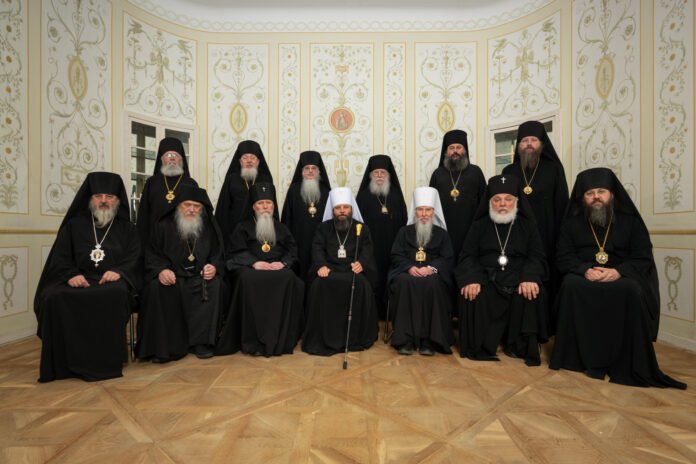
The United States Court of Appeals for the Second Circuit has held that the First Amendment’s church-autonomy doctrine bars a defamation action brought by a former Russian Orthodox priest against the Russian Orthodox Church Outside Russia and its leaders. The decision, issued on 18 August, comes after six years of litigation arising from a disputed episcopal election and subsequent ecclesiastical discipline.
In Belya v. Metropolitan Hilarion, the court ruled that a church’s selection, supervision, and discipline of its clergy are inherently religious acts. A civil defamation claim cannot be used as a collateral means of challenging those decisions where adjudication would draw the courts into questions of internal church governance.
The plaintiff, Fr Alexander Belya, had been a priest of ROCOR. The dispute arose amid an internal controversy over his eligibility and qualifications for election as Bishop of Miami. Diocesan leaders sent a letter to ROCOR’s Synod setting out complaints concerning his conduct, asserting that he had not been elected in accordance with the church’s ecclesiastical requirements, and calling for his suspension and investigation.
Fr Belya subsequently left ROCOR and brought suit, alleging that the church entities and individual leaders had defamed him by accusing him of forging letters connected with his proposed appointment to the episcopate. The church responded that the case arose from matters of faith, discipline, and internal government that are constitutionally reserved to religious bodies.
The court held that “a church’s selection and supervision of its religious leaders are inherently religious acts,” and that allowing the former priest’s claim to proceed would threaten a collateral attack upon those acts. Where a claim grows out of a church’s protected investigation into a minister’s conduct and implicates internal governance, the church-autonomy doctrine bars the claim, the court held.
The church-autonomy doctrine, sometimes called ecclesiastical abstention, is rooted in the First Amendment’s protections for the free exercise of religion and against governmental establishment of religion. Its central principle is that secular courts may not decide questions of doctrine, worship, discipline, or the appointment and removal of clergy.
This does not mean that churches are immune from all civil claims. Courts may resolve disputes involving religious institutions through neutral principles of law where they can do so without deciding a theological question or reviewing an ecclesiastical judgment. The dividing line is often whether a court can determine the case without having to decide what a church’s teaching, law, or governing authority requires.
Defamation claims pose a particular difficulty. A plaintiff ordinarily asks the court to determine whether a statement was false. When the alleged statement arises from a disciplinary process, however, determining falsity may require a civil judge or jury to assess the validity of a ministerial investigation, a church tribunal’s procedures, or the qualifications for holy orders.
In Belya, the Second Circuit concluded that the alleged defamatory statements were bound up with the church’s examination of a priest’s fitness for episcopal office and its authority to investigate and discipline him. That connection placed the case within the protected sphere of internal religious governance.
While it looked to the same legal standards that governed the Episcopal Church cases of the past two decades, the Belya court addressed clergy defamation claims rather than property, diocesan separation, and the authority of the General Convention and diocesan bishops.
Beginning with disputes surrounding dioceses and parishes that sought to withdraw from the Episcopal Church, civil courts were regularly asked to determine who held title to parish property and who represented the continuing Episcopal diocese. The Episcopal Church generally prevailed where courts applied neutral principles and found that governing documents, deeds, canons, and the Dennis Canon created or recognized a trust relationship in favor of the wider church, while state courts that followed neutral principles of law theories sided with dioceses.
After decades of litigation, the emerging patter of jurisprudence was that civil courts may apply secular legal rules to deeds, trusts, corporations, and titles, but they may not substitute their judgment for that of a church on questions of doctrine, polity, clerical status, or canonical discipline.
The Second Circuit’s reasoning in Belya reinforces that distinction. It does not create a blanket exemption for religious bodies from civil accountability. It does, however, make clear that a clergy plaintiff may not frame an internal dispute over discipline or episcopal selection as a tort action if deciding the claim would require a civil court to re-examine the church’s religious decision-making.
The case is also notable for its focus on the process of choosing a bishop. The court treated the investigation of a priest’s qualifications for episcopal office, and the church’s internal communications concerning that process, as part of the religious community’s protected authority to select its leaders.
For hierarchical churches, including the Episcopal Church, the decision is a reminder that canonical processes are not merely voluntary association procedures. They form part of a religious body’s constitutionally protected ordering of its common life, provided that the dispute truly concerns ministry, discipline, doctrine, or governance rather than an unrelated civil wrong.
At the same time, the judgment leaves unresolved the difficult cases at the boundary: allegations of fraud, abuse, financial misconduct, or statements made outside a disciplinary context. Courts have frequently held that church autonomy does not automatically foreclose every tort claim against a religious institution.
The importance of Belya for ecclesiastical lawyers lies in its reaffirmation of a familiar constitutional boundary. Civil courts remain open to litigants with ordinary legal claims, but they may not become appellate tribunals for ecclesiastical decisions about who may exercise the church’s ministry, who may be disciplined, and who may be called to the episcopate.