Anglicans around the world are sometimes surprisingly English. They exhibit real skill in not saying ‘no’ outright, but are good at burying or smoothing over rejection of an awkward proposal, smothering things in politeness.
There have been two excellent specimens for any sociologists interested.
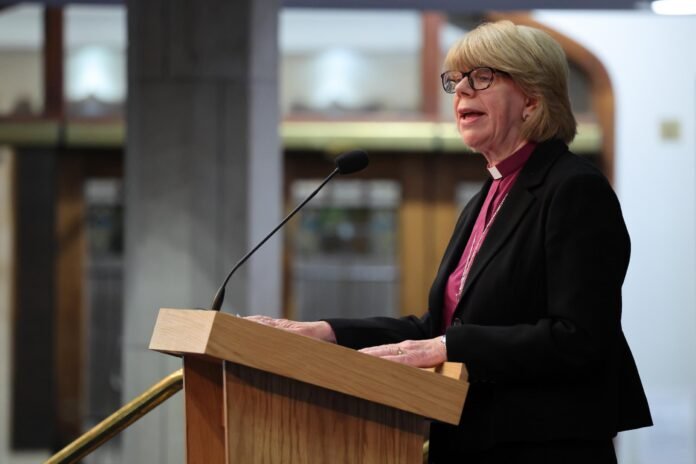
Last month, a body called the Anglican Consultative Council (ACC) gathered in Belfast – to do as their name implies, consult together as Anglican bishops, clergy and lay people representing Anglican provinces – that is, national churches (mostly).
Several, but not all, Provinces in the conservative Gafcon (Global Anglican Communion) network did not turn up. Nigeria, Rwanda, and Uganda maintained their long-standing boycott.
But a similarly conservative body, the Global South Fellowship of Anglicans, did show up but stayed away from communion services. They came to engage with what were called the Nairobi-Cairo proposals, which had been put forward by another Anglican Communion body, the Inter-Anglican Standing Commission on Unity, Faith and Order, which focuses on theology.
The Nairobi-Cairo proposals would have slightly loosened the ties of the Anglican Communion, reflecting the reality that only some of the member national churches actually remain in full communion. The old description of the Communion as churches “in communion with the See of Canterbury” would be replaced with a reference to a “historic connection with the See of Canterbury”. The Role of the Archbishop of Canterbury would have been supplemented with a “collegial council of regional primates” (national church leaders) to reflect the diversity of the Anglican Communion.
But all of this was dismissed oh so politely. The ACC voted to file away the proposal simply as “resources for the continuing discernment of the Anglican Communion concerning its life together and the development of the Instruments of Communion.”
In particular, they reaffirmed “widespread agreement that communion with the See of Canterbury remains vital to any rearticulation of Anglican identity.” Widespread is an interesting term because the ACC is aware that large parts of the Anglican Communion no longer believe that Canterbury or the CofE can hold the Communion together. For4 example, Nigeria, the largest national church in the Anglican Communion, has removed relationship with Canterbury from its constitution. The final resolution is here.
There was one critical moment in the discussion. The motion that dispatched the Nairobi-Cairo proposals into the long grass included a clause that originally said the ACC “rejoices that all God’s people are ‘called to one hope’ because there is ‘one body, one Spirit…one Lord, one faith, one baptism, one God and Father of all, who is over all and through all and in all’ (Ephesians 4:4-6)”
Joaquin Philpotts, from the Anglican Church of South America, moved an amendment that added “and acknowledges that our present divisions in the Anglican Communion are partly caused by disagreements about the ‘one faith’.”
Thus the ACC put on record the doctrinal differences in the Anglican Communion. The ACC delegates may not have read it, but an essay by Bishop Glenn Davies in the US-based Living Church site before the ACC met, argued that the Nairobi-Cairo proposals to somewhat loosen the structure of the Anglican Communion could not solve the real issue of doctrine. “While the proposal to remove the Archbishop of Canterbury as the ex officio chair of the Primates’ Meeting and the ACC is timely, such a proposal is akin to rearranging the deck chairs on the Titanic, Davies wrote. “As desirable as it may be in the postcolonial era, it does nothing to address the crisis surrounding marriage and human sexuality.”
It turned out that at the ACC meeting, progressives agreed that the Cairo Nairobi proposals attempt to slightly change the structures of the Anglican Communion failed to tackle the real problem – the doctrinal split over same sex blessings and same sex marriage. But they simply supported the status quo.
Read it all at The Other Cheek