

The Church of England has been forced to defend its now‑infamous “World Cup prayer” after members of General Synod challenged the theology, authorship and oversight of a piece of liturgical prose mocked across social media for invoking “the hand of God.” In a written reply to the 10–14 July 2026 meeting of General Synod in York, the Rt Rev Michael Ipgrave, Bishop of Lichfield and chair of the Liturgical Commission, insisted that the prayer was the work of “theologically trained staff” and part of a broader strategy of informal, “light‑hearted” digital engagement, even as clergy and laity asked whether such experiments have crossed the line from evangelistic creativity into religious illiteracy.
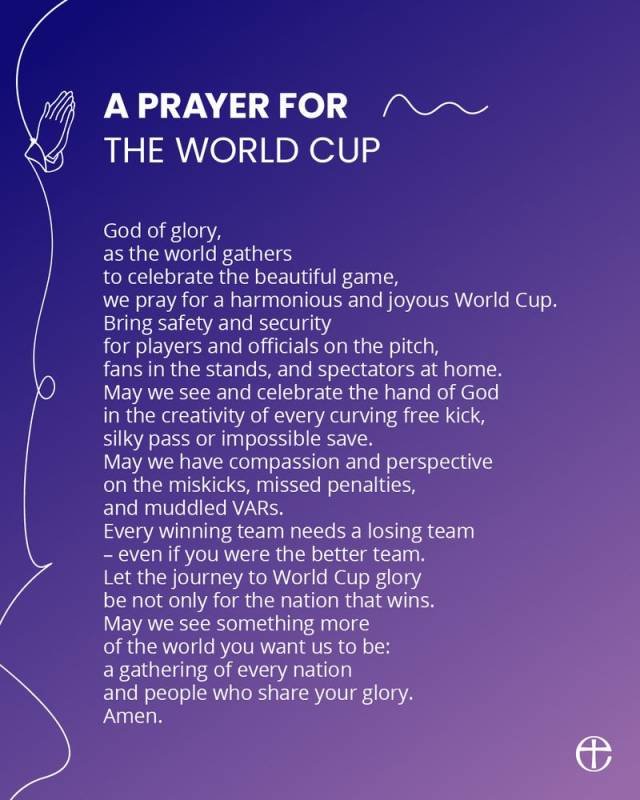
On 11 June 2026, the Church of England’s national communications team released an “official prayer” to mark the start of the FIFA World Cup, promoted across its digital channels as a resource for Christians following the tournament. The text, which referred to “the hand of God” — a phrase inseparable in football lore from Diego Maradona’s 1986 handball goal — quickly drew fire from clergy and commentators who saw the line as, at best, tone‑deaf and, at worst, a clumsy joke that trivialised divine action.
The prayer’s broader idiom, deliberately informal and pitched to a general audience, omitted any explicit reference to Jesus Christ and adopted a generic monotheistic register that critics said could just as easily have been prayed by “a Deist, observant Jew or a Muslim” as by a Christian. Supporters liked the attempt to link faith and sport in accessible language, but many saw a theologically thinned‑out text that read more like a piece of brand content than an act of prayer.
Reaction was swift. Clergy and lay members took to social media to deride the prayer as “ridiculous” and “religiously illiterate,” asking how such a text had cleared internal vetting in a national church that still claims to be guardian of the Church’s liturgical heritage. Commentators in the secular press noted that priests themselves were joining the ridicule, suggesting not a mere culture‑war pile‑on from outside but a crisis of confidence within the Church about the competence and judgement of its communications office.
The Church, however, has tried to present a mixed picture. According to the Bishop of Lichfield’s account to Synod, the prayer was “positively received” on platforms such as Facebook, where the Church of England’s reach extends beyond its regular worshippers to a broader public audience. He said responses “varied across channels,” with sharper criticism on X (formerly Twitter) but a warmer reception among those less embedded in what he characterised as the real‑time outrage culture of social media. A storm for clergy on X becomes, in Church House’s telling, a passing squall in an otherwise successful outreach.
The row did not end with a bad posting day. At the July Synod, four members tabled written questions to the chair of the Liturgical Commission, seeking clarity on authorship, oversight and theological standards for such prayers.
- The Revd Jeremy Moodey (Oxford) asked what approval processes sign off digital prayers and whether those writing them are required to be practising Christians, explicitly citing “religious illiteracy” and the “hand of God” line.
- The Revd Canon Julian Hollywell (Derby) asked who wrote the prayer and what theological advice was provided.
- The Revd Richard Seabrook (Europe) asked for the name of the author, given the level of public scrutiny.
- Mr Bradley Smith (Chichester) asked who commissioned the prayer, who wrote it, and who signed it off.
Together, the questions expose more than irritation at one misjudged text. They reveal a deeper unease that the Church’s liturgical voice is being handed, in practice if not in law, to a communications culture that prizes virality and “engagement” over doctrinal clarity and reverent speech about God.
Replying on behalf of the Liturgical Commission, the Bishop of Lichfield bundled all four questions into a single answer, thereby shifting the focus from individual responsibility to institutional process. He said prayers shared in national digital communications are “prepared by theologically trained staff” and “subject to a process of internal review and signoff,” and stressed that the communications team’s remit includes evangelism, discipleship and engagement with the wider public.
He drew a firm line between authorised liturgical texts and prayers crafted for social media. Online prayers, he said, may “look and sound different” from those commended for public worship, using registers and idioms unfamiliar to formal liturgies in order to connect with people who seldom darken a church door. Occasions of national significance, such as the World Cup, are seen as “opportunities to engage people beyond the Church’s regular audiences,” and this may mean “varied tone and format,” including language that is “more accessible, informal or light‑hearted.”
He conceded that “not all content will resonate equally with all audiences,” citing the World Cup prayer as an example of divergent reactions across platforms. He offered no apology and did not name the author, but defended the wider strategy: lighter, colloquial prayers as a bridge to those outside the Church, even if that risks provoking anger among those within it.
For many clergy, the pattern is familiar. Over the past decade the Church of England has tried repeatedly to reinvent its public voice through centrally produced campaigns, videos and online resources, coordinated from Church House and pushed through national social media. Each misstep — a poorly judged tweet, a confusing pastoral letter, now a misfiring “World Cup prayer” — reinforces the perception that communications strategy has drifted from theological moorings. Parish priests, working with shrinking congregations and thin trust, are left to explain to their people why the national Church seems more eager to be winsome online than to be clear about who God is.
The World Cup episode sharpens that concern. When national output flattens Christian confession into generic theism, or trades on knowing sporting jokes about “the hand of God” without any catechetical aim, clergy ask whether the Church remembers that its first duty is to proclaim the Gospel, not to entertain the crowd. The issue is not whether one may ever pray about football, but whether what is published in the Church’s name still sounds recognisably Christian.
The Bishop of Lichfield’s reply implies that the leadership sees the prayer as a legitimate example of “contextual” mission: a playful text for those who would never open Common Worship or attend a parish Eucharist. Critics hear something else: a frank admission that, in the name of outreach, the Church is willing to treat prayer as a flexible genre of marketing copy, so long as it retains a thin connection to “spirituality” and “community.”
Debate over sports prayers is hardly new. What has changed is that every such text, once posted online, becomes part of the permanent public record, instantly available to supporters and opponents alike. In that environment, sloppiness in doctrine or tone is not quickly forgotten. It lingers in screenshots, memes and headlines long after the fixture list has moved on.
Synod’s question is therefore bigger than one unfortunate prayer. Does the Church of England’s national communications office understand itself as a steward of a theological tradition, accountable to the wider Church, or as a religious brand agency free to experiment so long as engagement numbers look healthy? The Bishop of Lichfield maintains that “theologically trained staff” and internal review are adequate safeguards; clergy such as Moodey and his colleagues are signalling that, in this case, those safeguards have already failed.
By refusing to name the author or set out the precise approval chain, the bishop leaves unanswered the concrete questions Synod members put to him. That may protect junior staff, but it also sustains the impression that when national communications misfire, no one is ever plainly held to account. For a church already riven by disputes over doctrine, discipline and governance, this is another test of whether the centre will hear criticism from the parish trenches and admit when a line has been crossed.
If the Church of England is serious about evangelising a football‑mad nation, it will need to learn how to speak into that culture in ways that are both comprehensible and unapologetically Christian, rather than relying on the sort of soft‑focus, half‑joking piety that invites ridicule from believers and unbelievers alike. The World Cup will move on, and the social media cycle with it. The questions to the Bishop of Lichfield remain: who speaks for the Church in prayer, on whose authority, and with what understanding of the God to whom those prayers are addressed?