For many years, leaders in some Western churches have argued that disagreements over same-sex relationships should be understood through the lens of culture. We also heard such assumptions during the ACC-19 meeting in Belfast. African churches have repeatedly been urged to respect cultural differences and to appreciate perspectives that differ from their own.
My experience at ACC-19 in Belfast, however, left me asking a different question: if cultural diversity is so important, why were African ways of communicating, participating, and making decisions given so little attention?
This is not a complaint. It is about whether the structures of ACC-19 genuinely reflected the diversity of the Anglican Communion or whether they operated almost entirely through Western cultural assumptions.
Participation Through a Western Lens
Among African delegates, we often joked during meals that we were “fasting”. Much of the menu centered on potatoes and dishes that many of us would not normally consider a complete meal. We laughed, adapted, and enjoyed the fellowship. That was never the problem. Whenever people from different nations gather, everyone expects to make adjustments. We certainly did.
The real issue was the way the meeting itself was organized. Throughout ACC-19, participation depended heavily on written documents, digital platforms, and online communication. Delegates were expected to read documents electronically, submit feedback online, and contribute to discussions in two-minute speaking slots.
None of these methods is wrong. The problem arises when they become the only recognized way of participating in a Communion that describes itself as global. Every culture has its own ways of communicating, learning, and making decisions. A truly international gathering should seek to accommodate that diversity rather than assume that one approach fits everyone.
Elections Without Conversation
The elections highlighted this problem most clearly. Delegates were expected to vote for candidates after reading short biographies and written statements online. Many of us had never met one another, yet there was no opportunity for candidates to introduce themselves, explain their vision, or answer questions from delegates before voting. Instead, we were expected to make important decisions almost entirely on the basis of written profiles.
That approach may feel perfectly normal in some cultures. It is far less natural in many African societies.
Why This Matters
Many African scholars, including John Mbiti and Elizabeth Mburu, have shown that African societies have long valued oral communication, personal relationships, storytelling, and community dialogue. Knowledge is not found only in documents but is shared through conversation, lived experience, and relationships.
This does not mean Africans reject written communication. Rather, written material should be complemented by personal interaction. People want to hear someone speak, ask questions, and build trust before making important decisions.
If this cultural reality had been taken seriously, candidates would have been invited to present themselves publicly and engage in dialogue before delegates voted.
A Notable Irony
One moment during the Bible studies at ACC-19 made this especially striking. We reflected on Acts 15, where the apostles sent a letter to the Gentile churches. But they did not send only a letter. They also sent Judas Barsabbas and Silas to accompany it. The written message was strengthened by personal presence. The discussion rightly emphasized the importance of incarnation, relationship, and embodied witness in Christian ministry.
Yet when it came to the ACC elections, the opposite happened. Delegates received written statements, but the candidates themselves remained largely unheard and invisible. We voted without hearing their voices or engaging with them personally. The contrast was difficult to ignore.
The Result
Whether intentionally or unintentionally, this process disadvantaged delegates from cultures where oral communication and personal relationships remain central.
Perhaps it should not surprise us that no representative from the African churches was elected to the ACC Standing Committee, despite Africa now being home to the majority of the world’s Anglicans.
That should concern the whole Communion. If our structures consistently favor one cultural way of participating while overlooking others, then our commitment to inclusion becomes difficult to believe.
A Question for the Anglican Communion
The Anglican Communion rightly speaks of respecting different cultures. That commitment must also include African cultures.
Could the election process have been different? I believe it could. Time could easily have been set aside for candidates to introduce themselves and answer questions before voting. Instead, considerable time was devoted to discussions on secondary matters: environments, justices, inclusions, etc., while one of the most important decisions of the meeting—the election of the Standing Committee—allowed little meaningful interaction.
This raises an uncomfortable question. Why is there extensive discussion where decisions have little long-term significance, yet so little discussion where representation and leadership are at stake?
I cannot help wondering whether these structures unintentionally—or perhaps deliberately—preserve existing patterns of influence while creating the appearance of consultation and inclusivity. If so, this would represent a subtle form of neo-colonialism: maintaining control not through direct authority but through processes that consistently favor one cultural way of operating over others.
Whether or not one agrees with that conclusion, the questions deserve honest reflection. Can a Standing Committee with no representation from the churches of Africa truly reflect today’s Anglican Communion? Or does it reveal that the voices of the Communion’s largest constituency continue to be marginalized?
These are not questions for Africa alone. They concern the integrity, credibility, and future of the Anglican Communion itself.
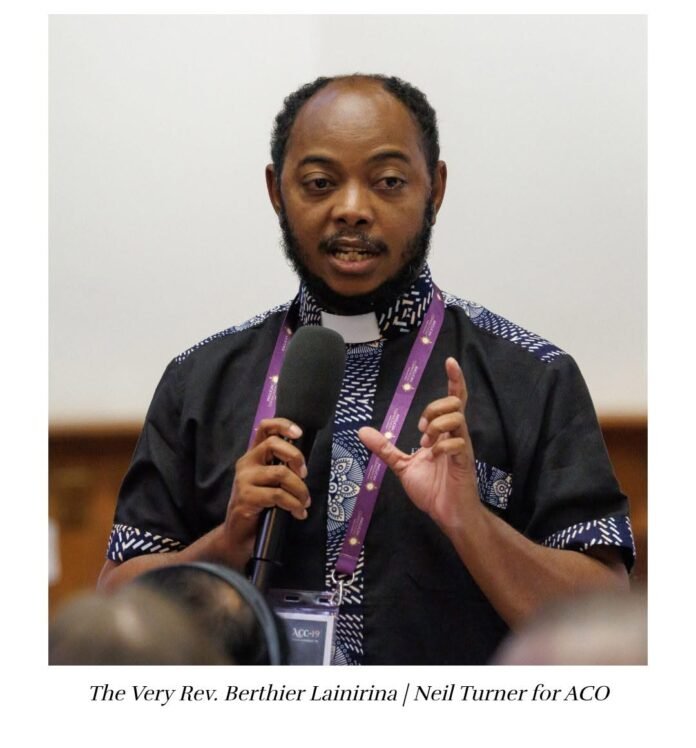
Berthier Lainirina is a Malagasy clergyman and a member of the Anglican Consultative Council. He is Provincial Secretary of the Anglican Church of the Indian Ocean, and Dean and Principal of St Patrick’s Theological College, Toliara, Madagascar.
N.b. The author notes: “All the ideas and content of this article are mine, but I used ChatGPT to rewrite my English in a better way as English is not my mother tongue.”