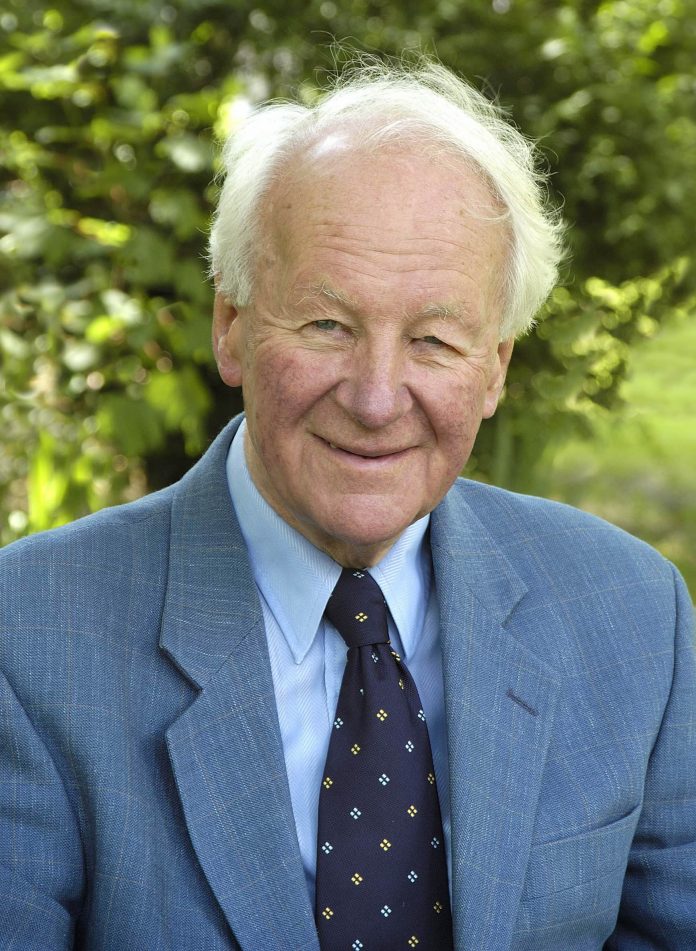
Pt 1- When One of Evangelicalism’s Most Trusted Voices Asks an Uncomfortable Question.
Some controversies arise because someone deliberately sets out to challenge the church. Others because someone whom almost everyone trusts quietly admits that they are no longer certain about a doctrine that everyone assumed was settled.
The controversy surrounding John Stott’s views on hell belongs emphatically to category 2.
It was not born in rebellion, nor fuelled by theological liberalism or even progressivism. Nor did it begin with an attempt to overturn historic Christianity.
It came rather from the mature reflections of a man who had spent a lifetime defending the authority of Scripture, preaching the cross of Christ, & calling people to repentance and faith; training pastors, encouraging missionaries, and helping shape modern evangelicalism across six continents.
That is precisely why it became one of the most (and in my opinion, unnecessarily) significant evangelical controversies of the late 20th century.
Had an obscure academic suggested that the wicked might ultimately perish rather than endure eternal conscious torment, few would have noticed. Similar ideas had circulated for generations, often on the fringes of Protestant theology. But this was not an obscure academic.
This was John Robert Walmsley Stott.
For millions of Christians around the world, Stott represented careful biblical exposition at its finest. He was neither a sensationalist nor an iconoclast. His sermons were marked by intellectual precision, pastoral warmth, disciplined exegesis, and remarkable humility. Few evangelical leaders of the C20 commanded greater respect across denominational boundaries.
His books became modern classics.
Basic Christianity introduced countless readers to the gospel. The Cross of Christ is still widely regarded as one of the finest evangelical books ever written on the atonement. Between Two Worlds transformed generations of preachers.
His commentaries in The Bible Speaks Today series became trusted companions for pastors across the English-speaking world.
His influence extended even further through his leadership in the Lausanne Movement, where his commitment to biblical authority, world evangelisation, expositional preaching, and thoughtful engagement with contemporary culture helped shape global evangelicalism for decades. Even those who occasionally disagreed with him almost invariably regarded him as a model evangelical statesman.
It is difficult to exaggerate his stature.
By the 1980s, John Stott was arguably the best-known evangelical Anglican in the world. He had spent over forty years defending orthodox Christianity against scepticism, theological liberalism, secularism and unbelief. Few people had done more to strengthen confidence in the inspiration and authority of Scripture.
Then, in 1988, six pages near the end of a dialogue book changed the conversation.
The book was Evangelical Essentials: A Liberal–Evangelical Dialogue, co-authored with the Anglican theologian David L. Edwards. Throughout the volume, the two men discussed biblical authority, Christology, and ethics; mission and numerous other doctrines. Then Edwards asked Stott a direct question about the nature of hell.
Stott answered with extraordinary honesty.
He acknowledged immediately that the traditional doctrine of eternal conscious punishment had been held by the overwhelming majority of the church throughout its history. He expressed genuine respect for that tradition and no desire to dismiss it lightly. Then came words that reverberated around the evangelical world:
“Emotionally, I find the concept intolerable…”
Had Stott stopped there, his comments could easily have been dismissed as an emotional reaction. But he did not.
Read it all at The Other Cheek