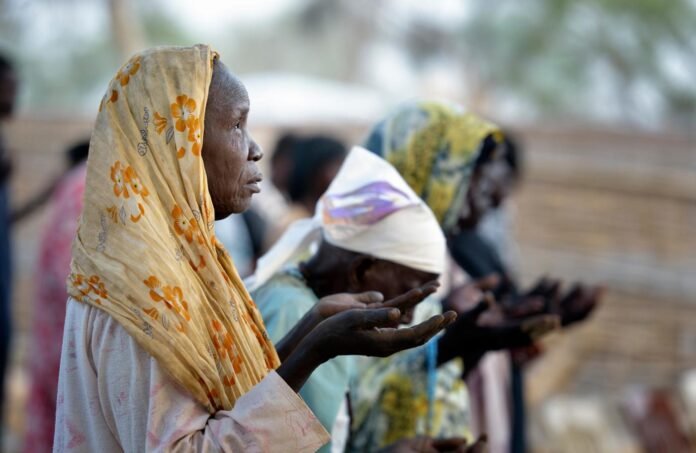
The paramilitary Rapid Support Forces and its allies are proliferating strikes on the strategic city of 500,000 people, hitting schools, markets, and fuel stations as well as transport routes and vehicles. At least 27 drone attacks hit the city in June, according to agencies, marking the highest monthly total so far.
Anglican Bishop Ismael Gabriel Abudigin of El-Obeid Diocese said the strikes were killing civilians and causing great fear, while destroying civilian facilities such as fuel stations.
“It is our prayer that this war stops,” said Abudigin, as the attacks caused major power blackouts and severe shortages of water, food, and fuel.
The violence is beginning to mirror that in El-Fasher, the capital of North Darfur, which the paramilitary blockaded for 18 months. After seizing the city in October 2025, the force was widely accused of committing crimes including mass killings, summary executions, torture, and sexual violence against women and girls.
“El-Obeid is still full of people and food is available, but things are very expensive. The markets are open, and the people are buying and selling things,” Abudigin said, while expressing confidence that the El-Fasher scenario will not repeat itself in El-Obeid.
“[But] thousands are also displaced,” he added.
El-Obeid is a key humanitarian and commercial hub for the Kordofan, a region in central Sudan. The region features sandy desert plains and scrublands in the north and a clay savannah and the vegetated Nuba Mountains in the South. It produces gum arabic, peanuts, and cotton. Also, it has rich oil fields; the Sudan-South Sudan oil pipeline passes through it.
The region is the latest frontline in the war, pitting the Sudan Armed Forces and the paramilitary Support Forces. The two militaries and former partners in government have fought for control of the country since April 2023. At least 200,000 people are newly displaced in the region, amidst threats of hunger and cholera.
While the city is increasingly encircled and the threat of a wider assault by Rapid Support Forces is growing, reports from the ground show that for many families still inside, the nightmare was already unfolding, said the Norwegian Refugee Council.
“In El Obeid, families are starving while dodging indiscriminate attacks just to stay alive,” said Jan Egeland, the charity’s secretary general in a statement on 7 July. “The world has been warned about this crisis and let it happen anyway.”
At the same time, Christian humanitarian organizations have joined the international community in the call for action to avert mass atrocities and a humanitarian crisis in El-Obeid.
“El-Obeid must not be allowed to become the site of further grave violations and preventable humanitarian catastrophe,” warned the Sudan INGO Forum, which includes organizations such as Christian Aid, Catholic Relief Services, and Pax Christi.
The forum wants all parties in the conflict to act to protect civilians and civilian infrastructure, guarantee safe and unimpeded movement for those fleeing the city, and protect humanitarian responders, community-based organizations, and traders.
Meanwhile, Sudanese church leaders stress that the international church is needed in ending the country’s “forgotten war,” and call for increased international focus.
Analysts assert that the world knows how to end the war, since its funders and arms suppliers are known, but no one is willing to take responsibility for the costs and consequences involved.