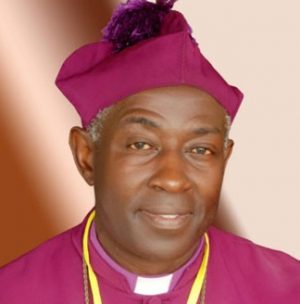
The most detailed first-person primatial account yet of GAFCON’s invitation-only G26 Bishops Conference in Abuja has come from the Archbishop of Uganda, the Most Re. Stephen Samuel Kaziimba Mugalu, who reported to his province on April 2 that he led a delegation of 52 representatives to the March gathering — providing the first on-the-record account by a sitting primate of what took place at the meeting.
Speaking in his Easter message, delivered at a service broadcast live on UBC TV, NBS TV, Church of Uganda Family TV, and Namirembe FM, Kazimba described the scale of the gathering. “The conference, hosted by the Anglican Church of Nigeria, brought together 347 Anglican bishops and 121 clergy and lay leaders from 27 provinces across the Global Anglican Movement,” he said. His own delegation comprised 41 bishops, six clergy, and five laity.
The G26 gathering, held March 3-6 in Abuja, was a specialised bishops conference — not a full GAFCON Assembly. GAFCON’s own communications in May 2025 described it as a “specialised conference” distinct from its five-yearly assemblies, noting that the next full assembly, GAFCON V, is scheduled for Athens in 2028. The March gathering was convened by Archbishop Laurent Mbanda of Rwanda, then Chairman of the GAFCON Primates Council, who in December 2025 announced that invitations had been sent to 500 delegates across the global Anglican family.
Archbishop Kaziimba’s figures correspond exactly to those in the Abuja Affirmation, the communique issued on March 6 and signed by Archbishop Mbanda as Chairman of the newly constituted Global Anglican Council. The Affirmation opens: “Greetings from Abuja, Nigeria where 347 Anglican bishops and 121 lay and clerical Anglican leaders from 27 provinces met from 3-6 March 2026, generously hosted by our brothers and sisters in the Church of Nigeria.”
Kazimba described the principal institutional outcome of the conference. “The GAFCON Primates Council was transitioned into the newly established Global Anglican Council, which will bring together primates, advisors, and guarantors to provide the oversight and the recognition of provinces and dioceses within the emerging Global Anglican Communion,” he said. He named the new Council’s officers: Archbishop Mbanda of Rwanda as chair, Archbishop Miguel Uchoa of Brazil as deputy chair, and Bishop Paul Donison as General Secretary. Donison’s March 5 communique, issued the day before the Abuja Affirmation, confirmed those appointments and stated that the terms of all three “will conclude at the end of GAFCON V in Athens in 2028.”
The Abuja Affirmation sets out the basis and mandate of the new body. The Council “will acknowledge and welcome existing provinces and dioceses who desire to participate in the Global Anglican Communion, and will be responsible for inviting new Primates to a seat on the Council” as well as authenticating “newly formed provinces and dioceses who seek recognition as Global Anglicans.” Membership of the Council consists of three categories of voting member: primates, advisors, and guarantors.
The Affirmation’s section on “Principled Disengagement” states that leaders holding office in the Global Anglican Council must not attend future Primates’ Meetings called by the Archbishop of Canterbury, the Lambeth Conference, or Anglican Consultative Council meetings, and that office holders who “continue to participate in any Canterbury Instruments will not be able to continue in this role.”
Archbishop Kaziimba connected the conference’s work directly to the Easter season. “The fellowship, which began within the Holy Communion service, continues to play a significant role in shaping what many have described as reordering of the Anglican Global Structures,” he said. He placed the gathering within a wider account of conflict and Christian witness. “I want to invite you to pray for the Middle East,” he told his congregation. “The situation is not good. It can affect all of us.” He connected the regional war to its effects closer to home: “I understand now the prices of gas has gone up. Even where I come from, from Rubukonjo, the banana prices have gone up. And I ask, ‘Why?’ They say because of the war in Middle East. So, all of us are equally affected.”
Following the Abuja conference, Archbishop Kaziimba travelled to Cairo on March 7 to attend the Global Council meeting of the Anglican Relief and Development Fund, where he serves as a trustee. He noted the Fund’s work in Uganda, including emergency response at the Nakivale refugee settlement, support to Sebei diocese for a medical facility, and a commitment to fund the Mama Margaret Kazimba Health Facility in Mityana-Mukono diocese, with the first phase expected to be commissioned later this year.
The Easter message was delivered to the Church of Uganda’s annual Easter gathering and broadcast across multiple Ugandan national television and radio networks.