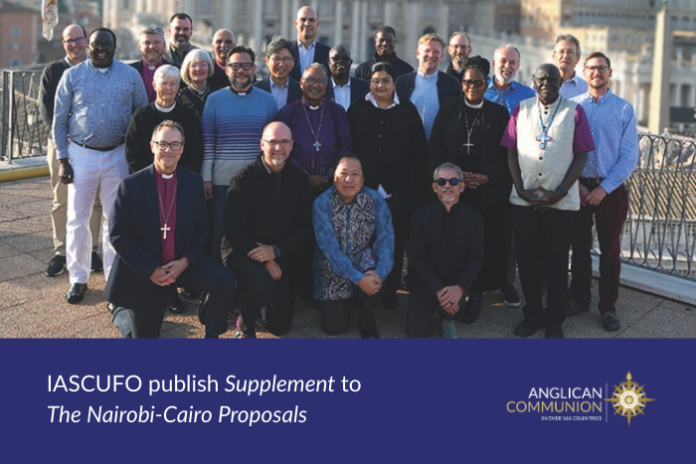
Plans to redefine Anglican identity and share global leadership between the Archbishop of Canterbury and a new Primatial Council will go to the Anglican Consultative Council (ACC‑19) in Belfast later this year, but the conservative “Global Anglican Council” has already signalled it will have nothing to do with the process, raising questions about whether the proposals are effectively dead on arrival outside Canterbury‑aligned circles.
The Inter‑Anglican Standing Commission on Unity, Faith and Order (IASCUFO) has issued a Lent 2026 supplement to its Nairobi–Cairo Proposals, confirming plans to revise the Communion’s self‑definition and to diversify its leadership. The first proposal would replace the 1930 Lambeth language of churches being “in communion with the See of Canterbury” with a description of provinces as sharing an inheritance of faith and order, mutual service, common counsel, and a historic connection with Canterbury.
The second proposal would strengthen the role of the Primates’ Standing Committee so that regional primates, gathered in a Primatial Council, could at times represent the Communion in ways currently reserved to Canterbury, such as attending provincial inaugurations or installations of new primates. The Archbishop of Canterbury would remain the presumptive representative in most ecumenical settings, but IASCUFO argues that “the diversified face of the Communion ought not always be the face of the Church of England.”
Lambeth Palace has not offered a formal “counter‑proposal” to Nairobi–Cairo, but its messaging has been to present the IASCUFO package as one contribution to a wider discernment, not a finished settlement. The Archbishop of Canterbury has spoken of ACC‑19 as a moment to receive “the fruit of IASCUFO’s labours” and to seek a renewed common life, while stressing that any changes must be owned by the whole Communion over time.
The Anglican Communion Office (ACO), which services the ACC, has stressed in guidance documents that Nairobi–Cairo is an “offer” to the Communion and “the beginning of a new conversation,” and that the ACC is free to amend, receive in part, or simply note the proposals. In media briefings, Secretary General Anthony Poggo has underlined that the aim is to “bring Anglicans together” and to accommodate “different contexts,” not to impose a new constitution from the centre.
While Canterbury and the ACO talk about a more collegial Anglican Communion, conservative leaders have moved ahead with their own conciliar project. Meeting in Africa this month, GAFCON and Global South‑aligned primates announced plans for a “Global Anglican Council” or “Global Anglican Communion” structured explicitly around shared doctrine and moral teaching rather than communion with Canterbury.
Public statements from these gatherings make clear that this emerging Global Anglican Communion does not intend to participate in the Nairobi–Cairo process or to recognise ACC‑19 as authoritative for their churches. In conversation with members of the Global Anglican Council, Anglican.Ink was told the IASCUFO proposals were “too little, too late” and held no interest for the wider Global Anglican Communion.
Analysts from conservative networks describe Nairobi–Cairo as a Canterbury‑led “reset” that cannot repair what they regard as broken communion, and instead commend their existing Cairo Covenant structures as the true conciliar alternative. In practical terms, this means a large bloc of Anglicans—particularly in Africa, Asia, and parts of the Americas—are already organising their life together outside the framework that IASCUFO is trying to renovate.
Within the Canterbury-led Anglican Communion, ACC‑19 in Belfast will devote substantial time to the revised Nairobi–Cairo texts, and bishops and ACC members have been drawn into online consultations ahead of the meeting. Provinces such as the Scottish Episcopal Church have welcomed the process and offered detailed feedback, and some leaders in the global North see the proposals as a realistic way of “walking together” amid deep disagreement.
However, the decision of the Global Anglican Communion networks to stand apart leaves the proposals with a shrinking constituency. Conservative commentators argue that a model which defines communion around historic ties to Canterbury and shared consultation, but without robust doctrinal discipline, only formalises a conversation among like‑minded provinces and ecumenical partners. With a parallel Global Anglican Communion now publicly committed to its own conciliar structures and explicitly uninterested in the Belfast process, many observers note that whatever the ACC decides in June and July, Nairobi–Cairo may already be stillborn as a truly global settlement.