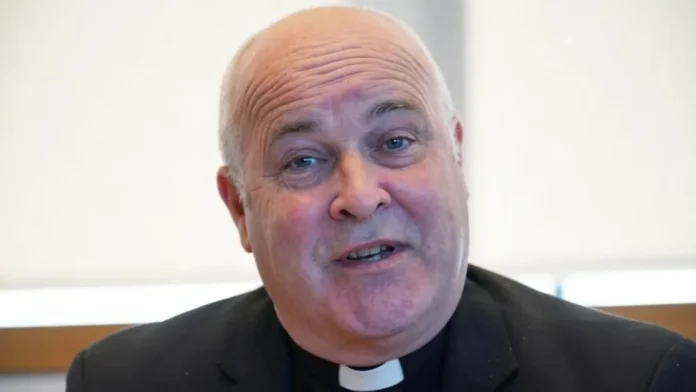
The General Synod has backed a call for the Church of England to recommit to ending poverty in a debate where members heard of the ‘relentless struggle’ of millions of people to make ends meet.
General Synod members voted to mark the 40th anniversary of the publication of the landmark report Faith in the City, and its impact on Christian social action, including the work of Church Urban Fund.
Churches must listen to people who are living in poverty, the General Synod agreed, in their mission to witness to the love of God through service to their communities.
The battle against poverty should include ‘asking questions’ about the causes as well as responding through services such as food banks, the Synod said.
Mark Sheard, from the Archbishops’ Council, bringing the debate before the General Synod, said that 40 years on from Faith in the City, poverty continues to hinder the health, wellbeing and life chances of millions of people.
“The awful truth is that there are 14 million people living in poverty in our nation, one in five of our population,” he told the General Synod.
“And of course each one of those 14 million is a real life person, a woman, a child, a family.
“Each has their story, their own struggles, their own reason to feel hopeless and abandoned by society – and maybe even by God.”
During the debate the Synod heard from clergy about poverty in rural areas as well cities and the disproportionate levels of poverty experienced by ethnic minority communities and disabled people.
The Rev Andrew Mumby, Rector of St Peter’s Walworth in south London, spoke of the ‘multiple jobs’ worked by people in his parish and their ‘sheer determination, grit and faith’ in keeping family life together in the face of poverty.
“Poverty in England disproportionately affects Black and ethnic minority communities,” he told the Synod.
The Rev Lesley Jones, Rector of Jarrow and Simonside, in the Diocese of Durham, urged churches to let people living in poverty know that they are not abandoned.
“My plea to you is let as many people know as possible what you are doing, that the Church of England cares, because God cares,” she told the Synod.
The Archbishop of York, Stephen Cottrell, paid tribute to the Faith in the City report and the ‘faithful, often unseen work of Christian communities.” He told the Synod that poverty ‘persists’, 40 years on from its publication.
“While well intentioned governments and policies, they may change, if you cannot feed your children if you can’t heat your home, nothing changes,” he said.
“The same is true in many coastal and rural communities, where low wages, poor transport and rising housing costs make poverty acute. And today there are new forms of poverty too: digital poverty and deepening isolation.”
- Faith in the City, published in 1985, was commissioned by the then Archbishop of Canterbury Robert Runcie amid concerns about inner city decline and the 1981 riots in English cities. The report was a catalyst for Christian social action and let to the founding of Church Urban Fund.
- The latest figures from the Church of England show that more than 31,300 social projects are run or supported by Church of England churches. These include nearly 8,000 food banks and more than 3,000 community cafes.
Here is the wording of the motion Poverty and the Church 40 years after Faith and the City:
That this Synod:
a) recognise and celebrate the enduring impact of the Archbishop of Canterbury’s Commission on Urban Priority Areas’ Faith in the City report on Christian social action forty years after its publication, including through the work of Church Urban Fund,
b) affirm the value and necessity of listening to people within our congregations and in our wider communities who are experiencing poverty, learning from these insights, and embedding these views and experiences in the forming of the body of Christ,
c) give thanks for the work undertaken by Christian communities across the country to witness to the love of God, serve and strengthen their communities, and build partnerships towards a movement of love, justice and mercy, together,
d) Affirm the importance of listening to people with lived experience of poverty, and recognise that poverty in England disproportionately affects some Black and minority ethnic communities, encouraging the Church to take account of these realities in its pastoral practice, mission, and public witness,
d) recommit to ending poverty in all its forms and manifestations, whilst asking questions of ourselves, our political, society and business leaders about the unjust structures and decisions which cause and exacerbate poverty, in line with the third and fourth marks of mission,
e) Recognise that in many areas of high deprivation poverty is experienced within multi-faith communities, and encourage the Church, where appropriate, to work ecumenically and in partnership with other faith groups in responding to poverty and supporting the wellbeing of local communities, while also encouraging the use of person[1]centred language when speaking about poverty—such as ‘people living in poverty’ or ‘people experiencing poverty’— and discouraging the use of objectifying terms such as ‘the poor’, so that poverty is understood as a condition affecting people within our shared communities rather than as a defining identity.