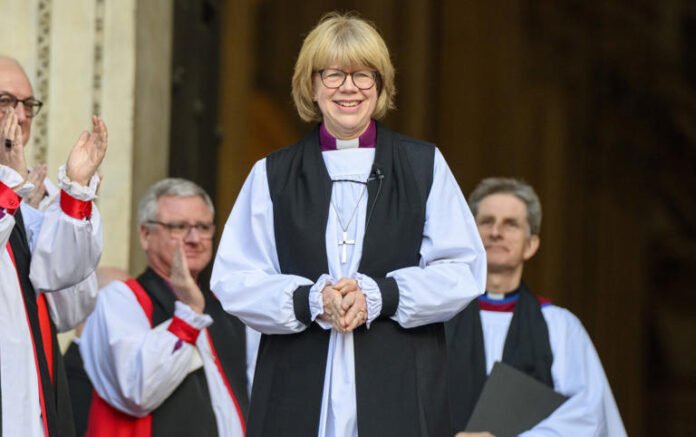
The stately quadrille of today’s ceremony that confirmed Sarah Mullally as Archbishop of Canterbury seems a long way from parish life. This past Sunday found me – as it probably did many other churchwardens – gloomily wondering whether we could afford to refill the oil tank again this winter, and whether the diocese would even soon order us to tear it out in pursuit of Net Zero.
The problems that the Church of England faces – from oil-tanks upwards – are legion, and it is difficult not to ask whether Sarah Mullally is the right person to deal with them. The root issue is Dame Sarah’s past experience. Undoubtedly, she has a career of great attainment. She was the youngest person to be chief nursing officer and director of patient experience for NHS England, amongst other achievements.
However, she has spent much longer in these elevated and bureaucratic positions (whether as NHS director or bishop) than in ordinary parish ministry, where the real potential and vitality of church life subsists. That she has exercised herself more in great matters than the travails of ordinary ministry is likely to skew her approach to dealing with the challenges that the Church of England now faces.
Conversations with churchgoers nationwide generally show that the greatest concerns on the ground are not same-sex marriage, nor whether conservative African Anglican churches will accept her leadership as the first female Archbishop. It is not even the lingering questions about her handling of safeguarding issues.
The concerns are much more immediate. The first is the shortage of clergy. One vicar might be rushing between a dozen parishes, exhausted and unable to give the pastoral care or evangelise as they mean to. Lay people are being called upon to give ever more money, and to do more of the work that clergy should ordinarily be doing, as volunteers. It seems ever harder to get actual help for ordinary endeavours, such as setting up choirs.
Read it all at MSN.com
Bijan Omrani is the author of ‘God is an Englishman: Christianity and the Creation of England’