
Part of my journey towards the state of my present life was spent teaching the psychology of religion in a red-brick secular university for twenty-five years. It was a fascinating period, and it coincided with a distinctive cultural, mental, and intellectual change in social belief.
One of the aims I had to was change the prejudices of several generations, and introduce the idea that religion and the quest for meaning made excellent intellectual and metaphysical sense, and not only led us towards discoverable truths, but were good for us.
When I arrived in the late 1980s, the whole atmosphere of the university was steeped in a reflexively Freudian outlook which everybody simply took for granted. Essentially, it meant that intelligent people disbelieved in religion because religion was closely connected with neurosis, guilt, and repression. Everybody “knew” this. Because there was no God, people who thought there was a God were simply projecting their own internal anxiety and need for a cosmic father onto a blank universe.
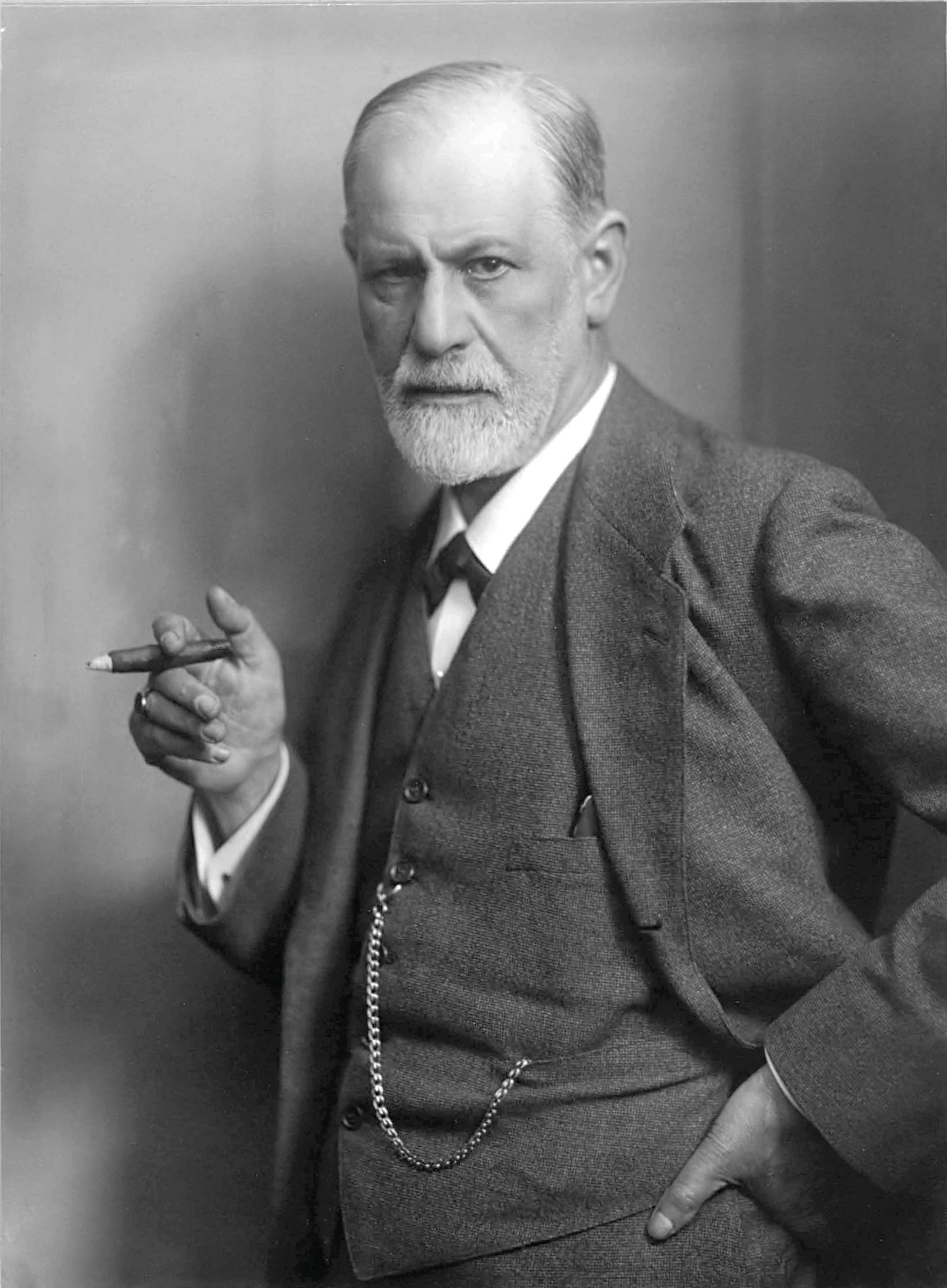
Jung, Gnosticism, and Meaning
I had spent some time doing postgraduate work with the University of London, where I had come across Carl Jung, and I had been very attracted to and influenced by him. One of the reasons was that Jung’s map of the personality seemed to work very well. It was embarrassingly clear that he was given to aspects of gnostic charlatanism, and the fact that his early work began with séances in which his cousin unveiled spirits was always going to be a very bad sign.
He was quite clearly an anti-Catholic gnostic, but every so often he would lean over and pat Catholicism on the head and say it was doing the right kind of thing in venerating the Virgin Mary — because what was really required was not a Trinity but a quaternity, with some feminine element baked in. The Catholic Church, he thought, came closest to this with the veneration of Mary.
But otherwise, he was a psychologically astute gnostic sub-Christian mystic or perhaps even psychic, who was wholly parasitic on Christianity. He used the language of Christianity, changed the meaning of the key words and concepts, without subscribing to belief in it.
But there were several reasons for taking him seriously and why he was to be so astonishingly successful. He was the apostle of human potentiality (we all had unlimited potential which could and should be fulfilled, and this would lead to ‘individuation’ — the Jungian version of salvation); and/but — he contradicted Freud by suggesting that real mental health required taking religion and spirituality seriously. This was a revolutionary challenge to his mentor and competitor.
The great task in his view, was to allow consciousness and unconsciousness to communicate with each other, and they did so through meaning-impregnated symbols. Religion had the richest and most powerful of these symbols. You could only really become psychologically healthy if you were engaged in the pursuit of ultimate meaning which religious symbolism gave access to.
The Turn in the 1990s
It was always going to be interesting to see at what point Jung’s ideas — which also included a great emphasis on fulfilling the potential of every human being — would become more popular. That moment came during the 1990s.
Up until then, most social studies were determined to hammer on an on that that religion was bad for you. They were conducted by people who began their work with that prejudice, used their research to express the prejudice, and then published the prejudice at the end of it.
In the 1990s something fresh happened. People began to do studies on well-being and religious outlook, and they discovered the opposite of what had been “known” for the previous fifty years. Religious people were more sane, more balanced, less neurotic, more productive, less depressed, and happier.
Among the main reasons were that they had meaning, hope, love, and forgiveness in their lives to a greater degree than secular people.
Viktor Frankl and Meaning
One of the philosophers who gave expression to this shift was Viktor Frankl who was an Austrian psychiatrist, Holocaust survivor.

Writing out of Auschwitz rather than the seminar room, he insisted that the deepest human need is not pleasure or power, but meaning.

His work overturned the assumption that guilt and suffering are pathological, showing instead that they become destructive only when stripped of meaning.
Some of his insights were wonderfully helpful.
“He who has a ‘why’ to live can bear almost any ‘how’.”
“Man is not destroyed by suffering; he is destroyed by suffering without meaning.”
Religion and spirituality do not create guilt and despair; they offer structured ways of resolving them — confession, forgiveness, absolution, hope. Psychotherapeutic language pathologises; religion heals.
The Return of Prejudice
I thought the tide had completely turned — that Freud and left-wing political prejudice had been put to flight — until I opened the Daily Telegraph this morning and yet again encountered one of those awful anti-religion pieces by a prejudiced social scientist, which for some strange reason the newspaper had chosen to publicise.
Mr Zong, a doctoral researcher at the University of Helsinki, in Finland, said:
“In particular, parental mental health issues and heavy alcohol consumption intensify the negative association between an early religious upbringing and their self-rated health in later life.”
So I am writing this in response as one small way in which I can continue to resist lies, untruth, prejudice, and anti-Christian and anti-Catholic polemic.

Poverty, Not Religion
I suspect the study was really aimed at noting that religious upbringing is more common among poorer economic groups. It is certainly true that poverty, childhood adversity, parental alcoholism, and untreated mental illness are long-established predictors of poor mental health later in life — irrespective of whether you believe in God or not. At that point, poor mental health later in life is fairly obviously caused by poverty and lack of resources.
But the researcher then decided to throw in, from absolutely nowhere, the notion of “patriarchal guilt”. He correctly found that religious upbringing was more common among lower socioeconomic groups, whom he assumed might turn to religion as a way of coping with adversity.
I do not think that is really the case. It is much more that higher-income liberal groups have been brought up in a cultural atmosphere which despises Christianity.
Guilt, Hope, and Forgiveness
On the plus side, the study suggested that religious communities might help children by preaching a healthy lifestyle and banning drugs, cigarettes, and alcohol. But then it turned to mental health and suggested that religion brought unresolved guilt, psychological pressure, and patriarchal elements — all of which were supposedly very bad for people and contributed to poor mental health.
‘Patriarchal elements’ Where did that come from. Perhaps Mr Zong has a feminist girlfriend he is trying to impress?
If we return to Viktor Frankl again, we are reminded by him that:
“Guilt is not something to be explained away, but something to be responded to.”
Frankl is very clear that guilt becomes psychologically destructive only when it is denied or rendered meaningless. A belief system that names guilt and resolves it through forgiveness, absolution, and reconciliation is psychologically healthier than one that pretends guilt does not exist, or relocates it in the wrong places and then offers no absolution at all.
Frankl was also very clear about the need for meaning in the human condition.
“Despair is suffering without meaning.”
What religious belief does is address despair at its root. It does not cause it; it contains it, diminishes it, and transforms it into hope, meaning, and purpose.
A psychologist called Charles Snyder worked on hope theory in the 1990s and showed that people who had access to hope displayed:
- lower levels of depression,
- better coping strategies, and
- improved recovery from illness.
In particular, hope was strongest when it was not self-generated or driven merely by optimism, but when it was grounded in a belief system larger than the self — which is exactly what Catholic belief epitomises.
A good deal of work has also been done on forgiveness, showing that forgiveness reduces pathology.
By the late 1990s, clinical studies consistently showed that forgiveness was correlated with:
- lower anxiety,
- lower depression,
- reduced anger, and
- improved cardiovascular and stress markers.
One of the questions psychology struggled with was how forgiveness could actually be achieved? For that, you need Jesus and absolution.
Confusion and Conclusion
So how do we respond to this study, which acknowledges poverty, childhood adversity, parental alcoholism, and mental illness — all of which can be empirically demonstrated — and then suddenly tries to blame religion, which it cannot?
The flaw ought ot be pretty clear. It is not religion being analysed; instead, religion is conveniently being disparaged and blamed. It functions as a useful moral suspect, blamed for what properly belongs to material deprivation and social neglect.
In other words, the incompetence of political and economic systems is being blamed on religious belief. That is not analysis; it is prejudice. It’s not empirical, it’s bias.
It is almost incredible that the language of guilt should be introduced here. It is not a measured variable; it is simply a cultural reflex. You might even say that it is the predictable gesture of a secular academy which cannot get over the fact that religion which it always hated, and survived, flourished and is on the rebound.
The many predictions of extinction that have echoed through academic corridors for the last hundred years, that all started with Freud, have all been completely wrong.
Frankl, although writing eighty years ago, has survived with his reputation intact and has become even more authoritative because of the depth of his insights. Human beings are not damaged by meaning, guilt, or moral seriousness. The reverse is true; they are damaged by their absence.
It was not religion that ruined these people; it was poverty. What we are presented with in this social science project is not science, but secular propaganda with a data set attached. It needs to be repudiated and exposed for what it is.
So many people have picked up the lazy vituperative prejudice that religion is bad for you when the opposite is true. We have to repudiate this wherever we meet it; produce better insight, analysis and argument. And introduce people to Christ and his Church.