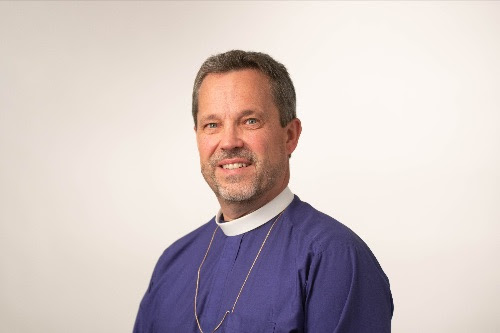
The news story about Archbishop Steve Wood has shaken many in our Anglican family. It is painful, confusing, and for those who know him personally—as I do—deeply saddening. The allegations against him are serious and deserve to be taken seriously.
I have to say plainly: if an archbishop or any pastor has acted in a way that crosses moral or physical boundaries with another person, he should step down. Period. The Church must be a place of integrity and safety.
But the process must also be fair and truthful, measured by facts, evidence, and patient investigation by people committed to the truth.
A Friend and a Fellow Pastor
I’ve known Steve Wood for many years. When I was rector of Christ Church, he was rector of St. Andrew’s. We were peers—two pastors of large, lively congregations. Since his consecration as bishop, and more recently as archbishop, our paths have crossed again.
I call him a friend. My experience of him is that he is kind, funny, sharp-minded, and firm in his gospel convictions.
Steve can fill a room with his energy and optimism. He’s a natural storyteller—sometimes too much so. I’ve been with him when, in the course of ‘catching up’, he will share a detail or an observation that probably should have remained unsaid. He ‘overshares’, but not out of malice but out of exuberance, in my opinion.
Saying too much about someone or something can give the sense that you’re being brought into a person’s confidence: Steve’s confidence, his inner circle. It’s part of his charm—and, perhaps, one of his blind spots.
Steve is talented, but also a learner. He’s grown through adversity. His recovery from COVID—eleven days on a ventilator, months of rehabilitation—left him humbled and spiritually renewed. He has told the story often, and it always moves me.
He says he saw God’s mercy more clearly in that dark valley than at any other point in his ministry.
- Doctors warned him that his chances of survival were below fifty percent.
- Nurses prayed over him as he lay unconscious.
- It took three years to regain full health.
What is also part of his story is that his church complex burned to the ground! That too was a trial by fire, literally.
The conclusion to his story is always the same: “I don’t regret the fire. I don’t regret COVID, because I saw the Lord do extraordinary things I would have never seen otherwise.”
That kind of gratitude in suffering tells you something about a man’s soul.
About the Allegations
If the allegation of an attempted romantic advance toward a woman is true, then it is disqualifying. That must be said clearly.
At the same time, many details now being circulated deserve careful examination.
- It is common for clergy to have discretionary or “mercy” funds for pastoral care and benevolence. These are often used for unbudgeted needs—groceries, rent, or help during a crisis. In my own parish, I used such a fund and consistently reported expenditures to the senior warden. That is not misconduct; it is pastoral discretion.
- As for the questions about a vehicle or personal expenses, that too is not unusual. Many clergy receive automobile allowances. Whether purchased personally or reimbursed through the church, such matters belong in normal financial oversight, not sensational headlines.
- Leadership style, however, is more complicated. Some have described him as overbearing. I’ve seen that kind of strength in many large-church leaders—decisive, directional, at times blunt. What one person calls bullying, another calls directional leadership.
These are not excuses, but context.
Still, these issues should be looked at honestly. The Church cannot heal by hiding.
A Larger Wound in the Church
I also believe we must speak about a deeper wound within the ACNA movement. Many clergy and lay leaders in the Anglican Church in North America carry a kind of spiritual PTSD from the long years of conflict with the Episcopal Church.
Those years were marked by lawsuits, betrayals, and seasons of siege. Churches were evicted from their buildings, pensions were frozen, and friendships were fractured. I lived through it too. It was not merely an institutional split; it was a spiritual trauma.
I’ve tried to describe some of this in my Christ Church Stories series. The cost of faithfulness was high. Many of us emerged grateful but scarred—strong in conviction, but sometimes cautious, defensive, or weary. We built a new church in the ashes of conflict, yet we may not always have tended to the wounds we carried.
That neglect may be showing now. The list of moral failures cited in the article are sobering. They should serve as a wakeup call for us all. And when I speak with bishops privately I hear a chorus of lament that so much of their time is spent dealing with clergy misconduct.
We should be more attentive, more prayerful, and more careful when choosing and forming our leaders. Skill and orthodoxy are essential, but so are spiritual health, emotional maturity, and healing from the past.
The Way Forward
I will continue to pray for Archbishop Wood, for those who have brought forward accusations, and for everyone whose faith is being tested. May the investigation proceed with both truth and grace.
In my view, Bishop Ray Sutton, who as I understand, will lead the investigation on this charge, is the perfect man for the position.
And we should all be thankful the ACNA has the structures in place to accomplish an investigation and to render opinions and findings. The Dean Bryan Hollon wrote about this here, saying:
The ACNA and GAFCON were created, to a significant extent, because The Episcopal Church and the Anglican Communion failed to adminster discipline consistently or in a balanced way.
But for all of us who serve the Church, the story of Steve Wood—whatever the outcome—and the stories of others who have faced similar trials, stand as a sobering reminder: leadership is not ownership. The Church does not belong to us; we belong to her. Our calling is to serve, not to rule. And the higher the office we hold, the deeper the humility it demands.
Our Lord’s Church will endure this, as she has endured many storms. But endurance is not the same as indifference. We must learn, repent, and renew.
“For it is time for judgment to begin at the household of God.” — 1 Peter 4:17
May it lead us all—not to despair—but to deeper faith, greater honesty, so that we are all a truer reflection of the One we serve.