Things fall apart; the centre cannot hold.” Yeats wrote these words in 1919, describing a Europe shattered by war, revolution and pandemic. Yet he also believed that history does not move in a straight line but in spirals, with each cycle of decline giving way to renewal. What looks like collapse may, in fact, be the beginning of transformation. This rhythm of history resonates deeply with Christianity itself, where death and resurrection, despair and hope, are never far apart.
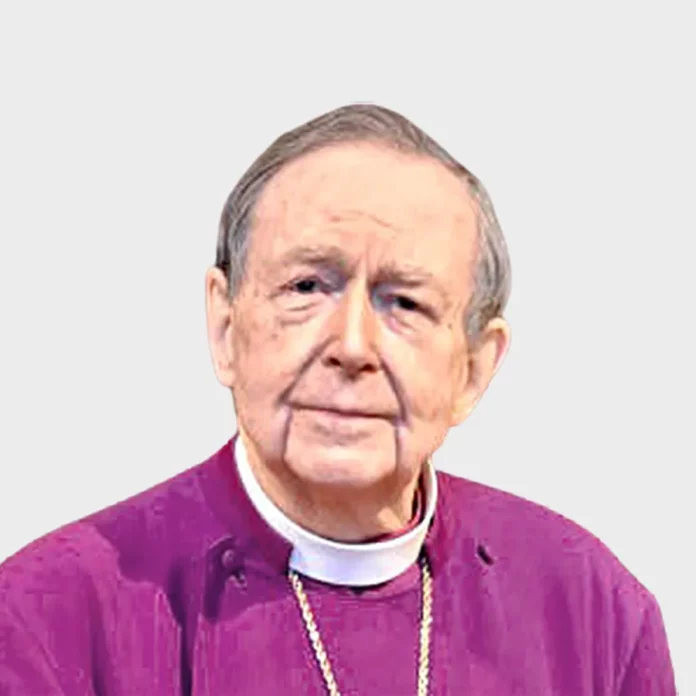
I am celebrating my golden anniversary as a bishop in the Church of England. Fifty years brings perspective. The present moment, with political polarisation, ecological peril, economic fragility and the lingering shock of a pandemic feels eerily similar to the turbulence of Yeats’s day. Many sense that the centre cannot hold. The church, too, appears fragile: attendance figures often tell a story of decline, divisions between traditions are loudly reported, and commentators confidently predict the Church of England may not survive another generation. Yet history shows that such moments of apparent collapse can become the very soil from which renewal grows.
In 1833 the historian Thomas Arnold declared: “The Church of England as it now stands no human power can save.” Yet that same year John Keble’s Assize Sermon in Oxford launched what became known as the Oxford Movement. It reminded the church of its true identity as not merely a religious organisation but the mystical, apostolic Body of Christ. From this rediscovery flowed new life in worship, theology and mission. Lay people were called into social action, beauty was restored to neglected places of prayer and the church rediscovered its calling to embody holiness in public as well as private life. Out of crisis came growth.
Might our own troubled age contain the seeds of a similar revival? Evidence suggests it may. A recent Bible Society study, The Quiet Revival, reports church attendance nationally rising from 8 per cent in 2018 to 12 per cent in 2024. Among 18 to 24-year-olds the rise is striking: from 4 per cent to 16 per cent. Anecdotal experience confirms the trend: clergy speak of unexpected numbers of young people presenting for confirmation, of newcomers turning up at church doors, of conversations beginning with a disarming honesty — “I’m not religious, but I am spiritual”.
What drives this quiet return is not nostalgia for a fading tradition but disillusionment with false promises. The “tin gods” of consumerism, careerism and technology have failed to provide lasting meaning. One young man recently stopped the abbot of Ampleforth at King’s Cross station to say: “I belong to a generation that hasn’t any hope or purpose. I think if I find Jesus, I will find hope.” His words capture a hunger that no institution alone can satisfy. The pressing question is whether the church, when confronted with this longing, will offer the living Christ or merely the machinery of religion.
Too often the church has imitated managerial culture. Bishops are expected to act like chief executives, priests like administrators, congregations like clubs preoccupied with survival. In the process, the apostolic vision has been obscured: the partnership of bishop, priest and laity, all sent to embody Christ’s compassion and truth in the world. When that partnership is eclipsed, the church turns in on itself. Instead of mission, maintenance; instead of discipleship, decline.
Yet the rediscovery of apostolic identity is precisely what this moment requires. Bishops are called to enable, to teach and to shepherd; priests to form disciples in Christ; laity to live out their vocation in workplaces, communities, the arts and public life. This is not wishful thinking or nostalgia but the church’s DNA, seen from its earliest days in the Acts of the Apostles: “The apostles’ teaching and fellowship, the breaking of bread and the prayers.” These four simple commitments created communities through which the Spirit of God could be seen and felt, and through which seekers could encounter transformation.
Catherine of Siena once said: “Become what you were created to be, and you will set the world on fire.” Her words apply to the church as a whole. To become again what it was created to be — catholic, spirit-filled, outward-facing — is to rediscover the fire that first set the world ablaze. Then decline would not mark an end but a crucible of renewal. The church could model hope and purpose in a world desperately short of both.
Yeats feared anarchy when “the centre cannot hold”. Christians believe that out of death comes resurrection. Perhaps, as new generations search for hope and old structures falter, “some revelation is at hand”.