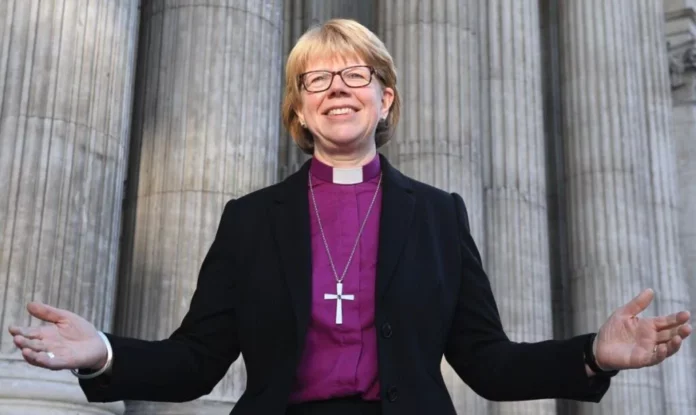
The announcement of the choice of the Bishop of London, Dame Sarah Mallally, to be the next Archbishop of Canterbury has been accompanied by frequent references to the Archbishop of Canterbury as the ‘head of the Church of England’ or the ‘head of the Anglican Communion.’ In this post I shall explain why both of these statements are misleading, what roles the Archbishop of Canterbury actually has in the Church of England and the wider Anglican Communion, and the implications of the fact that these roles are very limited.
What do we mean by ‘head?’
When thinking about these topics, the first thing we need to be clear about is what we mean when we say that someone is the ‘head’ of something. When we use the word head in this connection we are using analogical language. An analogy is being drawn between the role of the head (and more specifically what is inside the head, the brain) in the human body and the role of an individual in a particular organisation.
The analogy is between the role of the brain in determining how a human body shall act and the role of an individual in determining what happens in an organisation. Calling some the head in this way (as in the terms ‘head of state,’ ‘head teacher’ and ‘head of the armed forces’ ) means that they are the person who has the authority and ability to govern the life of the state, the school, or the armed forces. They have the right to say what will happen.
By extension, when it is said that the Archbishop of Canterbury is head of the Church of England or the Anglican Communion, what is being claimed is that the Archbishop of Canterbury has a similar governing authority over these bodies. The problem with this claim is that it is untrue for three reasons.
Reason 1 This is not a claim that is officially made by either the Church of England or the Anglican Communion.
A study of the official documents of the Church of England and the Anglican Communion shows that neither body describes the Archbishop of Canterbury as their head.
Thus, the ‘Governance’ page of the Church of England’s website describes the Archbishop of Canterbury as ‘the most senior bishop of the Church.’ [1] It does not say that the archbishop is head of the Church of England. In similar fashion, the Anglican Communion website states that the Archbishop of Canterbury is ‘is a focus of unity and has pastoral responsibilities in the Anglican Communion.’ It does not say that the archbishop is head of the Anglican Communion. [2]
If we ask why neither the Church of England nor the Anglican Communion describes the Archbishop of Canterbury as their head, the answer is that there are two further reasons for not doing so.
Reason 2 The Archbishop of Canterbury is not Jesus Christ.
The Church of England and the Anglican Communion are both parts of the one, holy, catholic and apostolic Church to which all Christians belong. Thus, Canon A1 of the Canons of the Church of England declares that: ‘The Church of England, established according to the laws of this realm under the King’s Majesty, belongs to the true and apostolic Church of Christ’ and Principle 10:1 of The Principles of Canon Law Common to the Church of the Anglican Communion likewise declares: ‘The Anglican Communion is a fellowship of Churches within the One, Holy Catholic and Apostolic Church.’
This is relevant to the issue of the role of the Archbishop of Canterbury because the New Testament is clear that the Church that is one, holy, catholic and apostolic is the body of Christ of which he alone is the head.
‘[God] has put all things under his feet and has made him the head over all things for the church, which is his body, the fulness of him who fills all in all. (Ephesians 1:22-23]’
‘Rather, speaking the truth in love, we are to grow up in every way into him who is the head, into Christ, from whom the whole body, joined and knit together by every joint with which it is supplied, when each part is working properly, makes bodily growth and upbuilds itself in love.’ (Ephesians 4:15-16)
‘For the husband is the head of the wife as Christ is the head of the church, his body, and is himself its Savior.’ (Ephesians 5:23)
‘He is the head of the body, the church; he is the beginning, the first-born from the dead, that in everything he might be pre-eminent.’ (Colossians 1:18)
What these verses tells us is that Jesus Christ alone is the head of the Church as the one who rules over the Church, cares for it, and enables it to reach that state of spiritual maturity which God wills for it. In the words of Bishop John Jewel in his Apology for the Church of England, what these verses tell us is that the Church:
‘…is the kingdom, the body and the spouse of Christ; that Christ alone is the prince of this kingdom; that Christ alone is the head of this body; and that Christ alone is the bridegroom of this spouse.’ [3]
In consequence we have to say that neither the Archbishop of Canterbury, nor anyone else, can rightly be described as ‘head’ of the Church of England or the Anglican Communion. That post is already occupied by someone else.
Reason 3 the roles performed by the Archbishop of Canterbury in both the Church of England and the Anglican Communion are strictly limited.
If we look at the relevant documents, what we find that the jurisdiction of the Archbishop of Canterbury, that is the authority they have to act as a bishop, is limited both geographically and in terms of the roles allotted to them.
The Church of England
In terms of the Church of England, the Canon which governs the ministry of the Archbishop Canterbury, and also that of the Archbishop of York, is Canon C.17 which runs as follows:
‘1. By virtue of their respective offices, the Archbishop of Canterbury is styled Primate of All England and Metropolitan, and the Archbishop of York Primate of England and Metropolitan.
2. The archbishop has throughout his province at all times metropolitical jurisdiction, as superintendent of all ecclesiastical matters therein, to correct and supply the defects of other bishops, and, during the time of his metropolitical visitation, jurisdiction as Ordinary, except in places and over persons exempt by law or custom.
3. Such jurisdiction is exercised by the archbishop himself, or by a Vicar-General, official, or other commissary to whom authority in that behalf shall have been formally committed by the archbishop concerned.
4. The archbishop is, within his province, the principal minister, and to him belongs the right of confirming the election of every person to a bishopric, of being the chief consecrator at the consecration of every bishop, of receiving such appeals in his provincial court as may be provided by law, of holding metropolitical visitations at times or places limited by law or custom, and of presiding in the Convocation of the province either in person or by such deputy as he may lawfully appoint. In the province of Canterbury, the Bishop of London or, in his absence, the Bishop of Winchester, has the right to be so appointed; and in their absence the archbishop shall appoint some other diocesan bishop of the province. The two archbishops are joint presidents of the General Synod.
5. By ancient custom, no Act is held to be an Act of the Convocation of the province unless it shall have received the assent of the archbishop
6. By statute law it belongs to the archbishop to give permission to officiate within his province to any minister who has been ordained priest or deacon by an overseas bishop within the meaning of the Overseas and Other Clergy (Ministry and Ordination) Measure 1967, or a bishop in a Church not in communion with the Church of England whose orders are recognized or accepted by the Church of England, and thereupon such minister shall possess all such rights and advantages and be subject to all such duties and liabilities as he would have possessed and been subject to if he had been ordained by the bishop of a diocese in the province of Canterbury or York.
7. By the laws of this realm the Archbishop of Canterbury is empowered to grant such licences or dispensations as are therein set forth and provided, and such licences or dispensations, being confirmed by the authority of the King’s Majesty, have force and authority not only within the province of Canterbury but throughout all England.’[4]
What this Canon tells us is that as well as having the normal responsibilities of a diocesan bishop (what is known as ‘ordinary jurisdiction’) within their own dioceses of Canterbury and York, the two archbishops have a number of additional responsibilities.
First, to exercise general oversight over the dioceses and bishops in their province and to exercise jurisdiction in a diocese when they undertake a visitation within it (paragraphs 2-3). This is known as ‘metropolitical’ jurisdiction because it is jurisdiction which belongs to the diocesan bishop of the chief city (or ‘metropolis’) of a province of the Church, in this case Canterbury or York.
Secondly, to confirm the election of bishops, act as the chief consecrator of other bishops, and receive such legal appeals as are specified by law (paragraph 4). The point of the reference to the election of bishops is that when a new diocesan bishop has been chosen by the monarch the person concerned is then formally elected to the post by the Dean and Chapter of the diocesan cathedral. The responsibility of the archbishop is to confirm that this election has taken place.
Thirdly, to act as the presidents of the General Synod and to give or refuse assent to Acts of the Convocations of the Provinces of Canterbury and York (paragraphs 4 and 5). The Convocations are the ancient provincial synods of the provinces of Canterbury and York. They consist of two Houses, the Upper House consisting of the diocesan bishops of the province plus ex officio (in the case of Canterbury) and elected suffragan bishops and the Lower House consisting of the elected representatives of the other clergy. The Convocations have the right to pass Acts of Convocation which have moral but not legal force and these Acts only have validity if the archbishop of the province gives assent to them. Since 1970 the two Convocations, plus the Houses of Laity of the two provinces. have met together as the Church of England’s General Synod and just as the archbishops have traditionally presided over the meetings of their Convocations, so also they act as the presidents of the joint General Synod.
Because they are the presidents of the General Synod the archbishops are also the joint presidents of the Archbishops’ Council, the national body which was established in 1999 to ‘co-ordinate, promote, aid and further the work and mission of the Church of England’ and which is also Central Board of Finance for the Church of England.
Fourthly, to give permission to clergy ordained by bishops outside the Church of England to serve as clergy in their province (paragraph 6).
Fifthly, to grant certain licenses and dispensations (such as an archbishop’s licence allowing a couple to marry in church) (paragraph 7).
What all this means is that while the Archbishops of Canterbury have important responsibilities both within their provinces and nationally this does not mean that they have governmental authority over the Church of England as a whole. They cannot tell The Archbishop of York what to do, they cannot tell their fellow bishops, except in the case of the suffragan bishops of the Diocese of Canterbury, what they should do, and they cannot tell the Church of England nationally what it should do.
The Anglican Communion
If we turn to the Anglican Communion, we find that the Archbishop of Canterbury has jurisdiction as archbishop in five overseas Anglican churches:
- The Anglican Church of Bermuda, led by the Bishop of Bermuda
- The Church of Ceylon, Sri Lanka, led by the Bishop of Colombo
- The Parish of the Falkland Islands, led by the Bishop of the Falkland Islands (a post currently held by the Archbishop of Canterbury)
- The Lusitanian Catholic Apostolic Evangelical Church (Igreja Lusitana Católica Apostólica Evangélica) in Portugal, led by the Bishop of the Lusitanian Church
- The Spanish Reformed Episcopal Church (Iglesia Española Reformada Episcopal) in Spain, led by the Bishop of the Spanish Reformed Church
Except in the case of the Falkland Islands, the archbishop does not have ordinary jurisdiction in any of these churches but has the same sort of limited metropolitical jurisdiction as they have over the dioceses in the Province of Canterbury.
In addition to having jurisdiction over these five churches, the Archbishop of Canterbury has traditionally also acted as a personal ‘focus of unity’ for the Communion with all the churches of the Communion being in communion with the archbishop. The archbishop also convenes and chairs the Lambeth Conference and the meetings of the Anglican Primates and is the president of the Anglican Communion Council. However, the Archbishop of Canterbury does not have the power to determine the teaching or practice of the Anglican Communion as a whole. These are determined on a collegial and communal basis by the Lambeth Conferences, the Primates’ meetings and the meetings of the Anglican Consultative Council.
What this means is that just as the Archbishop of Canterbury does not have governmental authority over the Church of England as a whole, so also the Archbishop of Canterbury does not have governmental authority over the Anglican Communion as a whole. The archbishop cannot tell the Communion what to do.
The implications of the limited role of the Archbishop of Canterbury
The fact that for the reasons set out above the Archbishop of Canterbury cannot rightly be described as the ‘head’ of either the Church of England or the Anglican Communion mean that we should not think that the future well-being of either the Church of England or the Communion depend on how the new archbishop exercises her archepiscopal ministry.
First, as we have seen, she will not have the legal power to determine what happens in either the Church of England or the Anglican Communion. To reiterate, she will not be able to tell the Church of England or the wider Communion what they must do. That will not be in her power.
Secondly, even if she did have the legal power to tell the Church of England and the Anglican Communion what to do, her actions would not be able to determine the future of either body. That prerogative, the prerogative of building the Church belongs exclusively to the one who is the head of the Church, namely Jesus Christ.
In the words of the great German Lutheran Theologian, Dietrich Bonhoeffer in a sermon on Matthew 16:13-18:
‘… it is not we who build. He [Christ] builds the church. No human being builds the church but Christ alone. Whoever intends to build the church is surely well on the way to destroying it; for he will build a temple to idols without wishing or knowing it. We must confess-he builds. We must proclaim—he builds. We must pray to him -he builds. We do not know his plan. We cannot see whether he is building or pulling down. It may be that the times which by human standards are times of collapse are for him the great times of construction. It may be that from a human point of view great times for the church are actually times of demolition. It is a great comfort which Christ gives to his church: you confess, preach, bear witness to me, and I alone will build where it pleases me. Do not meddle in what is my province. Do what is given to you to do well and you have done enough.’ [5]
However, as Bonhoeffer declares, both the new archbishop and every other member of the Church of England and the Anglican Communion do need to do well the tasks that God has given each of us to do.
In the case of the new archbishop, this means that she will need to seek to do as well as she can the specific tasks she has to perform as Archbishop of Canterbury in fulfilment of the promises she made when she first became a bishop and will make again when she becomes an archbishop.
In the case of the rest of us, we need to pray for her that God will enable her to do this, obey her if she asks us to do things which she has the proper authority to ask us to do (Hebrews 13:17), and get on with performing as well as possible the specific roles that God has asked each of us to perform within the body of Christ (1 Corinthians 12:12-26).
In summary, we must neither overestimate nor underestimate the importance of the new role which Dame Sarah Mallaly has been selected to perform. We must pray for her that she will perform this role well and for ourselves that we will do well that tasks that God has asked us to do which are, in the economy of God, equally important for the well being of the Church.
[1] The Church of England, ‘Governance’ at https://www.churchofengland.org/about/governance.
[2] The Anglican Communion, ‘Instruments of Communion’ at:
https://www.anglicancommunion.org/structures/instruments-of-communion.aspx.
[3] John Jewel, An Apology for the Church of England, in Works, Vol III (Cambridge: CUP, 1848), p.59.
[4]The Church of England, Canon C.17 at: https://www.churchofengland.org/about/governance/legal- resources/canons-church-england/section-c#b77
[5] Dietrich Bonhoeffer, No Rusty Swords (Glasgow: Fontana, 1977), p.212.