Dismissing those concerns outright risks pushing these people further from the church they love
Nigel Farage recently suggested that any criticism from bishops in the House of Lords about Reform UK’s plans for immigration showed that we were “out of touch” with our flock. He thereby laid down a gauntlet: any objections we made would be evidence of the chasm between us and our congregations, which, research by the University of Exeter has shown, contain a lot of support for Reform.
Hard as it is for church leaders such as me to hear, there is a grain of truth in what he says.
Let me be clear: I do not believe the church should remain silent in the face of inhumane policies or populist fearmongering. We are called to bear witness to the dignity of all people, and especially to defend those whose voices are silenced or ignored. This includes migrants, refugees and asylum seekers, many of whom are at the mercy of systems that reduce them to statistics.
But there is unease, fear and anger rife across the country. And the Church of England exists for these people just as much as it exists for Christians who are pro-immigration. Indeed, there are faithful Christians sitting in our pews who support tighter border controls not out of hatred but out of sincere concern for social cohesion, pressure on public services and the pace of cultural change in their communities. Dismissing those concerns outright risks pushing these people further from the church they love.
I would like to think that we model something of this in Leicester, one of the most diverse cities in the country; and Leicestershire, a county whose council is now run by Reform. Building bridges between city and county is core to my role and although there is a degree of fear and suspicion, there are also plenty of examples of good listening and increased understanding.
The Church of England must not become another echo chamber in an already polarised political landscape. If the church is to be a space of radical welcome, then it must also welcome disagreement, discomfort and diversity of thought, as people earnestly seek God’s will for their lives.
And we must speak with a distinct voice, rising above the squabbles of political parties. Jesus Christ did not avoid politics. He was deeply political — but in a way that subverted the narratives of leaders who desperately sought his support.
It is time for the church to participate in a conversation about our national identity. And our job has to be to help people to listen to one another and engage with respect, courtesy and love.
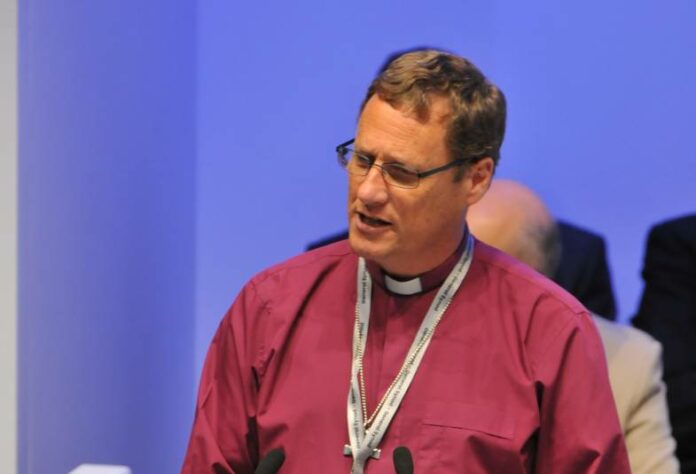
Martyn Snow is Bishop of Leicester and sits in the House of Lords