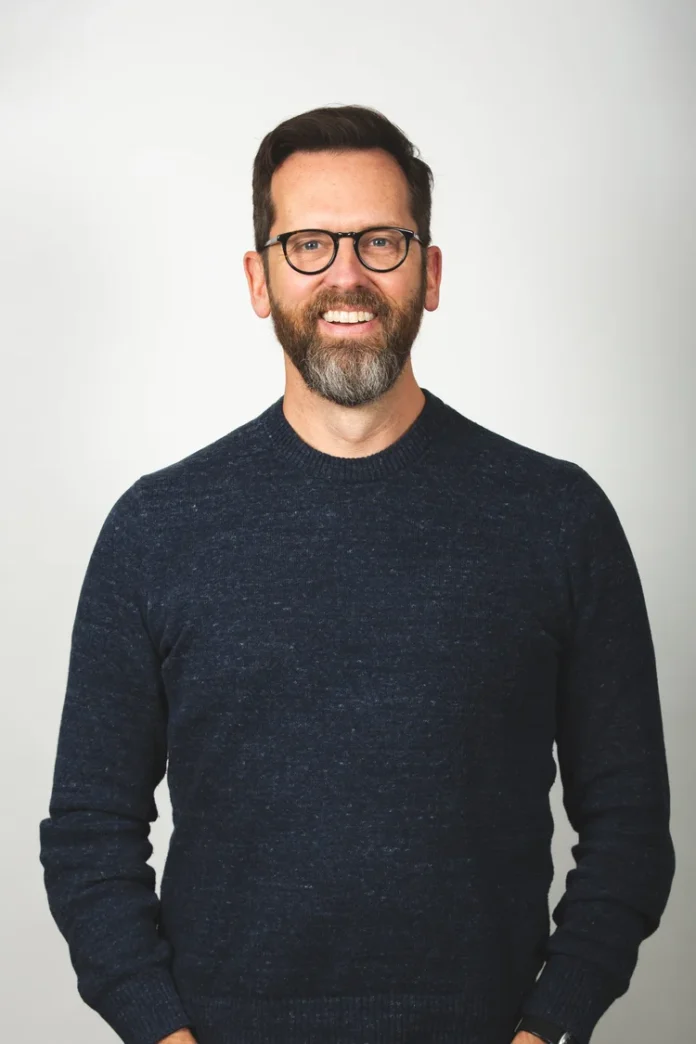
The Diocese of Churches for the Sake of Others (C4SO) has nominated the Very Rev. Canon Dr. Kris McDaniel, founding rector of Trinity Anglican Church in Atlanta, to be its next suffragan bishop. He is the only candidate.
Katherine Duderstadt of Christ Church Anglican in Kansas City, a member of the screening committee, announced the nomination in a [video released by the diocese on 23 Sept 2026. She said McDaniel had “submitted to a thorough discernment process,” including references, background checks and multiple interviews. The committee, she said, “felt united and encouraged” in forwarding his name to a panel of episcopal examiners appointed by the province. That panel reviewed the same materials and found him “a worthy candidate for Suffragan Bishop.”
The diocese will hold Zoom sessions over the next month so members can meet the candidate. Clergy and lay delegates will vote yes or no on his nomination at the diocesan convention on 7 Nov 2026. If the convention elects him, the Anglican Church in North America’s College of Bishops will consider consent at its January meeting, and the diocese expects to consecrate him in early 2027.
C4SO describes the new office as “reimagined for where C4SO is today,” focused on “planting new churches and forming clergy for the work ahead.” It is the second step in an expansion of the diocesan staff under the Rt. Rev. Jeff Bailey, following the appointment of the Very Rev. Drew Henley as Canon to the Ordinary on 1 August.
The current suffragan, the Rt. Rev. Brian Wallace, moved to a half-time role in the diocese on 1 March. He now oversees ordinations and clergy formation and has been appointed chief of the ACNA’s Common Life Commission.
C4SO’s rules for this election differ from those used for Bishop Bailey. In 2025, the diocese’s canons required at least two nominees for diocesan bishop (Title II, Canon 6, §1), and delegates chose between two candidates. Neither C4SO’s canons nor the provincial canons set a minimum for a suffragan election.
This time, a six-member screening committee of clergy and laity chose the nominee “in collaboration with Bishop Jeff,” and provincially appointed examiners then reviewed him. The diocese said this was needed because of the “close working relationship between Diocesan and Suffragan Bishops.” Bishop Emeritus Steve Breedlove of the Diocese of Christ Our Hope served as episcopal advisor to the process.
Canon McDaniel planted Trinity in Atlanta’s city center in October 2002, when he was 26. He had come from the Vineyard movement, as had C4SO’s founding bishop, Todd Hunter.
Trinity joined C4SO in 2015. At the time it was meeting on two campuses and had already sent out several church plants. Bishop Hunter, a longtime friend, called McDaniel “an outstanding leader of leaders” and named him dean of a new Southeast deanery. The diocese’s announcement said C4SO’s “egalitarian sensibility” had drawn the congregation.
In 2020 he became C4SO’s Canon for Church Development, working with church planters and with congregations from other denominations weighing a move into the diocese. He now serves as the diocese’s Canon for Church Multiplication. The diocese’s announcement summarized that record as service as “Dean for the Southeast region, Canon for church planting and most recently as the Canon for church multiplication”.
Trinity reported an average Sunday attendance of 990 in 2023. A 2026 diocesan profile describes it as a “1,500-person church” and one of C4SO’s three resource churches, and says it now runs a residency program for church planters. McDaniel holds a master’s degree from Richmont Graduate University and a Doctor of Ministry from Asbury Theological Seminary.
On 10 August, The North American Anglican published “More Bad Fruit From C4SO,” subtitled “Discipline for C4SO, When?” The author, Sean Luke, quoted from what he called Trinity’s “whitepapers.” Asked whether “Side A” Christians, meaning those who affirm same-sex relationships, may attend and join the parish, the document answered yes. Trinity’s intention, it said, “is to create a culture of hospitality in keeping with the Spirit of Jesus,” and “the communion table, which is the apex of our Sunday worship at Trinity, is open to all who call on the name of Jesus for salvation.” Membership requires only a profession of the historic creeds, baptism and regular attendance.
Luke based his objection on the exhortation to communicants in the 1662 Book of Common Prayer and on the eucharistic teaching of John Jewel. He argued that worthy reception requires repentance and “a firm purpose of amendment of life.”
Admitting people in “unrepentant same-sex relationships” to the Sacrament, he wrote, directly violates Scripture and the ACNA Catechism (Questions 122, 135 and 136). He called the practice “faux-charity” and “pastoral negligence in the highest order.”
He did not argue for exclusion itself. He wrote that LGBTQ people “can and should be shepherded into holiness,” and that “unjust bigotry” should not keep celibate and repentant believers out of church life. But admitting people “with no intention of amendment of life or repentance” to the Table was, he wrote, “blasphemous.” He added, “This cannot be tolerated in the ACNA.
The passage Luke quoted does not appear on Trinity’s current “Faith & Sexuality” page. That page says “heterosexual marriage is God’s desired design for human sexual expression” and that “sex difference (male and female) is an intrinsic part of what marriage is”.
Neither Trinity nor the diocese appears to have responded publicly to the article.
The complaint continues a long-running argument over C4SO’s approach to sexuality. In 2021 Bishop Hunter issued pastoral guidance for his diocese that departed from the College of Bishops’ recommended language on sexual identity, including the term “gay Christian”.
The diocese’s announcement did not mention the controversy. C4SO says members of the diocese will have “several opportunities to meet the candidate, ask questions and share any concerns” before the November vote. The College of Bishops will then decide whether to consent to the election.