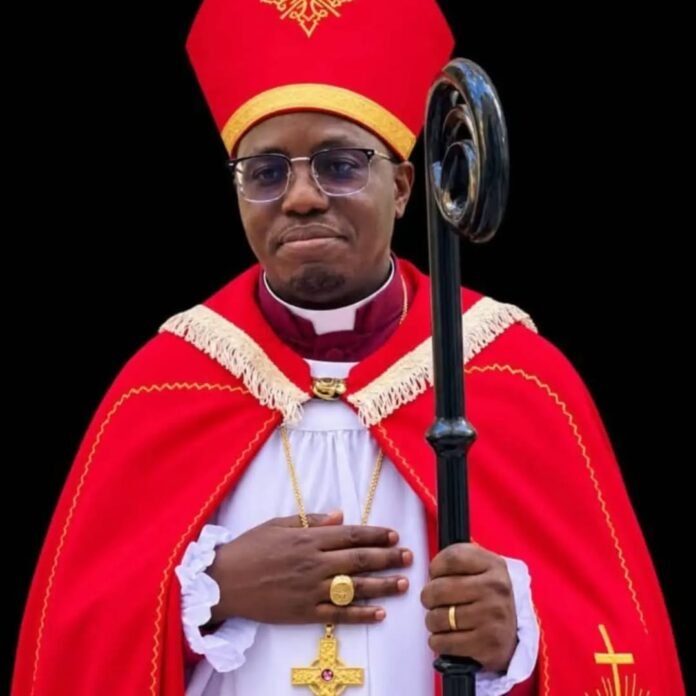
The Primate of the Anglican Church of Tanzania, the Most Rev. Maimbo William Mndolwa, has consecrated the Rt Rev Lameck Ndomba as the 11th Bishop of the Diocese of Zanzibar, ending a years-long vacancy that followed the suspension and eventual retirement of his predecessor amid one of the most turbulent episodes in the diocese’s modern history. The ceremony took place on Sunday, 20 September 2026, at the Cathedral of Christ Church in Mkunazini, Zanzibar — the historic building whose chapter was at the heart of the conflict that brought down the previous bishop.
The President of Zanzibar, Dr. Hussein Ali Mwinyi, welcomed the new bishop to his office, noting the cathedral had gone through a period of challenges. He spoke of the importance of peace, reconciliation, and cooperation between the government and religious institutions in building peace and stability..
The consecration marks a formal resolution of a crisis that Anglican.Ink first reported in October 2022, when the Tanzanian boshops directed the Rt Rev Michael Hafidh to take a leave of absence, dissolved the cathedral chapter, and placed the diocese under the oversight of a provincially appointed supervising bishop.
The dispute between Bishop Hafidh and the cathedral chapter had festered for years before the bishops intervened. The cathedral barred Hafidh from entering the building, and the funeral of Archbishop John Ramadhani in 2022 became a flashpoint when cathedral authorities again denied the bishop access to the grounds. Physical clashes between supporters of both sides culminated in Hafidh losing his mitre in a scuffle as he sought to enter his own cathedral.
The House of Bishops had convened in January 2022 in Kasulu Kigoma to hear complaints against Hafidh covering misconduct, theft, and moral turpitude. An Archbishop’s Commission visited Zanzibar in April that year to interview the bishop, cathedral members, and civil and political leaders, and presented its report to the bishops at their August 2022 meeting in Mpwapwa.
Among the charges that circulated were allegations that the bishop had pocketed cathedral funds and placed relatives on the church payroll. Hafidh successfully defended himself in civil proceedings over a paternity suit and as an alleged correspondent in a divorce case, but the reputational damage and the breakdown of his relationship with the cathedral chapter ultimately persuaded the House of Bishops to act.
The House of Bishops directed Hafidh to go on “vacation” — a term used in the official correspondence to indicate a leave of absence intended to allow healing “personally, his family and the Church in general.” A supervising bishop was appointed to manage the diocese in the interim.
Following his suspension Hafidh moved to the mainland, and he retired from the ordained ministry approximately two years later, leaving the diocese without a bishop and under continued provincial supervision until the election of his successor.
Christ Church Cathedral, built in 1873 on the site of the last open slave market in Zanzibar, is among the most visited Anglican churches in East Africa and one of the landmarks of Stone Town. Its altar is said to stand over the spot where slaves were chained and sold. The cathedral’s turbulent recent history had drawn concern from across the Anglican Communion, and the consecration of Ndomba as the 11th Bishop of Zanzibar was seen as an opportunity to restore stability.
The Anglican Communion’s directory still listed the Rt Rev Michael Hafidh as Bishop of Zanzibar as of the time of writing, though the consecration of Bishop Ndomba will supersede that entry.
The consecration came weeks after a gathering of Tanzanian bishops and their spouses concluded with another episcopal event — the consecration and enthronement of the Rt Rev Esron Yuba Kaziri as the first Bishop of Kahama on 30 August. Tanzania’s House of Bishops has thus consecrated two new bishops within a single month, a sign of the continued expansion and reorganization of one of Africa’s largest Anglican provinces.