It is over three years since the Church Commissioners published their controversial report on the Church’s links to the slave trade. Since then critics have challenged the Commissioners’ historical research while both the Church Commissioners and their historical advisers have published their separate responses to such criticism. However, in the light of recent academic research it is now clear beyond doubt that the Commissioners’ historical analysis is deeply flawed and their conclusions mistaken. The Commissioners therefore have a moral responsibility to withdraw their report and correct the record before a false historical narrative, to which they have lent their full authority, becomes further embedded in Google, AI and in schools and colleges throughout the world.
In February 2021 the accountants, Grant Thornton, were instructed by the Church Commissioners to review the ledgers of Queen Anne’s Bounty to “determine the extent to which the origins of the Endowment Fund may have been derived from the profits of the slave trade.”
Grant Thornton’s verdict was devastating: “We found that Queen Anne’s Bounty had purchased investments in an entity called the South Sea Company which is known to have transported 34,000 enslaved persons across the Atlantic. The South Sea Company ceased trading in enslaved people in 1739 at which point the Bounty had invested £443 million (in today’s terms).”
These findings were incorporated into the Church Commissioners’ report on the Church’s links to slavery, publicised in the press and cited as the basis for Project Spire, a proposed £100 million impact investment fund, that was announced in January 2023.
The central argument of the Church Commissioners and their historical advisers is that Queen Anne’s Bounty profited hugely from their slavery-linked investments, derived principally from interest on its holdings of South Sea Annuities. Church leaders were understandably shocked by the Commissioners’ report. The then Archbishop of Canterbury publicly apologised for the fact that the Church had profited from slavery, and the Bishop of Manchester, who was also deputy chair of the Commissioners, wrote an open letter to Save the Parish in support of Project Spire. He said:
“Having come to the full understanding of the extent of the involvement of Queen Anne’s Bounty in investing in the slave trade through research and forensic analysis…….. we cannot hold on to money gained so wrongly, any more than a burglar can hang on to profits from their activity.”
Here, then, is the historical narrative propagated by Church leaders and invoked as justification for Project Spire. However, this narrative is demonstrably false. The Church Commissioners’ historical advisers have misled the Commissioners, the Commissioners have misled Church leaders and Church leaders have misled the public at large. Because there is incontrovertible evidence that Queen Anne’s Bounty’s investments earned not one penny from the slave trade.
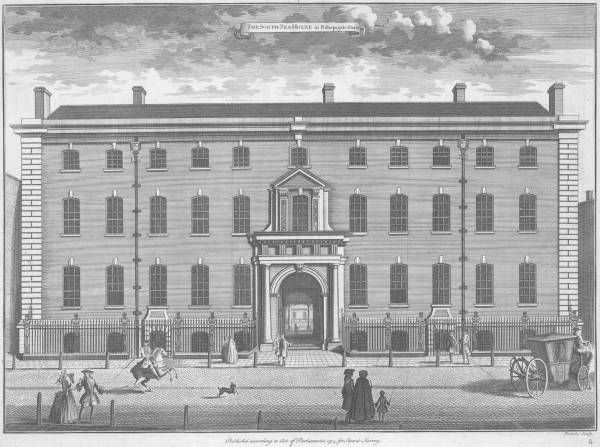
The Commissioners’ Report makes three related mistakes that distort its historical account. First, although the Report refers to the South Sea Company stock splits in 1723 and 1733 that separated the Company’s trading operations from the newly created South Sea Annuities, it fails to examine the legislative framework governing the latter. In 1723 Parliament established a new annuity company, the Joint Stock of South Sea Annuities which, according to the statute’s preamble, legally insulated investors from “future frauds, abuses, errors and mismanagement” of the South Sea Company. The Annuity certificates stated that the contracting party and issuer was the Joint Stock of South Sea Annuities and not the South Sea Company. The Annuitants were entitled to receive their pro-rata share of interest from the government at a specified rate in perpetuity and were ring-fenced from the risky and generally loss-making operations of the South Sea trading Company. The Company’s capital was split again in 1733 when, according to its chief clerk, Adam Anderson, “the proprietors of the trading stock becoming uneasy on account of their late losses by the Asiento and Greenland [whaling] trades” petitioned Parliament to divide the Company’s capital 25/75 in favour of South Sea Annuities. Thereafter there was a nominal distinction between Old and New South Sea Annuities.
The failure of the Commissioners to address the legal basis of the South Sea Annuities contributed to a second serious error. The authors mistakenly categorise South Sea Annuities as investments in the South Sea Company and the interest thereon as earnings related to the slave trade. This, despite the fact that the Annuities, as the report acknowledges, were invested exclusively in government debt and therefore equivalent to government bonds. Furthermore, Francois Velde, an authority on 18th century English finance, states in a recent paper that after the stock split of 1723 the Annuities represented the only form of liquid government debt available and that “if the Bounty wished to invest in government funds, there was no choice.” It is preposterous that the Bounty managers should be castigated for investing in slavery related assets when they were opting for a low risk investment strategy that explicitly avoided exposure to the South Sea Company’s trading activities. Even more extravagant is the Report’s assertion that “anyone [including Annuitants] investing in the Company before 1740 was consciously investing in [slavery] voyages.” Of course, the precise opposite was the case: Annuitants could be sure that they were not investing in such voyages.
This consideration leads to the third major error – which is also the most outlandish. Although the South Sea Annuities were government bonds in all but name the Commissioners’ advisers claim to have found a direct linkage between these assets and the South Sea Company. Their wording is significant: Grant Thornton’s website refers to its research into “Annuities issued by the South Sea Company” and the Report itself refers variously to the South Sea Annuities as “South Sea Company investments”, “investments in the South Sea Company”, “South Sea Company securities” and, in the glossary, as “Annuities in the South Sea Company”. Here, the Commissioners’ advisers have confused two different companies, each with the words “South Sea” in their name: the South Sea Company and the separately incorporated annuity company, the Joint Stock of South Sea Annuities. Furthermore throughout the Report the authors incorrectly refer to South Sea Annuities as South Sea Company Annuities, a descriptor unknown in contemporary records, whether this be the ledgers of the Bank of England, the Bounty’s ledgers, Chancery proceedings or the Annuity certificates themselves. Once more, the report is guilty of an elementary gaffe by conflating two legally separate entities.
Read it all at History Reclaimed
Professor Richard Dale is the author of The First Crash. Lessons From the South Sea Bubble (2004)