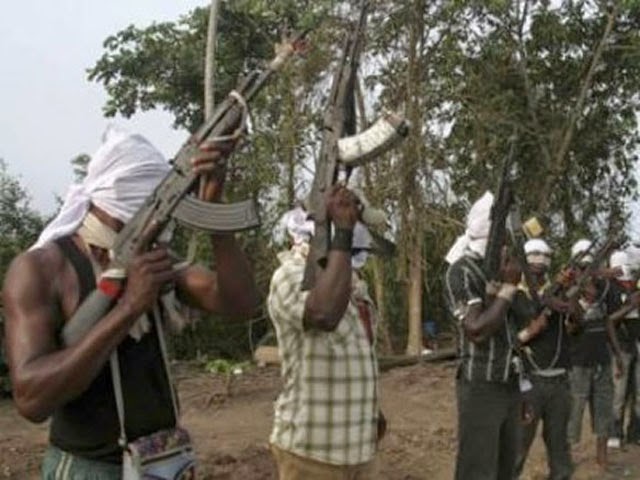
Nigeria’s Holy Week was marked by bloodshed, with coordinated attacks on churches and Christian communities across Nigeria’s Middle Belt leaving more than 50 dead from Palm Sunday through Easter. As graphic accounts emerged from Kaduna, Benue, Nasarawa and Plateau states, worshippers faced one of the most violent Holy Weeks in recent years, raising urgent questions about security and the government’s ability to protect Christian communities.
International Christian Concern reports that “dozens” were killed in coordinated Easter weekend attacks in Benue, Kaduna and Nasarawa, just days after a Palm Sunday massacre in Jos, Plateau State, that left at least 30 dead. In Ungwan Rukuba, a Christian-majority area of Jos North, gunmen opened fire on residents on Palm Sunday evening, prompting a 48‑hour curfew as authorities struggled to contain one of the region’s worst attacks in years.
On Easter Sunday unidentified armed men attacked worshippers in multiple communities across the Middle Belt, often arriving on motorcycles and on foot and operating for extended periods before security forces arrived.
Yet amid the mounting death toll and distress among Nigerian Christians, the Primate of the Church of Nigeria, Archbishop Henry Ndukuba—one of global Anglicanism’s most prominent conservative leaders—offered only a general Easter homily on the welfare of citizens, without a specific public response to the massacres in his own country.
The most widely reported Easter attack occurred in Ariko, Kachia Local Government Area of Kaduna State, where gunmen stormed two churches during Easter Sunday worship. According to International Christian Concern and Catholic sources, the attackers first hit a congregation of the Evangelical Church Winning All (ECWA) and then moved on to St Augustine’s Catholic Church nearby.
Casualty figures from Ariko vary across outlets: ICC cites local accounts of at least 12 killed, while BBC reporting—based on military statements and church sources—places the toll between five and seven. All sources, however, agree that several worshippers were abducted and taken into the bush, with local officials saying the armed men operated for hours without effective resistance.
The Nigerian army announced that it had rescued 31 civilians abducted during the Ariko attack, a claim repeated in national and international news summaries. But the Christian Association of Nigeria (CAN) and community leaders sharply dispute this, insisting that no such rescue took place and that many captives remain missing. Northern CAN chairman Rev John Joseph Hayab warned that false rescue claims risk compounding the crisis by obscuring the true scale of the violence and undermining trust between affected communities and the state.
The Easter horror was not confined to Kaduna. In Benue State, ICC and other Christian watchdogs report that at least 17 Christians were killed early Easter morning in the Mbalom community of Gwer East Local Government Area, with residents describing a familiar pattern of night-time raids on farming villages.
Further south in Kaduna, additional attacks in Kajuru Local Government Area left at least three dead in Maro Kasuwa, with more kidnappings and a cumulative toll of around 15 Christians killed in southern Kaduna alone over the Easter period. In Nasarawa State, advocacy groups say at least 10 more people were killed in attacks over Easter, bringing reported deaths in Benue, Kaduna and Nasarawa to more than 50 in the span of a week.
These incidents unfolded under the shadow of the Palm Sunday shootings in Jos, which local and international observers describe as one of the deadliest recent assaults on Plateau’s Christian communities. Eyewitnesses in Angwan Rukuba speak of gunmen arriving around nightfall and firing indiscriminately on civilians in a busy street before escaping, with the death toll rising as more bodies were recovered.
The Easter violence did not emerge from nowhere; it sits within a broader trend in which Nigeria has become the epicentre of lethal persecution of Christians worldwide. Open Doors’ World Watch List 2026 reports that of 4,849 Christians killed for their faith globally in the latest reporting period, 3,490 were in Nigeria—roughly 72 percent of the total.[13][14]
The report notes that sub‑Saharan Africa accounts for the vast majority of faith‑related Christian killings, with Nigeria the single deadliest country. Nigerian Christians killed over the period rose from 3,100 the previous year to 3,490, reflecting what Open Doors calls a “shocking” concentration of violence in the region.
Local monitors say 2026 has already seen a grim escalation. One Nigerian group, Intersociety, alleges that more than 1,400 Christians were killed in Nigeria between January and early April 2026, even before the full impact of the Holy Week attacks is counted, underscoring how religiously targeted killings have become almost routine.