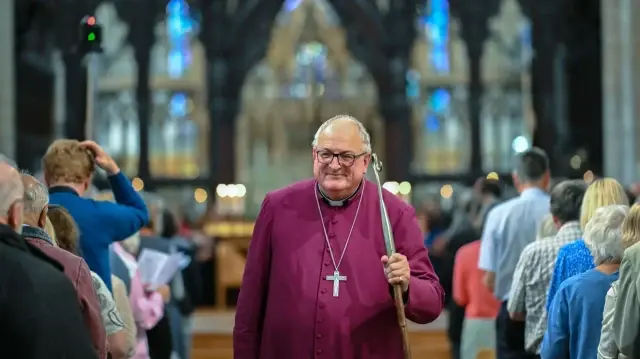
Lincolnshire Police have confirmed that a 68‑year‑old man was arrested on 19 February 2026 as part of an “ongoing investigation” into an allegation that a man was sexually assaulted between 2018 and 2025. The man has been widely identified in the media as Stephen Conway, Bishop of Lincoln, who was later released on conditional bail pending further enquiries.
The Diocese of Lincoln has stated that Conway has been suspended from ministry while a complaint made to the Church of England’s National Safeguarding Team is being handled under the House of Bishops’ safeguarding code of practice. That process includes referral to statutory authorities, and the diocese has said that support is in place for those affected and that it will not comment further while both civil and ecclesial investigations continue.
During Conway’s suspension, the Bishop of Grantham, the Rt Rev Nicholas Chamberlain, has been asked to assume responsibility for diocesan leadership and pastoral oversight. It is understood that the new Archbishop of Canterbury, the Most Rev. Sarah Mullally, formally removed Conway from ministry following his arrest, underscoring the seriousness with which the national church is treating the complaint.
Conway, who became acting Bishop of Lincoln in 2021 and was formally appointed to the see in 2023, previously served as Bishop of Ramsbury and Bishop of Ely and has sat as a Lord Spiritual in the House of Lords since 2014. In those roles he has been involved in national debates on safeguarding, education, and wider social and ethical questions affecting the church and the country.
Even before the current criminal investigation, Conway had attracted criticism over his handling of information about the late John Smyth QC, a barrister and lay church leader whose abuse of boys and young men in evangelical networks has been the subject of extensive reporting and inquiry. An independent review led by Keith Makin concluded that the Diocese of Ely, where Conway was bishop in 2013, could and should have taken further steps when it was alerted to concerns about Smyth, and Conway subsequently apologised, acknowledging that there were additional actions he ought to have taken.
Some survivors of Smyth’s abuse, as well as advocates and commentators, called for Conway’s resignation following the review, arguing that a bishop with his authority should have been more proactive in pursuing safeguarding concerns and ensuring that risks were addressed. Others have defended Conway as having acted promptly within the constraints and information available at the time, illustrating a sharp divide over how to interpret episcopal responsibility in complex historic abuse cases.
In public statements around national safeguarding failures, including the church’s response to Smyth, Conway has aligned himself with calls for a more victim‑centred culture, emphasising contrition for institutional failings and the need to embed safeguarding as an integral part of Christian practice. He has spoken of “deep regret” at the harm done to survivors and has urged church leaders to listen more carefully to victims and to ensure that structures no longer enable abusers to escape scrutiny.
Conway has also contributed to wider Church of England discussions about alcohol use in church life, generally reflecting the church’s official emphasis on moderation, pastoral awareness, and the dangers posed by substance misuse in ministry and hospitality settings. Those comments sit alongside his involvement in ongoing debates over homosexuality and human sexuality, where the Church of England continues to wrestle with questions of doctrine, pastoral provision, and inclusion, while insisting that any sexual conduct must be free of coercion and abuse. Public reporting shows that Conway has participated in these debates within the framework of national synodical and episcopal discussions rather than as a singular outlier on either side.
Separate from the current case against Conway, a related but distinct episode has shaped perceptions of the culture around episcopal households and alcohol. A widely reported disciplinary case has described how an Anglican priest admitted to drunk‑driving after leaving a social event at a bishop’s home, crashing his car and later facing possible defrocking. Media coverage of that case has focused on the priest’s conduct, the disciplinary outcome, and the pastoral and reputational consequences, rather than alleging wrongdoing by the bishop host.
News of Conway’s arrest has led to renewed scrutiny of the Church of England’s claim to have reformed its safeguarding culture after a long sequence of inquiries and reviews. Survivors, advocates, and critics of institutional religion have pointed to what they see as a recurring pattern in which senior leaders publicly champion safeguarding, moderation around alcohol, and high standards of personal conduct while the church continues to be rocked by allegations involving clergy, including bishops.
Supporters of Conway argue that he is entitled to the presumption of innocence and stress that an arrest in itself does not amount to a finding of guilt. Nonetheless, given his previous involvement in contested safeguarding decisions, the present inquiry intensifies pressure on both the Diocese of Lincoln and the national church to demonstrate that safeguarding procedures apply consistently to senior figures and that public commitments about abuse, alcohol, and sexuality are matched by transparent and rigorous practice.
The case continues.