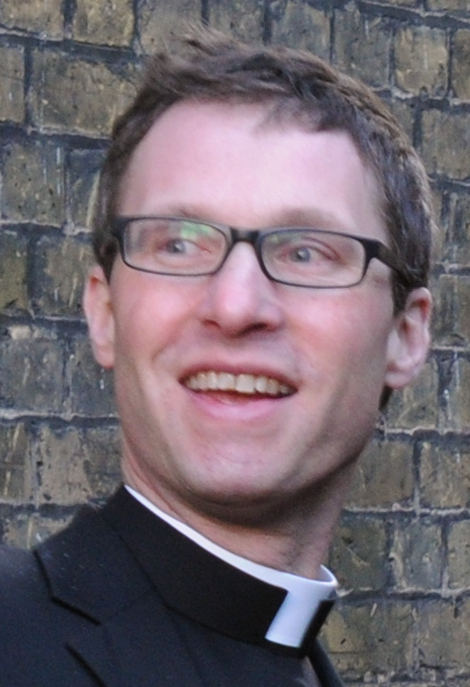
How did the Bishop of Blackburn, Philip North, become a diocesan bishop in the neo-Marxist-dominated Church of England hierarchy of the 21st Century? How did he slip through the managerialist episcopal net?
On Anglican Ink in the US, veteran church journalist, George Conger, has highlighted Bishop North’s remarkable address to Blackburn Diocesan Synod on October 10.
Conger commented: ‘Bishop North’s address is significant because it supplies a distinctly traditional and evangelical-catholic note amid the continuing turmoil of the Church of England. Rather than treating the Church principally as a body needing bureaucratic reform, political accommodation, or managed contraction, he presents it as a missionary people whose confidence rests in the risen Christ and the power of the Holy Spirit.’
Indeed. Anyone familiar with the Church Fathers or the outstanding Christian apologists of the AD 2nd and 3rd Centuries, such as Tertullian and Justin Martyr, will recognise that kind of positive, culturally-transforming, biblically-grounded Christianity in North’s discourse.
With its powerful appeal to the New Testament’s portrayal of Christ, this section of his address on the new vision for mission which Blackburn Diocese is launching, Joyful Followers of Jesus, resonates with the counter-cultural enthusiasm of the early Church:
‘So friends, as we launch this new vision, let’s be ambitious for the Gospel of Jesus Christ. Let’s have a rich ambition for the kingdom. Our task as Christians is not to tinker about and leave everything roughly the same. It is not to apply a thin veneer of ill-defined spirituality to a fundamentally secular nation.’
He continued: ‘When Jesus returned to his home town, he caused total chaos. When he crossed to the land of the Gadarenes, he wrought such utter disorder that they begged him to leave. When he went into the Temple, he smashed the place up. When he descended to hell, he harrowed it and brought to life the souls of the saints. Jesus does not tinker. He does not leave things the same. He transforms. He purifies. He destroys evil. He changes lives with the hope of salvation.’
Philip North, an Anglo-Catholic Christian, became suffragan Bishop of Burnley in 2015 under his predecessor as Bishop of Blackburn, Julian Henderson, a conservative evangelical. The fact that he was Henderson’s choice for Burnley sheds some light on how he became a suffragan bishop.
Henderson had inherited a strongly Anglo-Catholic diocese in Lancashire when he became Bishop of Blackburn in 2013. He needed an Anglo-Catholic episcopal colleague in that diocese but he wanted one with a heart for evangelism and church growth. He clearly found him in Philip North.
But North’s journey to becoming a diocesan bishop was very far from smooth. In 2017 he was appointed Bishop of Sheffield in a diocese that wanted a more homely senior pastor and a break from the managerialism of its former bishop, Steven Croft, who had become Bishop of Oxford in 2016. But after a campaign by militant feminists in the diocese and their male sidekicks North was effectively bullied out of Sheffield because of his Anglo-Catholic convictions about the male priesthood and withdrew, continuing as Bishop of Burnley.
It could be argued that his appointment by the Crown Nominations Commission to Blackburn in 2023 under former Archbishop of Canterbury, Justin Welby, was to some extent compensation for the treatment he had received in Sheffield. But the main reason North got Blackburn was because of his high pastoral standing in the diocese and his enthusiasm for mission.
Three years into North’s episcopate, something out of the C of E ordinary appears to be happening in Blackburn Diocese and it would probably take a theologian rather than a journalist to explain it.
Julian Mann, a former Church of England vicar, is an evangelical journalist based in Lancashire.