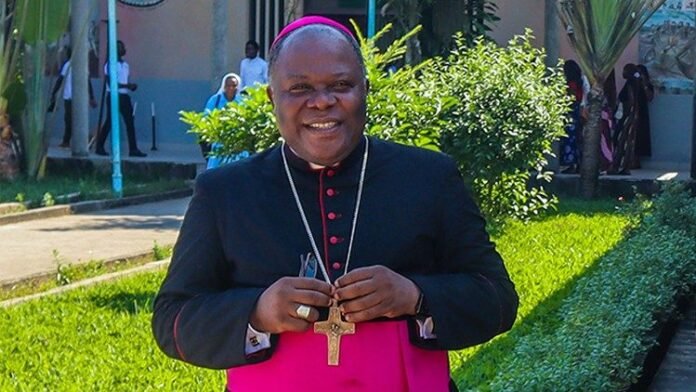
The Diocese of Quelimane has issued a “vehement repudiation” of reporting that links its former chancellor and current apostolic administrator to the June 6 assassination of Bishop Osório Citora Afonso, even as emerging details cast an increasingly stark light on long‑running governance and accountability failures in the local Church.
Bishop Afonso, 54, a Consolata missionary and fourth bishop of Quelimane, was shot in the chest in the early hours of June 6 at the episcopal residence in the city, in Mozambique’s Zambézia province. Initial police briefings suggested a commando‑style attack: assailants reportedly scaled the compound walls, disabled security systems, and fired a modernised Kalashnikov (AK‑M), a weapon standard in the Mozambican armed forces.[2][3][4][5]
Those early details fuelled speculation that the bishop had been killed for political reasons, in a country where Church leaders who speak against corruption or violence have at times found themselves under pressure from state authorities. Within days, however, the investigation pivoted sharply inward, with police arresting three suspects: Fr. Adelino Novais Amado, the former diocesan chancellor, along with a gardener and a security guard attached to the residence.
The arrests have brought to the surface years of internal conflict over Church governance and property in Quelimane. Local investigative weekly *Savana* and the daily *Canal de Moçambique* – independent outlets with a record of adversarial reporting on Mozambican politics – trace the current crisis back to the tenure of Bishop Hilário da Cruz Massinga, who led the diocese from 2008 until his resignation for health reasons in 2023.
According to these reports, Bishop Massinga clashed with religious sisters over control of schools, the diocesan radio station Rádio Paz, buildings and vehicles, accusing them of abusing funds while the sisters insisted they were being unjustly dispossessed. Civil and canonical cases followed, and the bishop froze the radio station’s accounts as part of his efforts to recover diocesan assets.
Savana now alleges that during the vacancy after Massinga’s departure, day‑to‑day administration fell heavily to Fr. Amado as chancellor and that in this period Church properties were increasingly registered in private names linked to diocesan figures and religious sisters. One sister, Justina Camilo, is reported to have been convicted in court of appropriating diocesan assets, with Savana listing license plate numbers of vehicles said to have been transferred.
When Bishop Osório Afonso was appointed to Quelimane in 2025, Savana says Sister Justina attempted to present her side of the story, but the new bishop instead ordered audits and opened investigations into those who had administered the diocese since Massinga’s resignation, naming Fr. Amado among them.
The governance disputes were not limited to property. Canal de Moçambique reports that Bishop Afonso identified serious moral concerns involving Fr. Amado, including alleged relationships with multiple women – the papers speak bluntly of “polygamy” – and a case in which a religious novice became pregnant. The novice was reportedly pressured toward abortion, prompting the bishop to launch canonical proceedings and seek guidance from the Holy See.
According to Canal de Moçambique, a Vatican response had already arrived by the time of the bishop’s death. On 31 May, six days before the murder, Bishop Afonso signed a decree reorganising the diocesan curia, naming a replacement for Amado as chancellor and reshuffling senior roles; the decree specified that the new officials would take office on 6 June, the day the bishop was killed.
Savana reports that Amado travelled that same day to the capital, Maputo, returning on the eve of the murder, and that investigators suspect he may have gone there to hire a hitman. Canal de Moçambique adds that one working theory of the police is that Amado coordinated the attack by plying the residence’s gardener and guard with alcohol, clearing the way for a shooter – still at large – to enter and carry out the killing.
Forensic teams are said to be analysing ballistic and DNA evidence, and Mozambican media close to the investigation now speak openly of an “inside job” hypothesis centred on internal resistance to the bishop’s reform and disciplinary moves. None of these investigative theories has yet been tested in court, but they paint a grim picture of a diocese where stewardship of assets, clerical discipline, and personal loyalties had become dangerously entangled.
Canal de Moçambique’s reporting goes further, alleging that investigators have uncovered unexplained money transfers from Fr. Amado to Bishop Estêvão Ângelo Fernando of Alto Molócuè, totalling more than US$15,500, along with messages in which Amado pleads to be transferred to Fernando’s new diocese. Alto Molócuè, erected in 2025 from territory taken from Quelimane and other sees, is led by Bishop Fernando, himself formerly a priest of Quelimane and familiar with its curial structures.
The paper claims that these transfers and messages have led authorities to open lines of inquiry involving Bishop Fernando, even as he has been appointed apostolic administrator of Quelimane following Bishop Afonso’s death. The Pillar, which has reviewed the original Savana and Canal reports, notes that it cannot independently verify all the allegations, but affirms that the papers’ accounts are consistent with their longstanding editorial posture of criticising both Church and state when corruption is alleged.
On 4 July, Bishop Fernando responded with a sharply worded statement entitled a “vehement repudiation”, co‑signed with the diocesan College of Consultors. In it, he condemns “material published by certain media outlets and circulated on social media, which blames individuals for actions, attitudes, and management decisions that at times have absolutely nothing to do with the case regarding the assassination of the Bishop of Quelimane.”
“I myself am a target of this,” the bishop notes, complaining that leaks from the police investigation and speculative reporting violate Mozambique’s constitutional principle of judicial secrecy and risk harming due process. The statement argues that the published material “includes serious insinuations, suggests connections to criminal activity and forms premature and extrajudicial judgments,” leading to public outrage, discrediting people and institutions, and “generating an atmosphere of suspicion that does nothing to contribute to clarifying the facts.”
While insisting that “the Catholic Church stands for the freedom of the press,” Bishop Fernando warns that “freedom without ethics or respect for the law degenerates into speculation.” He calls for investigative confidentiality to be respected, urges journalists and social media users to stop naming supposed perpetrators, and appeals to authorities to enforce laws protecting investigative secrecy.
At parish level, Saint Anne Parish in Quelimane had earlier issued its own communiqué rejecting unverified accusations against Fr. Amado and urging the faithful to await an official statement from the Episcopal Conference of Mozambique. Together, these responses show a local Church hierarchy attempting to lower the temperature of public debate even as the investigation continues.
The governance crisis in Quelimane is layered over ethnic and regional tensions. Both Bishop Fernando and Fr. Amado are ethnic Zambesians, while Bishop Afonso, originally from Nampula, belonged to the Makhua ethnic group. Savana and other outlets suggest that some local Zambesians resented the arrival of a Makhua outsider determined to impose discipline and recover assets, and that this resentment may have fed resistance to his reforms.
At a funeral Mass in Quelimane, a representative of the bishop’s family, who came to claim his body for return to Nampula, was quoted as saying: “We apologize to all believers of good will, but today we have come to reclaim what is ours. The Makhua are leaving now, you can keep your diocese.” The remark underscores how ethnic identity, loyalties, and grievances have become entangled with questions of ecclesial authority in the wake of the murder.
Canal de Moçambique closes its analysis by drawing a parallel with Archbishop Cláudio Dalla Zuanna, emeritus of Beira, an Argentinian‑born prelate reputed for his strictness in ecclesiastical discipline and pastoral accountability. Although his resignation in April 2026 at age 67 was officially attributed to health concerns, speculation persists in Church circles that internal resistance to reform contributed to his departure. Following Zuanna’s resignation, Bishop Osório Afonso was appointed apostolic administrator of Beira, further linking him to contested efforts to tighten governance within the Mozambican Church.
The murder of Bishop Afonso has prompted strong statements from both national and continental episcopal bodies. The Episcopal Conference of Mozambique (CEM) has condemned what it calls a “vile and cowardly crime” and demanded urgent, rigorous clarification of the circumstances, insisting that both intellectual authors and material perpetrators be identified and held accountable “whoever they may be.”
At the same time, the apostolic administrator’s insistence on judicial secrecy and his denunciation of media speculation reveal a tension between transparency and confidentiality that goes to the heart of Church governance in the case. On one side stand calls for light and truth about alleged clerical misconduct, asset misappropriation, and possible collusion; on the other stands a local hierarchy that fears trial by media and the erosion of due process.
The case continues.